

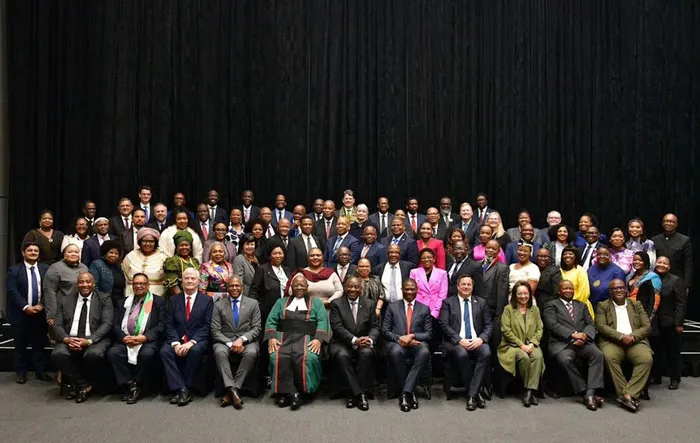
A recent study has revealed a dramatic return to pre-election pessimism about the country's direction and the GNU.
Image: Supplied
South Africa is often celebrated as a triumph of freedom. The right to vote, to speak, to assemble, and to live without the formal chains of apartheid is rightly honoured.
Many brave citizens and leaders sacrificed their lives and futures so that political freedom could become a reality. Yet there is a painful truth we rarely confront honestly. Freedom was won, but equality was postponed. Today, we live in a country that is free by law but unequal by design, and our current leadership, including the Government of National Unity, continues to defend freedom while quietly abandoning equality. There is a critical difference between equality and freedom. Freedom is the absence of legal restraint. Equality is the presence of justice.
Freedom allows a person to walk through the front door. Equality ensures there is something worth walking into. One can exist without the other, and in South Africa that separation has become the norm. Our Constitution guarantees freedom, but our lived reality exposes inequality in income, education, land ownership, health care, and opportunity. These gaps are not accidents. They are maintained through political choices.
Historically, many leaders were prepared to die for freedom because freedom threatened the system of racial domination. Equality, however, threatens privilege itself. It requires redistribution, accountability, and discomfort for those who benefit from the status quo. It demands more than slogans and commemorations. It demands courage after victory. That is where our leadership has consistently failed.
The Government of National Unity presents itself as a symbol of stability and cooperation. In practice, it represents mixed principles and confused priorities. Parties with opposing ideologies sit together not to advance justice, but to preserve power and calm markets. The language of unity is used to mask the absence of a moral centre.
When everyone agrees to disagree, the poor continue to suffer while elites negotiate positions and portfolios. The GNU speaks fluently about freedom, constitutionalism, and investor confidence. It is far less comfortable speaking about structural inequality. Land reform is delayed in the name of caution. Economic transformation is softened in the name of pragmatism. Basic services remain unequal while leaders praise restraint and fiscal discipline. This is not neutral governance. It is a political choice that favours stability over justice.
Mixed principles are dangerous because they blur accountability. When policies fail, no one takes responsibility. One partner blames another. Compromise becomes an excuse for inaction. The result is a government that manages decline rather than confronts its causes. Freedom becomes a shield used to defend inequality, rather than a tool to dismantle it. It is especially troubling that this happens in a society shaped by deliberate inequality. Apartheid was not only about racial separation. It was an economic project that concentrated wealth and opportunity. Ending apartheid without undoing its economic legacy was never going to deliver equality.
Yet decades later, leaders still act surprised by persistent poverty and unemployment. They speak as if time alone will heal wounds that require deliberate intervention. Citizens are told to be patient, to celebrate freedom anniversaries, and to trust gradual change. Meanwhile, children attend under-resourced schools, families live far from work, and communities lack dignity. Freedom without equality begins to feel like a performance rather than a promise. It is freedom to choose between limited options, freedom to compete in an unfair race, and freedom to watch others thrive. True freedom must include equality. Not equality of outcomes in a simplistic sense, but equality of dignity and real opportunity. This requires bold policy, not cautious coalitions. It requires leaders willing to risk popularity and comfort for justice. It requires rejecting the idea that unity means silence about inequality. South Africa does not need more speeches about freedom.
It needs honest leadership that understands that freedom delayed, equality is freedom denied. Until equality is treated as urgently as freedom once was, our democracy will remain incomplete. We will be free, yes, but trapped in a deliberately unequal society that our leaders are unwilling to change.
*Mayalo is an independent writer and the views expressed here are not necessarily those of Independent Media