

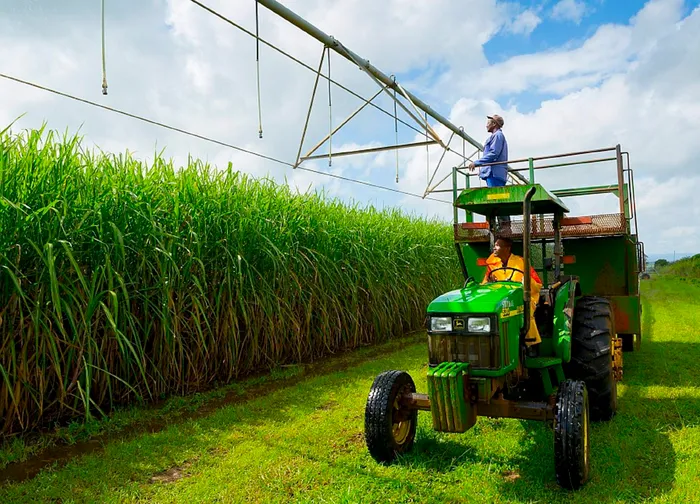
A Tongaat Hulett plantation. The distressed company is being forced to pay sugar levies.
Image: Simphiwe Mbokazi
Tongaat Hulett's business rescue practitioners won’t be able to avoid paying sugar levies after the Supreme Court of Appeal ruled that these payments are a legal requirement.
The sugar producer and its property arm voluntarily entered business rescue at the end of 2022, after the board found the companies in financial distress due to a working capital shortfall of around R1.5 billion.
Since then, the implementation of the rescue plan has faced several challenges, including missed funding deadlines.
Each month, the business rescue practitioners repeat that they believe the company can still be rescued. They say they continue to advance the Amended Business Rescue Plan, which was approved by the required majority of creditors at the end of January 2024.
As part of the process, the practitioners tried to pause payments under the Sugar Industry Agreement, which governs levies and revenue sharing across the sugar sector.
They argued that the Companies Act allows companies in business rescue to temporarily suspend obligations arising from existing agreements to give them breathing space.
The South African Sugar Association and other industry stakeholders opposed this, saying the payments are statutory obligations under the Sugar Act and the agreement itself, not ordinary contractual debts.
The dispute ended up before the Supreme Court of Appeal, which had to decide whether the Sugar Industry Agreement is a contract that can be suspended, or a legal instrument that applies to the entire industry.
The court agreed. Despite its name, the Sugar Industry Agreement is issued by government and applies to all sugar producers. Its payments are legal duties, not contractual obligations, and cannot be suspended during business rescue.
Tongaat Hulett's business rescue practitioners also argued that this puts it at an unfair disadvantage compared to businesses that can suspend contract payments during business rescue.
The court rejected this argument, stating that the law draws a clear and rational distinction between obligations created by contracts and those created by legislation, and that this distinction applies equally to everyone.
The court said keeping statutory payments in place during business rescue supports important public interests, including the regulation and stability of key industries.
As a result, the appeal was dismissed, and Tongaat Hulett remains obliged to make its sugar industry payments despite being under business rescue.
IOL BUSINESS