

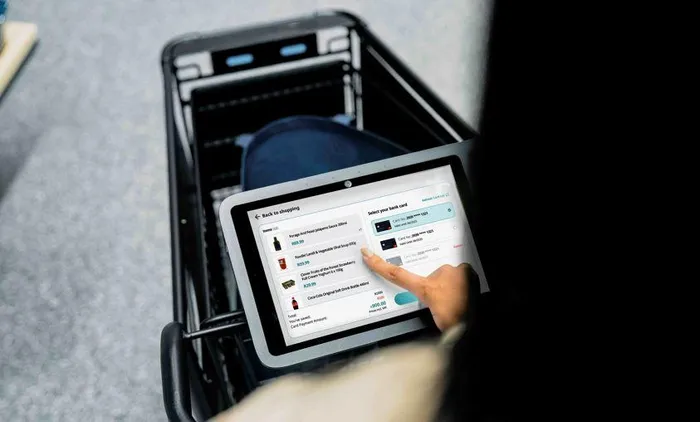
South African retailers and fast-food outlets are fast turning to self-service technology
Image: Checkers
South African retailers and fast-food outlets are fast turning to self-service technology, from smart trolleys to digital kiosks, promising quicker and more convenient experiences for customers.
However, while shoppers may welcome the speed, it has also raised fears that it may worsen unemployment, particularly for low-skilled workers in cashier and counter roles across the country.
South Africa currently has one of the worst unemployment crises in the world. According to Statistics South Africa, the unemployment rate is 33.9%.
Retailers, however, insist that the technology will not negatively affect staff. Last month, Woolworths introduced an Express Till pilot at its Foreshore store in Cape Town. According to the retailer, the pilot aims to make shopping faster and more convenient.
"This initiative does not impact till operator roles. Our focus is on upskilling and redeploying team members into other roles within store environments as we continue to evolve our service offering," Woolworths said.
"We are testing the Express Till concept in response to changing customer expectations. Many customers are increasingly comfortable with digital, self-led solutions, and appreciate the convenience of a faster checkout option".
Other retailers and fast-food chains are also experimenting with similar technology. KFC introduced self-service kiosks in its restaurants several years ago.
"The introduction of kiosks has not resulted in job losses. In some restaurants, kiosks have been accompanied by the addition of a lobby host role focused on welcoming customers, assisting them in the dining area and supporting those who choose to use the kiosks," the fast outlet said.
"Employees continue to receive ongoing training to support customers using digital ordering tools, alongside operational, service and leadership training that supports skills development and progression within restaurants".
Meanwhile, Checkers is also trialling smart shopping trolleys at two Western Cape stores, Checkers Hyper Brackenfell and Checkers Constantia. The trolleys allow customers to scan and bag items as they shop and pay directly from the trolley.
"At the Shoprite Group, we deliberately design technology with people in mind – to support and complement their work. No employees or existing positions are adversely impacted by this pilot. In fact, entirely new roles were created, such as concierge assistants to guide customers, employees to support check-outs and verify age for alcohol purchases, additional security personnel, and centralised tech and data roles".
However, despite retailers insisting that the technology will not negatively affect workers, COSATU national spokesperson Zanele Sabela said that the introduction of self-service systems brings the risk of job losses, particularly for workers.
"Experience from the previous industrial revolutions indicates that many jobs will be lost, and new ones created. At most risk are low-skilled and vulnerable workers who earn minimum wage and whose job security is precarious. The possibility of a jobs bloodbath for cashiers, counter staff and other in-store employees is very real," Sabela said.
"However, as yet we haven’t seen mass job losses. In spite of this, COSATU is urging all its affiliates, including those that organise the retail and fast-food sector, to remain vigilant to ensure that employers do not unilaterally impose AI and automation to the detriment of workers".
The Food and Allied Workers Union (FAWU) said businesses should engage with unions before rolling out such technologies and invest in training and redeployment programmes.
"FAWU is deeply concerned about potential job losses. Automation often leads to fewer entry-level positions, which are critical for young and low-skilled workers entering the labour market. Redeployment and upskilling are possible solutions, but they require genuine commitment from employers," the union said.
"Without structured plans, redeployment can become a euphemism for retrenchment and job losses, which is what FAWU and any other trade union must guard against".
The union added that South Africa "was not a developed economy, but a developing economy after all, and cannot risk religiously following in the footsteps of the developed economies".
"Unfortunately, in many cases, engagement has been limited or reactive, rather than proactive. FAWU insists that workers must be part of the decision-making process, not merely informed after changes are implemented".
IOL Business