

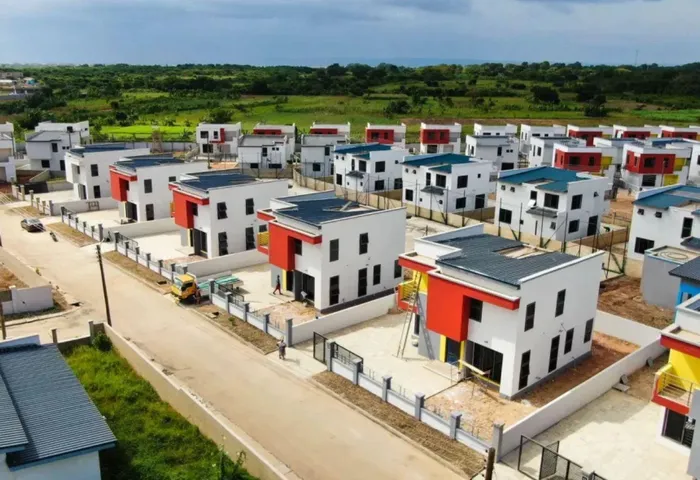
South African companies are contributing to Africa's development through skill exportation, job creation and urban development. This is complemented by African countries collaborating on housing and infrastructure initiatives.
Image: Supplied
A new chapter in African housing development is taking shape, with thousands of Ghanaian families set to see real change.
This marks the official signing of an agreement between Afribiz Invest (Pty) Ltd, a South African-founded infrastructure investment company, and Ghana’s National Home Ownership Fund (NHF), a government-backed body focused on making homeownership more accessible.
The agreement was signed on Friday at the Seven Villa Hotel & Spa in Sandton.
This project shows what African collaboration can achieve when it is done with intention, says Afribiz Invest CEO Pongo Pule.
Partnership impact
She says people need homes, not promises.
“This partnership allows us to take real steps towards building communities that work for families. We are proud to bring our experience and expertise into a project that will make a long-term difference to Ghana’s urban landscape,” she said.
She added, “Africa has the talent and the capability to build by itself for itself. This partnership proves that.”
The partnership is said to be more than just a business deal, reflecting a shared vision to make housing more affordable, to support economic growth, and to strengthen ties between South Africa and Ghana.
20 000 housing opportunities
The project, valued at R27 billion, will deliver 20,000 housing opportunities. These homes will form part of a modern mixed-use development designed to meet the needs of Ghana’s fast-growing urban communities.
The plan includes smart, practical and sustainable living spaces that ordinary families can call home.
The project comes at the right time for Ghana’s growing cities and landscape, says Prosper Hoetu, who serves as CEO of the NHF.
“Our focus is simple: families must be able to own safe, dignified and affordable homes. This partnership gives us the scale and expertise to make that a reality for thousands of Ghanaians. We value the collaboration with Afribiz Invest because it brings practical solutions, not just plans,” he said.
He added that the project will “support jobs, empower local businesses and uplift communities for years to come.”
The partnership is said to be made possible through Black Knight Advisors, a leading advisory and management consulting firm. Their work brought all the key players together and ensured that the project has the financial and strategic backing it needs to succeed.
Sharing of skills
This collaboration goes is said to go beyond building houses creating room for shared skills, shared investment and shared growth between the two countries. For Ghana, it is said to mean thousands of new homes, more jobs, and business opportunities for local suppliers.
For Afribiz and South Africa, it said to reinforce their role in shaping sustainable urban development on the continent. The signing marks a major step towards reshaping access to housing, while building stronger economic and diplomatic ties between South Africa and Ghana, they said.
Afribiz Invest is a South African company with a strong track record across engineering, property development, construction, energy, ICT, logistics, security, training and financial services.
Increased housing problems
According to the Centre for Affordable Housing in Africa(CAHF), in Ghana, housing problems are becoming increasingly evident as the population continues to grow, particularly in urban areas.
The independent think tank in South Africa, pursuing its mission of making Africa’s housing finance markets work, says housing supply has not kept pace with the increasing demand for housing, resulting in a large deficit, in turn escalating costs of renting, and proliferating slums and informal settlements.
“It is estimated that 33% of Ghanaian urban residents live in slums. The absence of a holistic solution to the housing shortage remains a problem as existing interventions remain a piecemeal approach from diverse players.”
Key interventions have focused on mass housing projects, the establishment of the National Homeownership Fund (NHF), public-private partnerships and the creation of an enabling environment for private developers.
With an increase in unemployment rates and high currency volatility, living standards are continually declining, inducing a surge in poverty, particularly in urban areas.
Two million housing units deficit.
The World Bank estimates that Ghana’s annual housing need ranges between 70 000 and 133 000 units, with the housing deficit estimated at approximately 2 million.
Only 33% of the country’s housing needs are delivered annually. Statistics showed an oversupply of luxury accommodation targeted at high-income earners and a persistent shortage of low-income housing.
Independent Media Property