

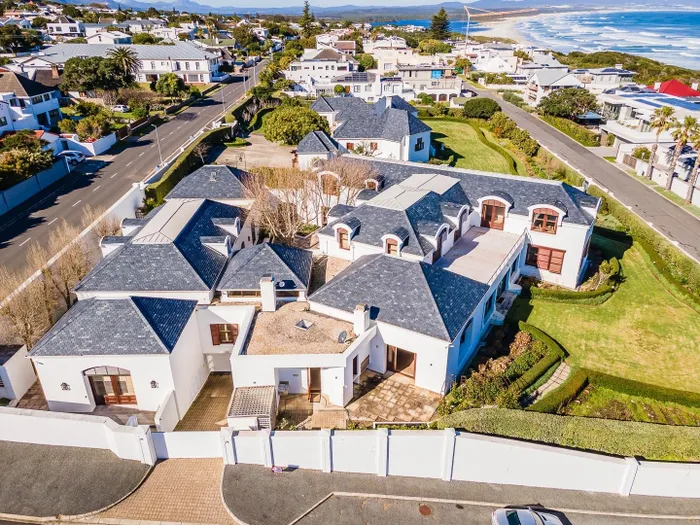
For the property market, Remax says stability in borrowing costs is often just as important as rate cuts.
Image: Supplied
Global geopolitical tensions introduce new uncertainty into the outlook for borrowing costs and the housing market.
This is a South Africans will be watching closely when the South African Reserve Bank’s (SARB) Monetary Policy Committee announces its next interest rate decision on Thursday, March 26.
The outlook for interest rates has become more complex in recent weeks as global developments could disrupt the downward trajectory many economists had anticipated for 2026, says Adrian Goslett, CEO and regional director of REMAX Southern Africa.
“At the start of the year, there was growing optimism that South Africa would see further interest rate relief as inflation remained contained and economic growth stayed subdued. However, the current conflict has pushed oil prices sharply higher and could reintroduce inflationary pressures globally.”
“If those pressures filter through to local fuel prices and consumer costs, the South Africa Reserve Bank may choose to remain cautious rather than accelerate rate cuts,” says Goslett.
According to SARB, monetary policy is the means by which central banks manage the money supply to achieve their goals. The SARB says it uses interest rates to influence the level of inflation.
National Treasury, in consultation with the SARB, sets the inflation target, which acts as a benchmark against which price stability is measured. The SARB then independently makes monetary policy so as to achieve this target.
The basic aim of monetary policy is to determine how much money an economy should have in circulation. The monetary policies of countries may differ, but most major economies aim for low and stable inflation, and have publicly announced inflation targets.
South Africa entered into 2026 with the repo rate at 6.75% after the central bank began easing monetary policy in late 2025.
Earlier forecasts suggested the possibility of additional rate cuts throughout the year as inflation stabilised and economic growth remained modest.
However, rising geopolitical tensions have added a new layer of uncertainty. As South Africa relies heavily on imported fuel, higher global oil prices are likely to translate into increased transport and production costs that can filter through the broader economy.
Economists have already cautioned that sustained pressure on oil prices could raise inflation risks locally and complicate the outlook for further rate cuts.
“If global oil prices remain elevated or the rand weakens as a result of geopolitical tensions, SARB may opt to keep rates unchanged for longer while it monitors inflation risks. On the other hand, if the rise in oil prices and global tensions prove to be temporary, and local inflation remains well contained, SARB could still lower interest rates later in the year,” explains Goslett.
As the days go by, and oil prices continue to remain “elevated” from a few weeks ago, due to the Middle East conflict in and around Iran, the concern surrounding a looming shock to South African petrol prices is understandable, says John Loos, an independent economist.
News over the weekend of US President Donald Trump’s strike on Kharg Island, Iran’s main export hub, initially raised concerns, but it would seem he only hit military targets, says Reezwana Sumad, research analyst at Nedbank CIB.
“As a result, Brent crude oil pared an early 3% jump this morning and is now up only 1.3%, trading at USD104.56/barrel. This was also aided by comments from Iran’s Foreign Minister Abbas Araghchi that the Strait of Hormuz was only shut to ships from 'enemies'. Two tankers carrying liquefied petroleum gas to India reportedly sailed through the strait, providing some relief to acute cooking fuel shortages.”
Sumad says much of the discussion seemingly centers around how high next month's petrol prices may go, what happens beyond that, how far inflation rises as a result and will that lead to interest rate hikes?
“Less discussed, however, is how public transport where it is available in South Africa potentially cushions the blow of such oil and domestic petrol price shocks. If anything, these periodic bouts of high petrol prices should serve to remind us of the need to develop far more comprehensive and better quality public transport for South African cities.”
Sumad says when breaking down the modes of land transport in order to view the impact of oil price shocks, it appears that those having to use private transport will likely be more directly impacted, whereas public transport inflation during a fuel price shock might be less severe.
“In times of a fuel price shock, public transport operators appear to absorb a portion of the cost increase, while in the fuel price dips they don’t cut fares accordingly, thus smoothing out the volatile fuel price cycles for public transport users quite significantly.”
For the property market, Remax says stability in borrowing costs is often just as important as rate cuts.
“While further reductions would provide additional relief for homeowners and prospective buyers, a period of steady rates can also support market confidence and allow buyers to plan their finances with greater certainty.”
Independent Media Property