Safety remains a priority for community soup kitchens amid second Covid-19 wave
|Published
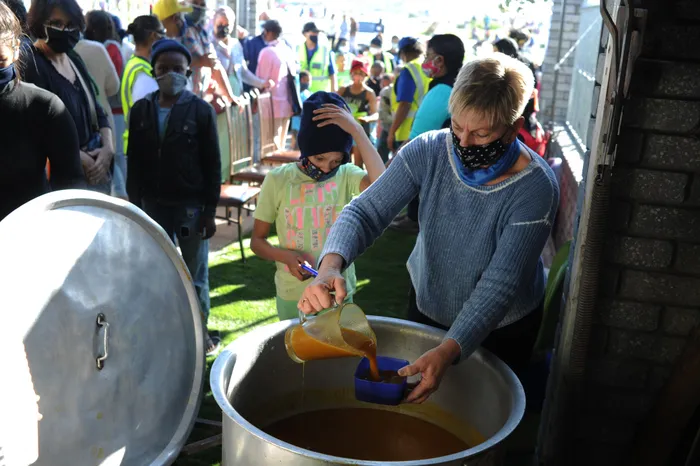
The large number people arriving at community soup kitchens during a resurgence of Covid-19 is naturally a cause for concern, but community leaders ensure adherence to measures. File picture: Henk Kruger/African News Agency(ANA)
Cape Town - The large number people arriving at community soup kitchens during a resurgence of Covid-19 is naturally a cause for concern, but community leaders ensure adherence to measures aimed at preventing the spread of the disease.
Atlantis resident and Extension 12 Sopkombuis chairperson Sarah Salie said the need for food relief rose exponentially during the pandemic as many grapple with job losses and salary cuts.
She feeds approximately 500 people every Tuesday and Thursday and serves breakfast to around 150 people every morning.
Safety has now become her first priority, she said.
“Everyone who comes to the soup kitchen must wear a mask and we sanitise them and they must be 1.5m away from each other. That is the soup kitchen protocol. If you don't have one (mask) I make you one.”
Charmaine Pretorius from Hillview 2 Informal Settlement has been operating a soup kitchen for the past 13 years. Yesterday, hundreds of children flocked to her home for an early Christmas party and to collect hampers.
Pretorius said there were many observant eyes present to ensure that safety protocols were followed.
“Because of the second wave, we are very vigilant because anything could happen,” she said.
“We’ve become stricter and our children, they must be 1.5m away from each other and have to wear masks,” she said.
Western Cape Community Care chairperson and Belhar resident Nicky Booysen, said sponsors were suffering from donor fatigue as the need for daily meals increased.
She said children start queuing from 7.30am and walk long distances to get there, proving that the need was dire. She said the youngest on foot was just two years old.
Through several sponsors, around 20 000 meals are served on any given day in struggling communities .
“We are very aware of the risks of becoming infected, that is why we apply strict rules. Unfortunately, we have no choice because Covid-19 has reduced our communities to come to soup kitchens in order to survive,” said Booysen.
She said all volunteers were trained by the South African Red Cross Society (Sarcs) and have provided sanitiser, gloves and masks. Strict physical distancing is maintained and anyone without a mask not served. Education pamphlets from Sarcs are also distributed to the community.
“We have been working non-stop and our volunteers are exhausted but weighing this up against our most vulnerable going to sleep without a meal, the decision is easy. We feed until God says we must stop,” Booysen said.
Cape Argus