
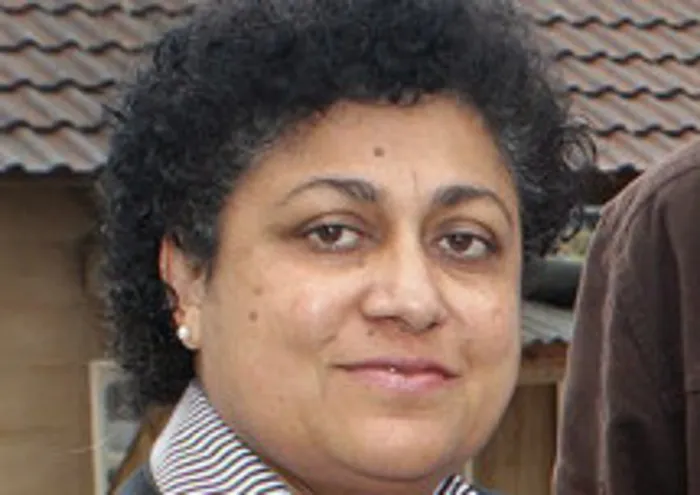
MEC for human settlements Maggie Govender MEC for human settlements Maggie Govender
Zohra MoHamed Teke
KwaZulu-Natal Human Settlements MEC, Maggie Govender, has called for urgent action to unlock land for housing in the province, saying the housing backlog has become a “bottomless well”.
Speaking to the Daily News, Govender said KZN’s housing backlog, which exceeds 900 000, was unlikely to change until more land was found for development.
“As a department we’ve built more than 15 000 houses in the past financial year and have 47 000 in various stages of construction, but that is not enough to meet the backlog, which will continue to grow.
“We are in the process of establishing a provincial needs database, which pinpoints exactly where the housing needs are, because we don’t have that at the moment.
“People don’t know when they will qualify for a house, which means a person can die before they qualify… With the new programme we will ask people where they want their house, and they will then be given a number so that they can track the progress of the development in that area.
“But for this to work, we are screaming for more land,” said Govender, adding that, under the new plans, the elderly and child-headed households will be given priority for home ownership.
Govender has also called for a review of government’s billion-rand housing guarantee policy, introduced last year to allow middle income earners easier access to bank mortgages.
“As KZN we are going to submit a list of changes at a meeting this month that we would like to see for this policy to work, because it’s not working.
“We currently have 700 000 people who are middle income earners in KZN, and the difficulty with the current policy is that they have to raise money for a deposit and must be credit-worthy.
“In addition, banks are obviously reluctant to take the risk because, under the agreement with the banks, the house cannot be sold for the first three years and if the homeowner defaults on payment, then the house will come back to government as the first beneficiary. So this needs to change,” Govender said.
Some of the other changes to be tabled include a higher threshold for middle income earners accessing the new subsidy to be increased to R15 000, as opposed to the current limit of R7 100, and that low income housing projects set aside a portion of land for the development of middle income housing.
“The fact is that the current policy is a fertile ground for fraud, because many middle income earners can and do lie about their income just so that they can qualify for low income state housing.
“It’s either that or nothing at all, because they cannot access finance any other way. They cannot save enough for a deposit and, besides this, they are not able to find a house for R350 000, which is their qualifying subsidy with a maximum of R400 000,” added Govender.
To address the problem of land shortages, Govender said projects like Cornubia, which is aimed at housing mixed income earners, will be the way to go.
“We need integrated housing, and should not be promoting economic ghettos, which is what apartheid provided.
“We will never be able to address social challenges if we just stick people out there. You cannot have 5 000 houses stuck in the veld.
“That is economic apartheid. We want to encourage social integration to help build communities, and that is what mixed developments will do,” explained Govender.
Govender’s calls for more land echoes similar calls made by eThekwini City Manager Mike Sutcliffe recently, who reportedly wants Parliament to give municipalities the power to expropriate land for housing, and to force state-owned entities like Eskom to sell their land to municipalities at book value.