

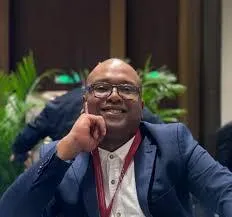
AYANDA MDLULI: The lack of decisive leadership has allowed grassroots movements such as March and March to flourish, which overshadows traditional political parties that seem to be out of touch with the genuine concerns of the electorate
Image: Supplied
One thing is for certain, as South Africa gears up for the 2026 Local Government Elections (LGE), an exciting shift that one cannot escape is happening within our country's political landscape, and I, for one am blessed to witness and document it.
From the outside looking in, the mechanics of traditional governance as we know it are being challenged by a wave of grassroots activism, with protests driving the narrative surrounding critical issues such as immigration, unemployment, and basic service delivery.
And no, these are not multi-million dollar backed NGO's that are servicing an agenda for regime change like we saw during the Zuma years. These are grassroots organisations, led by your next door neighbours who hail from humble beginnings in our townships.
What we are witnessing, particularly in KZN is a transformation in the way citizens engage with politics. Bit by bit, it is becoming evident that our people are no longer passive observers, and many are stepping into the streets to voice their frustrations and demand accountability.
This is good because it means that the machinery is moving and that those who have been elected to positions of power will always be on their toes and do the right thing.
Grassroots organisations such as the March and March movement have illustrated the escalating civic anger that has captured the nation’s attention and has sparked some serious debates about illegal foreigners and where the majority of South Africans fit in, in the broader scheme of things.
Our people, for the most part have largely remained unheard and are tired and fatigued. This was exacerbated by KwaZulu-Natal SAPS Provincial Commissioner, lieutenant general Nhlanhla Mkhwanazi who dropped a bombshell and revealed that our country was being run by drug and criminal syndicates who have certain politicians in their pockets.
This revelation confirmed what many already knew because the experiences of black South Africans in the township is an intrinsic reflection of that reality.
We do not even have to go very far, we can start right here at home: All over Durban, in our townships from Inanda, Ntuzuma, Kwa-Mashu, Phoneix , Chatsworth, Wentworth, Umlazi, Lamontville, Chesterville, Clermont etc, our youth are being plied with drugs, alcohol and all manners of debauchery.
They have no jobs and no prospects and many of them end up on Moore road as statistics and addicts whose sole purpose is to fatten the pockets of the criminal syndicates that are running the show.
Our people are fatigued by the status quo and governance failures can no longer be tolerated which is why communities are mobilising to express their disenchantment directly.
On this topic, my intellectual assertion is this: The lack of decisive leadership has allowed grassroots movements such as March and March to flourish, which overshadows traditional political parties that seem to be out of touch with the genuine concerns of the electorate.
The urgent call for attention is further exacerbated by growing anxieties surrounding safety and justice. Insights from the Madlanga Commission of Inquiry and the Parliamentary Ad Hoc Committee have highlighted long-standing fears that the state’s capacity to uphold the law and protect its citizens is rapidly eroding.
In communities grappling with crime and economic marginalisation, citizens are no longer willing to wait for a political savior to materialise, they are taking matters into their own hands, as seen with the recent outburst at Addington Primary in Durban.
Illegal migration in South Africa is a highly divisive issue that now directly affects service delivery for ordinary South Africans. Illegal immigration in our country is characterized by overcrowded clinics, conflicts in informal trading, pressure on housing, lack of access to education and government funding as well as intense competition for limited job opportunities.
It is a bloody competition for resources that has resulted in political rhetoric losing its weight and currency.
Certain key political figures may articulate policy with clarity, but their polished communication skills alone no longer guarantee engagement from the youth or the Black middle class. The electorate is smarter, more sceptical and are demanding tangible outcomes rather than empty promises.
As we approach the elections, key issues of immigration, unemployment, crime, and service delivery are no longer just talking points; they are critical political deal-breakers.
Parties and leaders that underestimate this will continue to score own goals and will find themselves rendered irrelevant by the very streets that once empowered them.
In closing, I want to say that South Africa needs more than voices operating within traditional party structures , it requires an invigorated spirit of activism. This is where figures like Jacinta Ngobese Zuma, become critical in society.
Their activism, which is often grounded in the lived experiences of the communities they represent, fosters engagement and honesty, confronting uncomfortable truths that challenge complacency in civil society and political discourse.
Their ability to call a spade a spade encourages critical conversations that are essential for a vibrant democracy.
With the streets already beginning to decide, the upcoming elections could well redefine the future of the South Africa.