

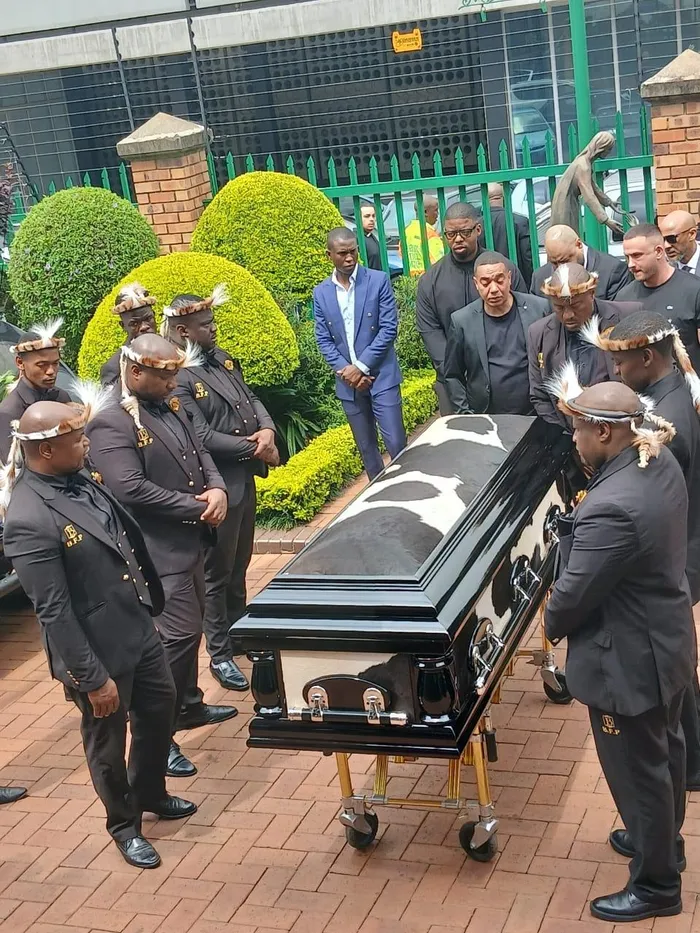
Traditional Zulu customs were observed by DJ Warras’ sons and pallbearers during his funeral in Johannesburg on Tuesday, December 23.
Image: X
DJ Warras’ sons and pallbearers paid cultural homage in traditional Zulu style during his funeral held on Tuesday, December 23, in Johannesburg.
The private service took place at the Immaculate Conception Church in Rosebank, where family members, friends and colleagues from the media and music industries gathered to say their final goodbyes.
The ceremony served as a tribute to the popular broadcaster and DJ, honouring both his roots and life while reflecting a sense of identity and shared mourning.
Warras, born Warrick Stock, was fatally shot last week in the Johannesburg CBD. He was 40-years-old.
One of the most striking moments of the service came as his three sons and the pallbearers entered wearing black suits paired with umqhele, the traditional Zulu headband.
The choice of attire was a deliberate cultural tribute, signalling respect for Warras’ heritage and the traditions that he valued. His casket was also designed in traditional cattle skin, further reinforcing the cultural significance of the farewell.
Warras had strong ties to KwaZulu-Natal (KZN) province. He was born in Durban and spent his formative years in Vryheid in northern KZN, where he attended school.
Despite having a mixed heritage, Warras openly embraced his Zulu lineage. Those close to him have described him as someone who reflected the mixed-race identity common in parts of the province, where cultural roots often include Zulu ancestry.
He was also known for his love of the Zulu language and his ease in moving between cultural spaces.
As a teenager, Warras relocated to Johannesburg, where he went on to build a successful career in radio and television.
He became a familiar voice and face through his work with major stations such as YFM and 5FM. While his professional life was largely based in Johannesburg, he maintained ties with KZN and was also associated with Durban-based Gagasi FM.
The umqhele worn at his funeral carries deep meaning within Zulu and Ndebele cultures.
Traditionally made from animal hide or fur, it symbolises status, cultural pride and identity. Historically worn by men, it continues to be used at important cultural moments, including weddings and funerals.
At his funeral, the umqhele served as a visible reminder of the life that he lived between cultures and the heritage that he chose to honour, even in death.