

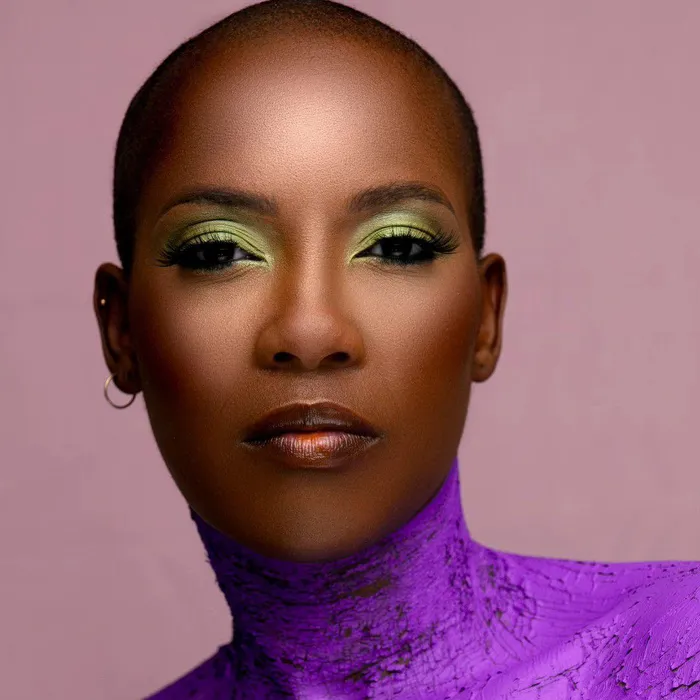
Zamajobe stands among South Africa’s most distinctive and influential musical voices.
Image: Supplied
Zamajobe Sithole, known simply as Zamajobe, is one of South Africa’s most distinctive voices.
Her journey in music began in the township of Vosloorus, where she grew up surrounded by the sounds of community choirs, street melodies and the gospel tradition.
She began singing in her local church choir at the age of nine, an experience that instilled in her discipline, vocal training and an early love for performing in front of audiences.
Her first major mentor was Pastor Benjamin Dube, the acclaimed gospel artist whose influence on her development was profound.
At home, Zamajobe pressed her father for a guitar, and once she got it, she began experimenting with writing her own songs.
The instrument became her creative companion. Her breakthrough moment came when she entered “Idols South Africa” in 2003.
While she did not win, her performances on the show introduced her to a wider audience and made clear that her unique style - blending Afro-jazz, soul and funk - set her apart. Soon after, she began working on her debut album “Ndawo Yami", released in 2004.
The album was a defining moment in her career. “Ndawo Yami” produced hit singles and earned her the Best Newcomer award at the 2005 South African Music Awards (Samas).
It also led to a nomination at the 2005 MTV Europe Music Awards for Best African Act. The record was celebrated for its originality and for the way it captured her fusion of influences while still sounding fresh and authentic.
The success of her debut opened doors both locally and internationally. She went on to release other projects, including “Ndoni Yamanzi”, “Journey 2003” and “Thula Mntwana”.
She performed on stages across SA and abroad, building a reputation for a soothing yet powerful sound that resonated with audiences everywhere.
Despite her success, Zamajobe took a step back from the music scene for a decade, marking a pause that would become the foundation for her new beginning.
For many fans, her absence was felt deeply, but for Zamajobe, this break was about personal growth and preparing for a genuine fresh start.
"I wanted to come back with fresh eyes and fresh energy. I learnt a lot about healing and being intentional. Life is always testing you, but you can channel what you go through into productivity. That is what I did,” she explained.
Her return has been marked by the release of “Umi”, her first album in ten years, and her first independently produced project.
The album has already earned nominations in two categories at the Samas: Best Produced Album and the Best South African Adult Contemporary Album.
For Zamajobe, the project carries echoes of her debut.
“Funny enough, I wanted to model ‘Umi’ on the way I created ‘Ndawo Yami’. Every track on that album was like a different genre put together under one umbrella. I did not want to come back with something completely unfamiliar. ‘Umi’ feels like a modern-day version of ‘Ndawo Yami’,” she explained.
Recording the album was a deliberate process. She chose not to feature collaborations but instead worked with some of SA’s top session musicians, recording much of the material live.
“I worked with some of the best musicians in the country. They played beautifully and did an excellent job. The live recording gave the music an organic feel,” she said.
Returning independently, Zamajobe’s release of 'Umi' is more than a comeback; it underlines a deliberate new beginning in her career.
“It feels great that my comeback is with a nominated album. ‘Umi’ is also the first album that I have put out on my own. It feels like a fresh start, both career-wise and personally. I feel grateful,” she shared.
Beyond the music itself, Zamajobe is focused on growth.
“I would say that I am the same, just a 2.0 version of myself. I am intentionally trying to be more business minded and to grow my brand. I really hope I can execute what I want to achieve and do it well,” she said.
She is also adjusting to the realities of running her own career in a changing music industry. “I am trying to find my way around it. It is no child’s play, but we keep moving,” she said.
Performing remains central to her life as an artist.
“Performing terrifies and excites me at the same time. I wish I could do more and more of it. It is where I feel most alive,” she admitted. She has continued to perform at gigs around the country, and while a full tour has not yet been announced, she is open to the idea.
“People can follow me on social media to see where I will be performing. I would love to put together a tour. Hopefully I can make it happen soon,” she said.
Lutho Pasiya’s pick on songs to check out from “Umi”:
“Nabangani Bakho”: This is a celebration song. It paints the scene of a Saturday gathering filled with joy, inviting you and your friends to join in.
“Inhliziyo Yami”: This is a heartfelt song about heartbreak. It tells the story of someone whose heart is broken - tired of thinking about a lover, tired of calling and realising that the other person no longer shows love.
“Siyajabula”: This is a song of hope and joy.