

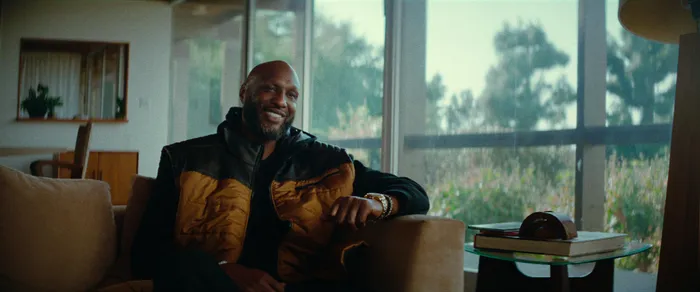
Lamar Odom in 'Untold: The Death & Life of Lamar Odom'.
Image: Courtesy of Netflix © 2026
Why I love documentaries is simple: they dig into stories we think we already know, but then hit us with layers we didn’t even see coming. The ones that make you go, “Wait. So all that actually happened?”, even when you thought you already knew the headlines.
Lamar Odom was once the headline magnet. Even if you only watched "Keeping Up With the Kardashians" at sleepovers, you know the moment his health crisis became global news. He was an NBA champion, a Sixth Man of the Year, and an all‑around court magician.
Then came the world watching him nearly die on that Las Vegas motel floor, battling an overdose that left fans asking the same question: How did we get here?
"Untold: The Death and Life of Lamar Odom" on Netflix doesn’t just repeat the chaos we’ve seen in snippets online or in tabloid teasers. It lets Odom speak candidly.
If you thought the drama was only about his public breakdown, wait until you hear his internal one. Something is striking about watching a man wrestle with his own story, especially when the world had already written its version years ago.
Odom's relationship with Khloé Kardashian was compelling television because it was glamorous and raw. They married “at the drop of a dime”, a phrase that barely does justice to how fast that whirlwind moved.
And yes, on camera, they looked in love, but love and fame are like oil and water on a basketball court: they don’t blend well. The documentary doesn’t shy away from that, and buzzy tea moments - yes - but we get context, not clickbait.
One of the deepest parts of the series is watching Odom confront addiction, uncertainty and identity loss. You know when someone says, “I lost myself”? This is the literal embodiment of that. The narrative isn’t simplified into “star falls, star gets up.”
It’s human. It’s what happens when the whole world thinks your life is solved simply because it was successful.
What makes documentary disproportionately vital as a piece of storytelling is its refusal to sanitise or evade the uncomfortable truths. Odom speaks about his addiction, his infidelity, and the ways he hurt people closest to him.
This honesty forces viewers to grapple with the human consequences of fame; success doesn’t shield anyone from vulnerability or poor choices.
Odom seems to touch on the narrative of fame, and it often overlooks the inner fractures that accompany public success. It’s an unfiltered examination of a man wrestling with his own demons and the consequences that surfaced when his internal struggles collided with global visibility.
Addiction, especially amid celebrity, has a way of blurring lines between persona and person. The world saw Odom’s talent and his relationships, but few saw the questions he asked himself quietly at night.
Who am I beyond the achievements? What am I running from? The documentary confronts these questions directly. There’s an honesty in seeing Odom acknowledge infidelity, insecurity, and emotional fragmentation not as plot points, but as real‑world human consequences.
Kardashian's participation in the film adds another layer of complexity. She revisits moments of care and conflict not for drama, but to contextualise the lived experience of loving someone at odds with themselves.
Her perspective and experience show viewers that addiction and pain do not exist in isolation; they shape the lives of partners, families and friends who are too often left to reconcile public perception with private reality.
"Untold: The Death and Life of Lamar Odom" goes beyond the near-death moment to show how fame and success can hide deep personal struggles. It asks viewers to look past the highlight reels and headlines and see the human behind the story.
Odom's journey reminds us that even celebrities face vulnerability, doubt, and mistakes, and true courage comes from confronting those flaws honestly.
Rating: *** solid and enjoyable, though not groundbreaking.