

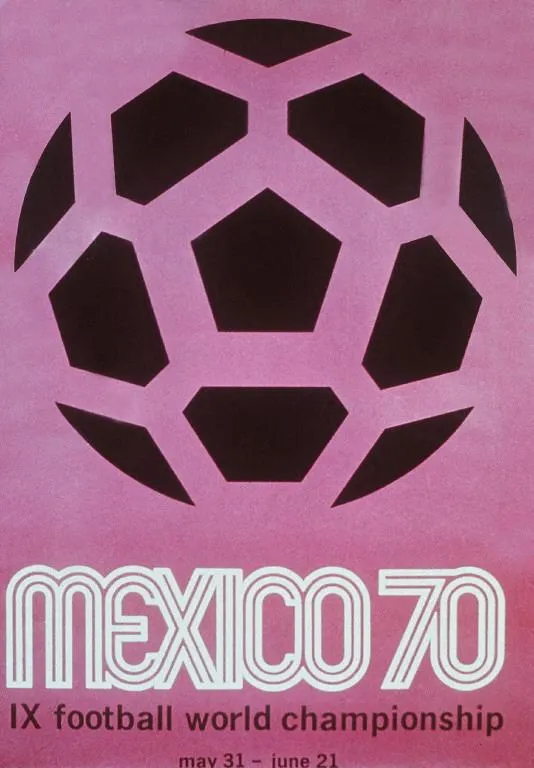
The Fifa World Cup in 1970 was arguably the dawn of modern football. Photo: AFP
Image: AFP
The 1970 showpiece event held in Mexico was arguably the dawn of modern football.
Fifa introduced yellow and red cards, alongside the use of substitutes. Although aggressive defensive play remained, gone were the days of unvetted rough play, with a strict interpretation of the rules applied. It ensured a more attacking mindset from teams, and a tournament where not one player was sent off.
Adidas designed and introduced the now-iconic 32-panel black and white Telstar ball as the official World Cup ball, which was easier to follow on TVs of the day. It was named after the satellite — which had a similar appearance — that was the first active communication array capable of sending live TV signals, telephone calls and faxes through space.
That advancement ensured that the 1970 edition was seen by more countries and people than ever before, with some even receiving colour broadcasts.
Just as revolutionary, albeit on the pitch, were the Brazil team that contested the World Cup. They won all of their qualifying matches, and then all six of their World Cup matches. Captained by the legendary Carlos Alberto, they are widely considered one of the greatest teams to ever play the beautiful game.
From hereon, Africa were assured a spot in the Finals after boycotting the 1966 event. With all continents represented, this was arguably the first truly global World Cup.
Africa: Morocco
Asia: Israel
Europe: Belgium, Bulgaria, Czechoslovakia, England, Italy, Romania, Soviet Union, Sweden, West Germany
North America: El Salvador, Mexico
South America: Brazil, Peru, Uruguay
Five stadiums were selected to host the World Cup, including the mammoth 107 000-seater Estadio Azteca. Held from late May to late June, the host cities were characterised by searing heat and high altitude, with many pundits believing it would stifle attacking flair and play. Although previous World Cups had seen more goals, the 1970 average of 2.97 goals per match remains higher than any subsequent tournament.
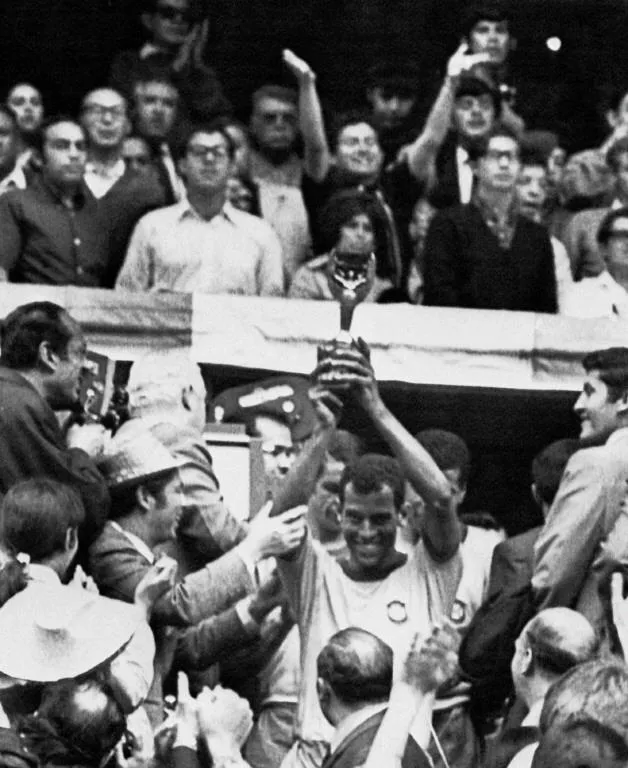
Brazilian captain and defender Carlos Alberto holds aloft the Jules Rimet Cup. Brazil were the last team to win the trophy. Photo: AFP
Image: AFP
By now, Fifa had locked into a familiar format with four groups of four teams playing each other once. The top two teams progressed to the knockout stages of the tournament. In Group 1, neither points nor goal difference could separate the Soviet Union and Mexico, resulting in the former winning their pool by drawing lots.
Brazil started the tournament as clear favourites, and with a team consisting of Pelé, Carlos Alberto, Jairzinho, Tostão, Rivelino, Gérson, Clodoaldo, and goalkeeper Félix, it is not hard to see why. Due to the new, stricter rules, playmakers — such as Pelé, who had been targeted in the two previous editions and played limited game time — were afforded a bit more freedom to play attacking football.
The Brazilians dominated their group, even dispatching defending champions England 1-0 in a highly anticipated encounter. Speaking of England, their legendary captain, Bobby Moore, had been arrested days before the start of the tournament and detained in Colombia, allegedly for the theft of a bracelet in Bogotá.
He was released and warmly welcomed by his team in Mexico, leading them in their opening match victory over Romania. Moore would eventually be exonerated in 1972, with the case considered an attempt at extortion.
Moore was largely praised for his performances in Mexico, but it was not enough to get England past the quarter-finals, where they lost to West Germany.
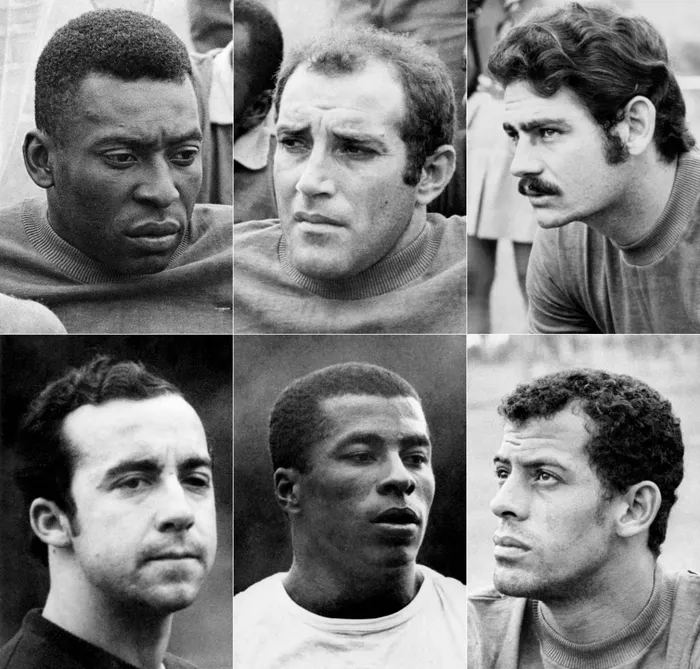
The legends of Brazil's 1970's World Cup winning team. From top left, Pele, Gerson, Rivelino, Tostao and Jaïrzinho. Photo: AFP
Image: AFP
Quarter-finals: Soviet Union 0, Uruguay 1; Brazil 4, Peru 2; Italy 4, Mexico 1; West Germany 3, England 2
Semi-finals: Uruguay 1, Brazil 3; Italy 4, West Germany 3
West Germany won the third-place play-off 1-0.
The semi-final between Italy and West Germany, eventually won by the former, is often considered the "Game of the Century". Locked at 1-1 at the end of regular time, the teams scored five more times in extra-time.
The Azzurri took the lead twice during that period, with the Germans equalising on both occasions. It took a 111th-minute goal from Gianni Rivera to seal the 4-3 victory.
Brazil, meanwhile, brushed aside defending champions England and South American champions Uruguay on their way to the final. They then humbled Italy — a former two-time champion — 4-1 in the final. Pelé cemented his status during the event as one of the greatest to ever play the game, while teammate Jairzinho, "The Hurricane", scored in all seven games he played — the only player still to do so.
The Jules Rimet Trophy was retired after this event and gifted to Brazil in perpetuity. The following World Cup in 1974 would see the first usage of the originally named, yet iconic, Fifa World Cup Trophy.