
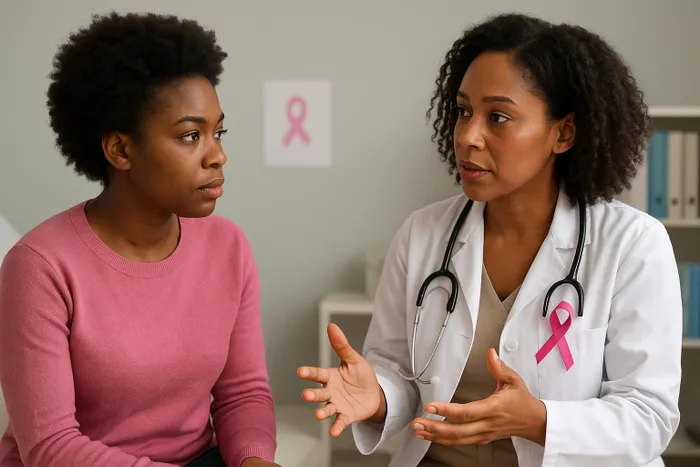
The focus must be on early detection and early prevention.
Image: Gerry Cupido / ChatGPT AI
As October, Breast Cancer Awareness Month, comes to an end, it is vital to remember to continue shedding a spotlight on an illness that affects so many women, and a subject that shouldn't be highlighted in just one month.
To this end, I recently had an essential conversation with Dr Kristen Barnes, a dedicated General Practitioner, about the critical topic of breast cancer awareness.
The core of our discussion was to address the persistent misconceptions about breast cancer and emphasise why early awareness is vital for all women.
Dr Barnes immediately stressed a crucial point: breast cancer is not exclusive to menopausal or older women; it can happen at any age.
That's why the focus must be on early detection and early prevention.
She states that this is: "actually what saves you if you are unfortunately diagnosed with this cancer. The earlier we catch it, the earlier we can treat it.".
She explained that the moment a girl hits puberty and her menstrual cycle begins, she is exposed to the rising and falling levels of estrogen and other hormones that can stimulate cancer cell growth.
Essentially, any girl with developing breast tissue is at potential risk.
The risk is significantly higher if there’s a strong family history, whether it’s your mother, aunt, or grandmother.
For this reason, Dr Barnes urges young women to start self-checking their breasts early, becoming familiar with what's normal for them.
She cited the youngest patient she has personally seen was 23 years old, who was fortunate to have a strong family pushing for regular check-ups.
Another significant misconception she pointed out is that men cannot get breast cancer.
This is false, as men possess the same breast tissue as women and are susceptible to hormone-receptor breast cancer.
Unfortunately, due to the stigma and the belief that it’s a “woman’s disease,” it is often picked up too late in male patients.

Women fear the worst.
Image: Michelle Leman / Pexels
When I asked Dr Barnes why women, particularly younger ones, often put off screening, she offered two insightful reasons.
First, she acknowledged that the mammogram process is generally unpleasant.
It's uncomfortable, sometimes painful due to the breast compression, and involves vulnerability.
Second, she noted that many women engage in a form of denial: the fear of "What if they do find something?" is so strong that it becomes easier to "stick your head in the sand and just hope it all goes away," rather than confronting the potential reality.
Dr Barnes did offer reassurance about the screening process itself, especially for those with smaller breasts.
The mammogram plates come in many different sizes, meaning breast size doesn't prevent an effective screening.
In cases where the mammogram is inconclusive due to dense breast tissue, an ultrasound can be performed to check for any lumps.
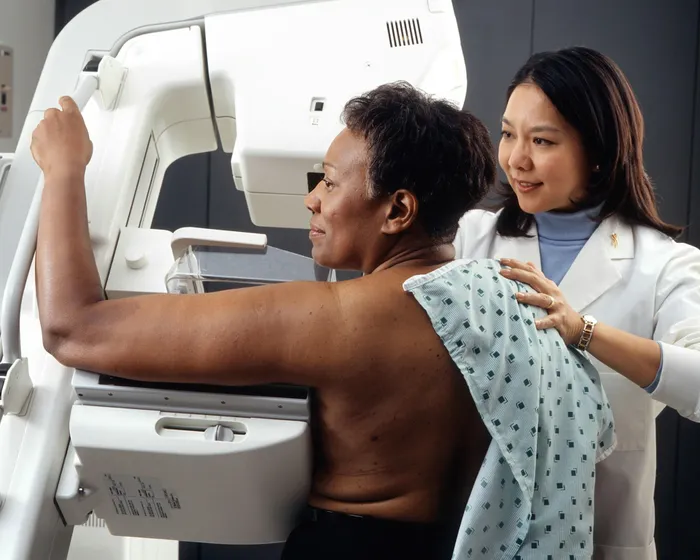
The mammogram plates come in many different sizes, meaning breast size doesn't prevent an effective screening.
Image: National Cancer Institute / Unsplash
I shared the story of my 12-year-old daughter feeling a lump, which Dr Barnes gently explained is often a normal hormonal response to the menstrual cycle, causing temporary nodules or tenderness.
However, she always advises getting any lump checked out to be sure.
On the question of avoiding cancer, she was clear: while a healthy lifestyle (diet, exercise, minimal alcohol or smoking) will reduce your general risk, it cannot guarantee prevention.
Especially if you carry the BRCA1 or BRCA2 genes, your chances are significantly higher regardless of how healthy you live.
Early detection is crucial in combating a genetic predisposition.

All women should take control of their health and remove the stigma around breast cancer.
Image: Freepik
Dr Barnes's overarching advice to all women is to take control of their health and remove the stigma around breast cancer.
She advises that a quick self-check once a month in the shower is essential for knowing what's normal for you.
If you find anything concerning, see your GP or clinic sister immediately.
The first line of medical investigation after finding a concern is a biopsy to determine the specific type of breast cancer, as there are many variations.
Dr Barnes emphasised that treatment has advanced so much that it doesn't always lead to an immediate mastectomy: "The radiation therapies and the chemotherapies have come such a long way that you don’t have to go to the extremes anymore.".
Finally, she reinforced that the process of getting screened has improved, and it's not the uncomfortable ordeal it once was.
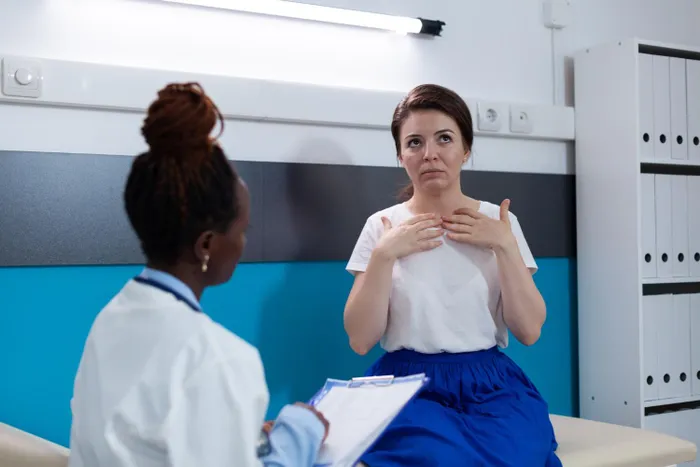
It's essential to see a doctor as soon as you find anything unusual in your breasts.
Image: Pexels
While it might not be on the topic of breast cancer, she also stressed the importance of regular screening, noting that a Pap smear should also be done every three years if everything is clear.
Being open about these health issues with daughters who are becoming sexually active is critical for early prevention and intervention.
People need to continue having conversations about breast cancer and their examination experiences until it becomes a less scary topic.