


AI cannot interpret factors like blood pressure trends, cholesterol profiles, or prediabetes risks.
Image: Freepik
In the not-so-distant past, any mysterious ache or unexplained rash would lead us straight to "Doctor Google."
We’ve all been there: you type in a mild cough and, three clicks later, you’re convinced you have a rare, tropical disease.
It was the era of digital hypochondria, where search results often led to more panic than peace of mind.
Today, consultations have shifted from search bars to sophisticated AI tools like ChatGPT.

People have now turned to AI tools for answers.
Image: Freepik
With their calm, authoritative tone and ability to process vast amounts of data in seconds, it’s tempting to treat these bots as a pocket-sized medical specialist.
However, the tech giants themselves are urging caution.Google recently made headlines by removing several AI-generated health summaries from its search results after investigations revealed inaccuracies in its responses.
Even OpenAI, the creator of ChatGPT, includes a firm disclaimer at the bottom of medical-related interactions: "ChatGPT can make mistakes. Check important info. This tool is not intended for medical diagnosis or treatment."
As Dr Jess Morris, a General Practitioner at Mediclinic Morningside, explains, while AI is an incredible starting point for gathering general information, it lacks the human "puzzle-solving" ability required for a real diagnosis.
The primary risk of relying on AI isn’t just getting the wrong answer; it’s getting a "false okay."
AI cannot interpret factors like blood pressure trends, cholesterol profiles, or prediabetes risks in the personalised way a healthcare specialist can.
“In some cases, this can cause unnecessary stress, but in others it can create false reassurance, delaying professional care when early intervention could make a critical difference,” says Dr Morris.
Here are three common health questions that "Dr AI" simply cannot answer with the necessary nuance:
Do I have high blood pressure?
The "silent killer" remains one of the hardest conditions to self-diagnose via a chatbot. Hypertension often lacks any obvious symptoms until it reaches a dangerous level.
“By the time symptoms such as chest pain, blurred vision or anxiety appear, a person may already be experiencing a hypertensive crisis,” Dr Morris explains.
“A single reading, or an online reference range, cannot show how blood pressure behaves over time or during sleep, nor can it reflect an individual’s risk of stroke or heart disease.”
The fix: Dr Morris recommends professional 24-hour blood pressure monitoring at least twice a year to see the full picture.
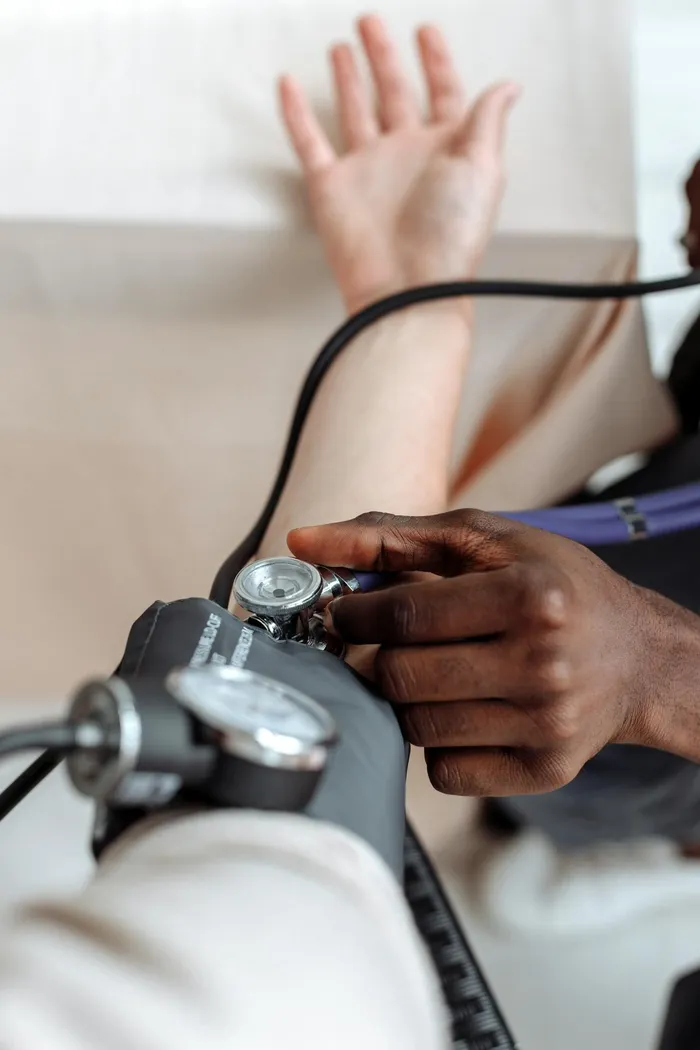
Dr Morris recommends professional 24-hour blood pressure monitoring at least twice a year to see the full picture.
Image: Thirdman / Pexels
Should I worry about my cholesterol level?"
An AI can tell you what a "normal" range looks like on paper, but it doesn’t know you.
It cannot assess how your levels interact with your specific family history or lifestyle.
“Many people with abnormal lipid levels feel perfectly well until they experience a heart attack or stroke,” notes Dr Morris.
Doctors look at your results alongside your weight, age, and other conditions like diabetes to decide if you need a salad or a prescription.
The fix: If you have a family history of heart issues, start screening at 16. Otherwise, annual checks from age 30 are a must.
Am I prediabetic?
"Prediabetes is a grey area where AI often trips up. Slightly high blood sugar doesn’t guarantee you’ll develop diabetes, but it’s not a "safe" zone either.
“Prediabetes often has no symptoms and is typically identified through screening tests such as HbA1C, which reflects blood sugar levels over several months rather than at a single point in time,” says Dr Morris.
Clinicians must weigh these results against weight changes and activity levels to create a plan that could actually reverse the condition.
AI is a brilliant tool for understanding terms or learning how a specific medication works in theory.
It adds value by helping you frame better questions for your doctor, but it cannot replace clinical judgment.
“Medical test results are pieces of a larger puzzle, not definitive answers in isolation,” Dr Morris concludes.
“When it comes to understanding your health, there is no shortcut that replaces a conversation with a qualified healthcare professional who can consider the full context and guide you towards appropriate care.”