

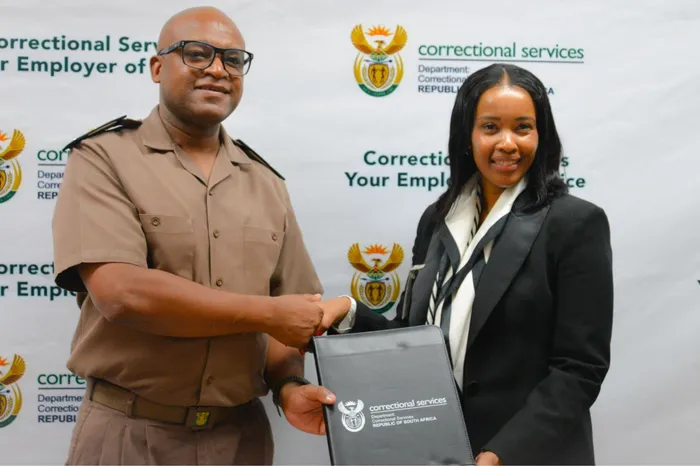
A Memorandum of Agreement was signed to strengthen skills and knowledge among correctional healthcare professionals.
Image: Supplied.
In a landmark move for public health and social justice, Johnson & Johnson Innovative Medicine has officially joined forces with the Department of Correctional Services (DCS) to transform mental health care within South Africa’s correctional facilities.
The two entities recently signed a Memorandum of Agreement (MoA) aimed at upskilling healthcare professionals who operate on the front lines of the prison system.
The goal is to ensure that incarcerated individuals receive the mental health support they need to successfully reintegrate into society.
The announcement follows a briefing from the Department of Health to the Committee, which exposed the severe infrastructure and capacity constraints currently straining the state's resources.
While legislative frameworks exist to manage state patients, individuals who have been found unfit to stand trial or not criminally responsible due to mental illness, the system is currently under immense strain.
The department reported that:
3,450 state patients are currently accommodated in 14 psychiatric facilities.
437 state patients remain trapped in correctional centres due to limited capacity and infrastructure constraints.
A growing backlog in forensic assessments continues to delay justice and treatment.
Committee members have raised serious concerns regarding these findings, describing the continued detention of state patients in prisons as unconstitutional and inhumane.
While the DCS cited funding and human resource limitations as primary hurdles, the Committee has called for urgent, coordinated, and time-bound interventions to resolve the crisis.
The mental health burden within the correctional system is a quiet but persistent crisis. Research indicates that the environment of incarceration often exacerbates existing conditions or triggers new ones.
Over one-third of incarcerated individuals in South Africa experience symptoms of anxiety and depression.
Reincarceration rates in the country sit at approximately 32%.
Untreated mental health conditions significantly increase the likelihood of reoffending, as undiagnosed needs undermine rehabilitation efforts.
By targeting the on-the-ground capability of healthcare providers, this partnership seeks to break this cycle, moving away from mere containment and toward genuine recovery.
The partnership focuses on clinical confidence and best-practice standards. Johnson & Johnson will leverage its global expertise to help develop and deliver training programs specifically tailored for the unique challenges of the correctional environment.
“This initiative reflects our longstanding commitment to addressing unmet mental health needs and supporting more equitable access to quality care,” said Asgar Rangoonwala, senior vice president at Johnson & Johnson EMEA Emerging Markets.
The training will focus on three core pillars:
For Johnson & Johnson, this MoA is an extension of its Credo-driven commitment to advancing health equity.
Vulnerable populations, including those in the justice system, often face the steepest barriers to specialist care.
“People in correctional settings often experience a disproportionate burden of mental health challenges, which can be further exacerbated by incarceration,” Rangoonwala added.
“By supporting healthcare professionals with targeted training and education, we aim to help strengthen the system’s ability to respond to these needs with dignity, respect and clinical excellence.”
The ripple effects of this initiative extend far beyond prison walls. Better mental health care leads to:
Higher success rates for internal programs.
Individuals returning to their communities with better coping mechanisms.
Reducing the long-term burden on the broader South African healthcare system.
The collaboration marks a significant step toward a more sustainable, system-level solution to one of South Africa’s most complex health challenges.