

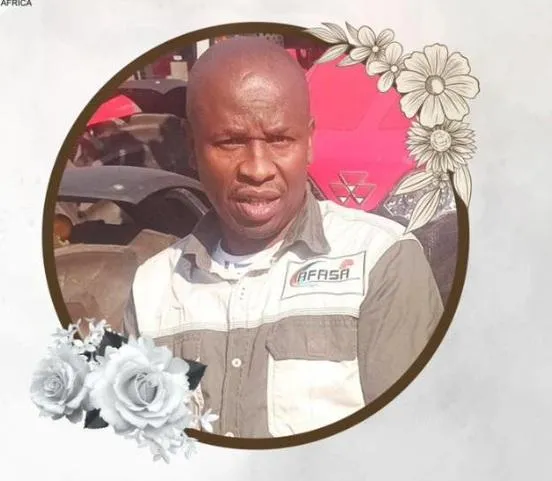
African Farmers’ Association of South Africa (AFASA) KZN chairperson Mbongeni Skhakhane was shot dead at his home on December 26.
Image: KZN Department of Agriculture and Rural Development / Facebook
The African Farmers’ Association of South Africa (AFASA) says black farmers are facing increasing and heightened risks linked to crime and is demanding a coordinated national response to tackle rural safety.
It was commenting after the murder of its KwaZulu-Natal chairperson Mbongeni Skhakhane. He was shot dead at his home on the evening of December 26.
“This tragedy comes at a time when families across the country are on holiday, enjoying a welcome rest from the toil of their endeavours throughout the year,” AFASA said.
“Farmers, however, do not enjoy this benefit. They continue to labour tirelessly to ensure that food is available for all the festivities and year-end celebrations.”
AFASA argued that the killing of a farmer has consequences far beyond the immediate loss of life. “The loss of another farmer is devastating because it robs the country of one more soldier in the fight against food insecurity,” the organisation stated.
A central theme of AFASA’s response is its rejection of what it calls a “dangerous narrative” around farm attacks in South Africa.
“There is a dangerous narrative that only white commercial farmers suffer this scourge,” AFASA said. “This narrative is misleading and harmful. Farm killings do not discriminate by race, colour, or scale of operation.”
The organisation stressed that black farmers, particularly smallholder and emerging farmers are often less visible in public debates, yet face heightened risk due to limited resources. “Black farmers, especially developing farmers, are among the worst affected because they lack the resources to secure their farms and protect themselves,” the statement said.
AFASA linked this vulnerability directly to broader national concerns. “Unlike large commercial operations, many smallholder and emerging farmers lack the financial resources, infrastructure, and private security capacity to protect themselves, their families, and their farms,” it said, warning that this exposure “threaten[s] both their livelihoods and national food security.”
Citing crime statistics showing 188 farm attacks and 34 murders in 2024, with additional attacks and killings already reported in early 2025, AFASA described farm killings as “a national crisis that demands urgent intervention.”
The organisation called on the South African Police Service to act decisively. “AFASA strongly condemns this senseless and cowardly act of violence and calls upon the South African Police Service to leave no stone unturned in their investigation, ensuring that those responsible are swiftly apprehended and brought to justice.”
Beyond policing individual cases, AFASA is demanding a coordinated national response. Its proposals include increased rural policing, dedicated rural safety units, the deployment of modern surveillance technologies, and “a coordinated national plan to prevent and stop farm killings, recognising them as a threat to food security and rural development.”
The organisation has also urged political leadership at the highest level to intervene. The organisation called on the Minister of Agriculture, John Steenhuisen, to engage urgently with the Minister of Police and other state agencies to implement such a plan “without delay.”
AFASA President AJ Mthembu and the National Executive Committee expressed their condolences to the Skhakhane family and the wider community, urging members to remain united.
“We hope this loss will not be in vain but will create serious awareness and ignite determined action from both the public and government to address this crisis,” the organisation said.
AFASA noted that Skhakhane was not only widely respected in KwaZulu-Natal, but his influence extended well beyond provincial boundaries. He served for many years as the organisation’s provincial chairperson and was a member of the AFASA National Executive Committee, where he was involved in shaping strategies to advance developing farmers nationally.
It highlighted his significant role in strengthening cooperation between farmers and the state, especially in KwaZulu-Natal. He worked closely with the provincial Department of Agriculture and Rural Development (DARD) and was instrumental in mobilising government support for farmer training initiatives and conference participation.
The KZN DARD also paid tribute to Skhakhane and said he will be remembered for his dedication to improving lives through farming and agricultural development.
“Our heartfelt condolences go to his family and loved ones during this difficult time.”