

Yusuf Moolla
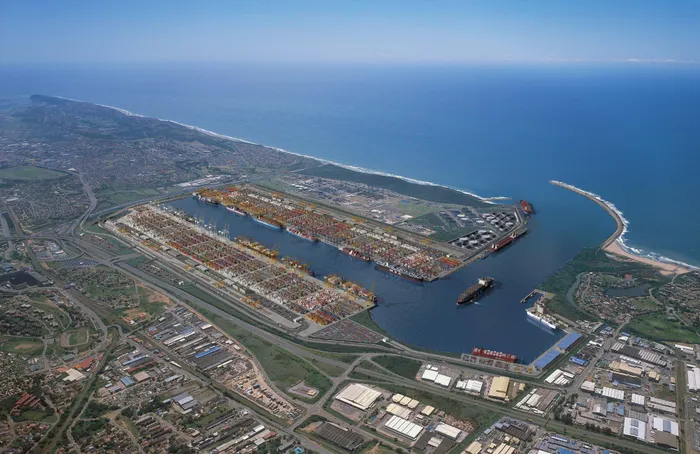
Transnet has put forward a budget of R1.5 billion to buy the old Durban International Airport site, which would then be transformed into a container port.
Transnet chief executive Brian Molefe said a budget of R1.5bn was available to buy the 600ha site, but he hoped it would cost much less than that.
He said the land was still owned by the Airports Company South Africa (Acsa).
Making a presentation to the parliamentary portfolio committee on public enterprises yesterday, Molefe said the initial cost for the first phase of the project would be about R50bn.
The airport would be dug out and equipped with 16 container berths, five automotive berths and four bulk liquid berths, he reported to MPs.
Acsa spokesman Solomon Makgale said the company recognised that the airport land was of strategic importance and had the potential to unlock economic value for KwaZulu-Natal and the country.
“It is with this understanding that Acsa agreed to engage Transnet with a view to selling the land. The intention is to sell a portion to satisfy Transnet’s requirements, leaving the remainder to be developed as part of Acsa’s property portfolio.”
Makgale would not be drawn on the details of the negotiations, but said these were ongoing with Transnet and other interested parties.
He added that it would not be appropriate to release the names of the parties Acsa was in discussions with at this stage.
In March this year, Transnet was only prepared to pay R1bn for the site, half the amount Acsa wanted, sources close to the matter had said.
Makgale said last night there had been speculation regarding the amount Acsa wanted for the land.
“We have conducted a valuation of the property, but it wouldn’t be prudent to share that publicly, as we are still engaged in negotiations,” he said.
According to Transnet, construction on the first phase of development would need to start by 2015 to be ready in 2019, when the current Durban port was expected to reach its capacity, based on forecasts of container traffic growth.
Following completion of the first phase, at least R100bn would be invested in the site’s development over the long term.