

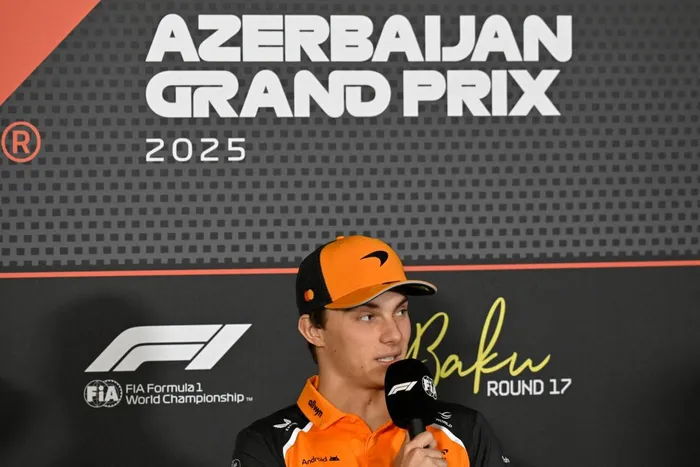
McLaren, with Oscar Piastri currently also leading the world drivers' championship, have soared to the top in 2025, but 2026’s sweeping regulation changes will test whether the team can translate their momentum into a new era of Formula 1. | AFP
Image: AFP
McLaren have been riding a wave of success in the 2025 Formula 1 season, establishing themselves as the team to beat after years of playing catch-up to Red Bull and Mercedes.
Their resurgence has been nothing short of remarkable, driven by clever car development, a strong driver pairing, and sharp execution on race weekends.
But as whispers around the paddock remind us, the sport never stands still.
With sweeping regulation changes looming in 2026, many are asking the uncomfortable question: can McLaren’s current dominance realistically carry into the new era, or is this their moment to cash in before the reset button is pressed?
The challenge is clear. 2026 represents one of the most significant overhauls in Formula 1’s modern history. The FIA is introducing a new generation of cars that will be lighter, smaller, and more aerodynamically efficient.
At the same time, a new power unit formula is being rolled out, prioritising sustainability and efficiency. Current hybrid systems, introduced in 2014, will evolve into power units with a 50/50 balance between internal combustion and electrical power.
Teams will have to grapple with vastly different packaging demands, cooling requirements, and integration challenges between chassis and engine.
For McLaren, the timing is both exciting and daunting. On the one hand, they have momentum: the technical department under Andrea Stella has shown an ability to develop at pace, and the synergy between Lando Norris and Oscar Piastri has given them stability in the cockpit.
On the other hand, history suggests that regulation resets often reshuffle the competitive order. Just look at 2014, when Mercedes surged ahead thanks to its pioneering hybrid engine, or 2022, when Red Bull capitalised on ground-effect regulations better than anyone else.
The key question is whether McLaren’s current trajectory positions them well to adapt. Their partnership with Mercedes for power units is secure through the new rules, but the reliance on a supplier rather than being a works team could put them at a disadvantage if factory outfits such as Ferrari, Mercedes, or even Audi (entering in 2026) find breakthrough solutions.
Aerodynamically, McLaren have found a sweet spot with the current ground-effect cars, but the 2026 rules will reduce downforce levels and shift the emphasis towards efficiency and drag reduction.
That means much of the intellectual property gained in 2025 may not directly translate. Still, there are reasons for optimism. McLaren have invested heavily in infrastructure, with their new wind tunnel and simulator facilities already paying dividends.
These tools will be vital as they prepare for the new era. Moreover, stability in management and the driver line-up could provide the continuity needed to weather the storm of regulation changes.
The lesson from Formula 1’s history, however, is clear: enjoy dominance while it lasts, because resets rarely allow dynasties to carry over unchallenged. McLaren may well be able to fight at the front again in 2026, but the scale of change means nothing is guaranteed.
For now, fans in papaya should revel in 2025’s success — because the sands of Formula 1 are always shifting.