

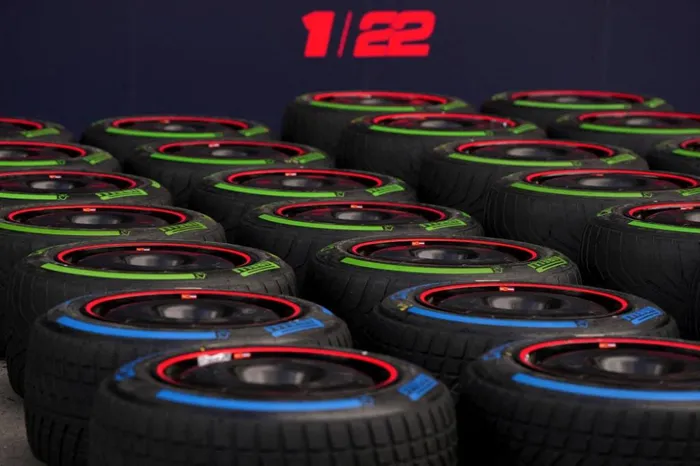
Formula One has cancelled a key Pirelli tyre test in Bahrain following missile strikes in the region. Photo: AFP
Image: AFP
A scheduled pre-season tyre test at the Formula One venue in Sakhir was abruptly cancelled after missile strikes in the region raised immediate safety concerns.
The two-day program, due to take place at the Bahrain International Circuit, was called off following escalating military activity nearby. While all personnel were reported safe, the decision was taken swiftly as a precautionary measure, prioritising the wellbeing of team members, engineers and tyre supplier staff over valuable track time.
The cancelled session was a crucial development test for Pirelli, Formula 1’s sole tyre supplier. With sweeping regulation changes coming into force next season, tyre construction and compound behaviour are more critical than ever.
Testing allows Pirelli to gather real-world data on wear rates, thermal degradation, load sensitivity and performance consistency under different fuel loads and track conditions. That information feeds directly into the compounds teams will race on throughout the year.
Without that mileage, the sport loses an important layer of preparation. Teams will head into upcoming rounds with less understanding of how tyres will respond under race simulations, particularly in high-temperature environments similar to Bahrain.
Limited data increases uncertainty around strategy, stint length and degradation curves. While F1 teams are well equipped with simulators and historical data, nothing fully replaces live track running.
The result could be more conservative strategy calls early in the season, or conversely, unpredictable tyre performance that shakes up the competitive order.
The cancellation inevitably casts a shadow over the Middle Eastern leg of the calendar. The Bahrain GP and the Saudi Arabian GP remain scheduled, but heightened tensions place them under close review by the FIA and commercial rights holders.
Formula 1 has raced in the region for years and has contingency planning in place, yet geopolitical instability introduces logistical and security challenges that cannot be ignored. If those races were to be cancelled, the implications would be significant.
Financially, host venues invest heavily in staging grands prix, and contracts typically span multiple years. Cancellation could trigger renegotiations, insurance claims and complex commercial discussions.
For teams, it would reduce the total number of championship rounds, potentially altering title dynamics. A shortened calendar places greater weight on every remaining race, amplifying the impact of reliability issues or driver errors.
There is also the broader sporting narrative. Middle Eastern events have become cornerstone fixtures in modern Formula 1, often delivering night races and dramatic backdrops that define the early season. Removing them would reshape the flow of the championship and compress travel schedules elsewhere.
For now, the immediate concern remains safety. The tyre test cancellation serves as a reminder that global sport does not operate in isolation but rather to subject to geopolitical factors, like everyone else.
Jehran Naidoo is sports reporter with focus on motorsport for Independent Media and editor of the social media channel The Clutch