
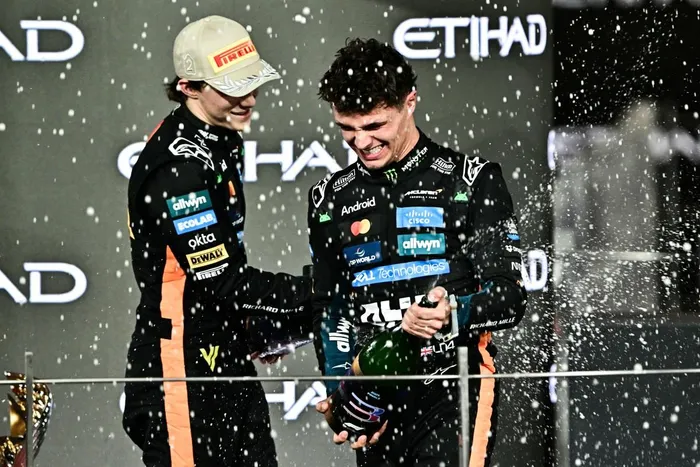
The was tension between Oscar Piastri and Lando Norris during their fight for the F1 title.
Image: AFP
The new season of Formula 1: Drive to Survive has shone a harsh spotlight on the speculative tension simmering inside McLaren during the 2025 campaign.
While CEO Zak Brown consistently wore a polished smile for the cameras, Netflix’s producers peeled back the glossy papaya paint to reveal something far more uncomfortable.
Behind the carefully rehearsed lines about unity and shared ambition was a team wrestling with a problem most would envy: two drivers capable of winning, and no clear plan for how to manage them.
The tension inside "Camp Papaya" became increasingly awkward, particularly for Oscar Piastri. The series subtly suggests that he was not entirely central to the original long-term narrative; he simply arrived, put his head down, and started winning.
That is where the so-called "Papaya Rules" began to cost more than just points. On weekends when Lando Norris outperformed his team-mate, the energy in the McLaren garage felt relaxed, almost celebratory.
But when Piastri flipped the script, the cameras caught something else: clipped smiles, forced applause, and a visible shift in body language from Brown and senior management. It was not overt hostility, but it was telling.
Brown maintains that McLaren always wanted two drivers fighting for the championship. In theory, that sounds ideal; in reality, it is chaotic. Managing two elite competitors in equal machinery is never clean. It demands ruthless clarity, emotional intelligence and, at times, uncomfortable decisions. Drive to Survive shows just how messy it can become behind the scenes.
As the season intensified and the championship battle tightened, Piastri at times walked away from media duties, declining interviews in moments where the atmosphere felt thick with politics. For a young driver still carving out his place in Formula 1, that silence spoke volumes. It was less about petulance and more about a competitor unwilling to play games when the stakes were rising.
There is no secret about Piastri’s ability. The young Australian has the composure, race craft and mental steel of a future world champion. He does not rattle easily. He does not overplay his hand. He simply delivers.
If I am being honest, I would love to see him lift the trophy this season. But here lies the dilemma: if McLaren cannot decisively back one driver when the pressure peaks, they risk losing both. Harmony is admirable, yet championships are often won through hierarchy. The sport’s history is filled with examples where clarity of leadership defined eras.
If "Papaya Rules" remain a balancing act rather than a strategy, Piastri may eventually decide his future lies elsewhere. A driver of his calibre belongs at the helm of one of the "Big Four", winning races for a team prepared to prioritise him when it matters most.