

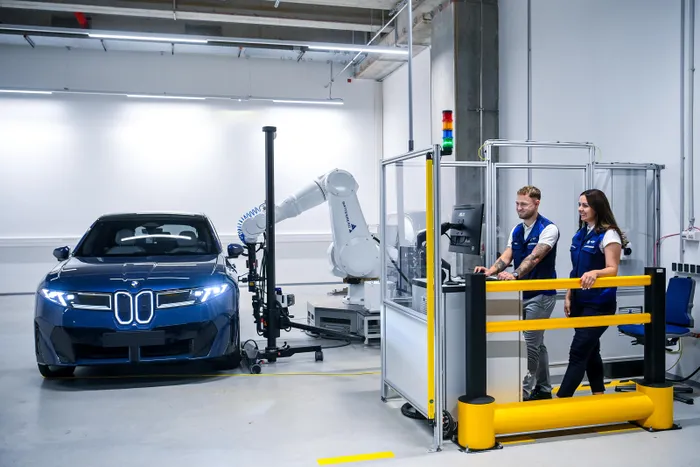
BMW's new iFactory in Debrecen, Hungary will have important lessons for its plant in Rosslyn, Pretoria.
Image: Supplied
When BMW unveiled its brand-new iFactory in Debrecen, Hungary, much of the global attention focused on the European milestone, a ground-up site designed to build the Neue Klasse, BMW’s next generation of vehicles.
But for South Africa, it’s important too. BMW’s Rosslyn plant, just north of Pretoria, has been a cornerstone of the country’s automotive sector since 1973, and the Debrecen principles could soon trickle through to Rosslyn.
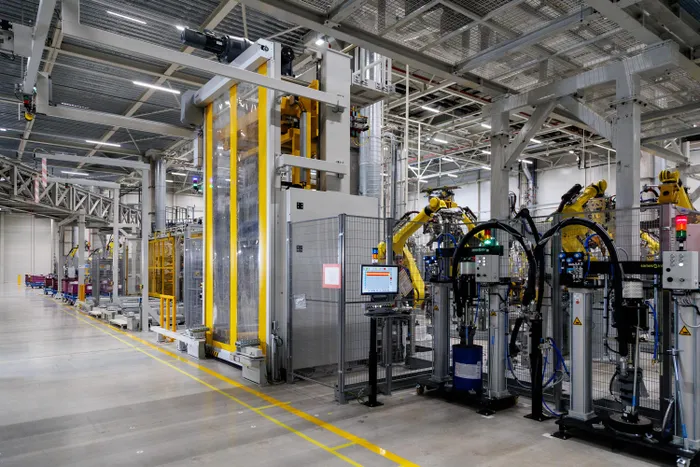
In Debrecen, the body shop and paint shop are fully automated, but final assembly is just 20% robotised.
Image: Supplied
South Africa’s role in BMW’s worldwide production network is long established. The plant was the first BMW facility outside Germany, and today it produces the X3 for export to more than 40 markets.
Dr Milan Nedeljković, BMW production board member, stressed that Rosslyn’s future remains central to BMW’s global ambitions.
“Rosslyn is currently a 15-unit plant producing around 75 000 to 80 000 vehicles annually. Debrecen, by contrast, launches at 30 units, producing close to 150 000 cars.
"But the important thing is that each plant is part of one system. What we validate in Debrecen sets the template for the whole network, including South Africa.”
South Africa and the Neue Klasse
So when can we expect Neue Klasse on South African roads?
“The X3 has only been on the market a year,” he said. “It wouldn’t make sense to radically shift it into Neue Klasse design just yet. They are distinguished on purpose, with different content evolving over time.
"Updates such as connectivity, ADAS (advanced driver-assistance systems), and software enhancements will filter across, but that doesn’t mean they will all look identical in the end.”
For Rosslyn, this means a gradual transition in time, though the plant is expected to adopt the same processes and philosophies that Debrecen uses - from simplified manufacturing and flexible automation to energy independence.
Debrecen as the spearhead
Debrecen is BMW’s spearhead for Neue Klasse, with Munich, China and Mexico following closely behind. The site is designed for flexibility, capable of producing multiple body styles and drivetrains - from pure battery-electric models to hybrids - all on the same line.
“The Neue Klasse will underpin more than 40 models,” Nedeljković explained. “Some will be fully electric, others will continue with combustion or hybrid power, but all will adopt elements of the new DNA. The panoramic display, the new battery cell technology, advanced driver assistance — it’s a universal platform.”
This is important for countries like South Africa, where EV adoption remains slow. By sharing a common DNA, BMW ensures its cars remain relevant across markets with different levels of infrastructure maturity.
Lessons for Rosslyn
One of Debrecen’s most important moves was not connecting the factory to a gas network. Instead, the plant uses a huge solar park and advanced heat storage to supply energy.
“It wasn’t an easy decision,” Nedeljković admitted. “Gas is still the cheapest way to heat industrial processes. But once you’re locked in, you’re stuck. We wanted to start fresh.”
Rosslyn already runs on a large proportion of renewable energy, but the Hungarian plant could become a blueprint for how South African industry navigates its own energy challenges.
Automation is another area where Rosslyn could gain. In Debrecen, the body shop and paint shop are fully automated, but final assembly is just 20% robotised.
“Sometimes it’s easier to start manually and automate later,” explained Hans-Peter Kemser, Plant Debrecen head. “Flexibility is the point. We can scale as we need to.”
For Rosslyn, this balance is important. The plant employs thousands directly and supports tens of thousands more through suppliers. By keeping final assembly more human-focused, BMW preserves jobs while still allowing for future automation where it makes sense.
Simplification
Important for Rosslyn is the Neue Klasse’s simplification. “In the past, we used around 3,000 different joining elements - screws, bolts, fasteners,” said Nedeljković. “Now, with Neue Klasse, that number is fewer than 250. That’s a 90% reduction.”
Such changes don’t just cut costs; they make production globally consistent. Whether a car is built in Hungary, Germany, China or South Africa, the underlying processes are the same.
For Rosslyn, this means smoother integration with BMW’s global supply chain and easier adoption of the latest technologies.
Economic weight
BMW’s investment in South Africa is not just about cars; it’s also about economics. The country’s automotive sector contributes almost 5% to GDP, and manufacturers like BMW play a vital role in sustaining exports, jobs and skills development.
The Pretoria plant has been part of South Africa’s motoring identity, and with the X3, it has shifted firmly into export mode, strengthening South Africa’s trade balance and cementing its role in BMW’s global footprint.
The ripple effect is huge. Local suppliers, logistics providers and component manufacturers all rely on BMW’s presence. As Neue Klasse reshapes the industry, it is important that Rosslyn remains future-ready.
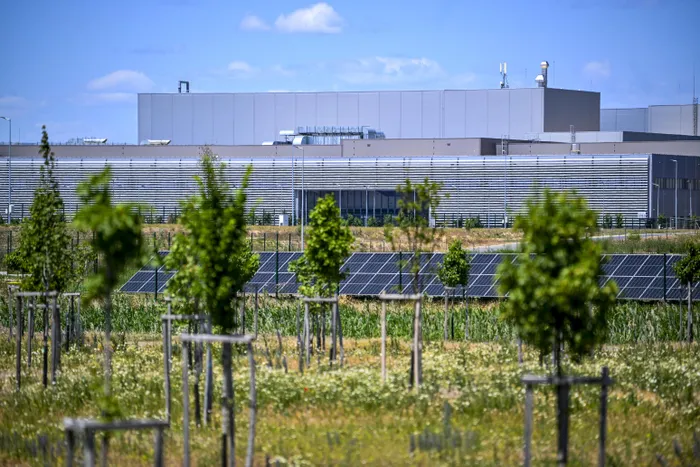
One of Debrecen’s most radical moves was not connecting the factory to a gas network. Instead, the plant uses a huge solar park and advanced heat storage to supply energy.
Image: Supplied
A future-proofed Rosslyn
Summing up BMW’s vision, Nedeljković said: “Every new plant becomes a centre of learning for the entire production network. What we test and prove in Debrecen, Rosslyn will benefit from.”
For South Africa, that means cleaner energy strategies, simplified manufacturing, digital integration and smarter logistics could all find their way into local operations. It also means South African-built BMWs will continue to carry the same technological DNA as those built in Germany or China.
Global ambition, local impact
According to Nedeljković, the Debrecen iFactory is not just another BMW plant; it is the embodiment of the brand’s future. For South Africa, it’s proof that Rosslyn has a future in a rapidly changing global automotive industry.
From energy resilience to simplification, from hybrid flexibility to export potential, Debrecen offers a blueprint. And while the X3 may not yet be a Neue Klasse car, the systems that make the Neue Klasse possible are already preparing the ground in Pretoria.