

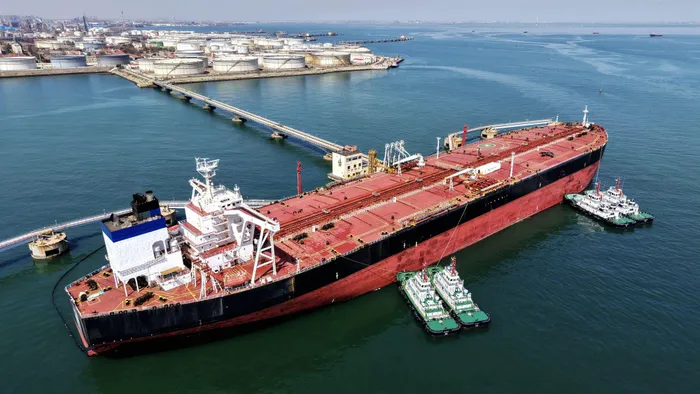
Surging Brent crude oil prices could lead to dramatic fuel price increses in June.
Image: AFP
International oil prices surged to four-year highs of around $126 per barrel on Thursday after US President Donald Trump indicated that the naval blockade against Iran could last for months.
He also hinted at further military action against Iran, rattling markets and sending oil prices soaring as investors priced in a prolonged conflict that would keep the critical Strait of Hormuz passageway closed for longer than anticipated.
With South Africa’s current fuel price structure based around Brent crude oil costing less than $100 per barrel, the latest oil price spikes seen this week could lead to devastating price increases if they persist.
Thankfully, May’s fuel prices appear to be ‘baked in’ already, with the latest data from the Central Energy Fund pointing to increases of between R1.72 (93 Unleaded) and R2.04 (95 Unleaded), while diesel looks set to go up by around R4 per litre, after Treasury extended the current temporary tax reprieve by a further 93 cents for the month of May.
However, should the oil crisis persist into the next month, South Africans could be facing catastrophic fuel price increases in June. This will be further aggravated by Treasury halving the fuel price relief amount to R1.50 for petrol and R1.96 for diesel. These price relief measures are due to fall away completely in July, Treasury announced this week.
While the South African rand has remained relatively stable this month, volatile international oil prices caused by the war in the Middle East have played havoc on the fuel price equation of almost every country in the world, including South Africa.
Having traded above the $100 per barrel mark for much of March, the price of Brent Crude fell to below $94 around mid-April following a ceasefire agreement between the US and Iran, which led traders to factor in a possible reopening of the Strait of Hormuz.
However, stalled peace talks later in the month have caused oil to rebound, with Brent trading in the $100 to $125 range in the past week.
“Oil markets are pricing in a significant risk premium as long as uncertainty persists around flows through the Strait of Hormuz,” a Standard Chartered analyst said.
According to the International Energy Agency (IEA), the Strait of Hormuz is the most important oil transit chokepoint in the world, and any disruption immediately translates into higher prices and heightened volatility.
IOL Motoring