

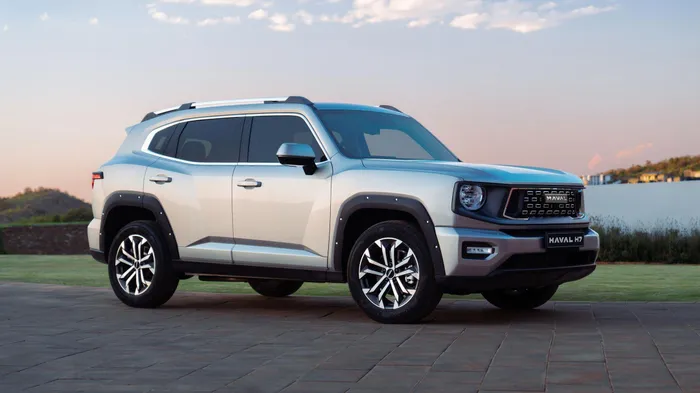
A distinctive design and capable drivetrain make the Haval H7 stand out in a crowded SUV segment. But it might not be everyone's cup of tea.
Image: Supplied
It’s taken me a while to figure out where the new Haval H7 fits in, but does it really even matter? Some say the styling is a little polarising, but it certainly commands attention. And is it just me, or is there a hint of 1964 Ford Mustang in its front end?
The H7 is boxy and upright, yet curvy in places, and that duality is very much inherent in its architecture and drivetrain, at least in the case of the 2.0T 4WD Super Luxury version that I spent a week with recently.
It has all-wheel drive, a reasonably decent ground clearance of 210mm, and respective approach and departure angles of 24 and 30 degrees. Yet, like most modern SUVs, it’s built on a unibody platform and lacks all the hardcore stuff like low-range gearing.
It does aim to mimic the latter, though, with an Off-Road Cruise Control function, while an electronic locking rear differential and drive select modes for sand, gravel and mud also help to make it more capable off the beaten track than your average “pavement hopper”. Light off-road trails should not be a problem in this vehicle.
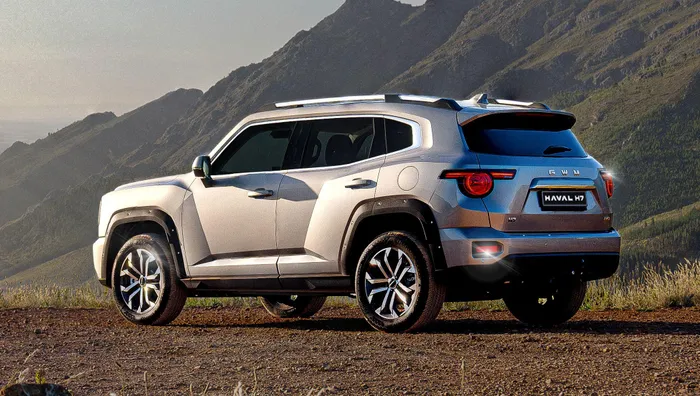
The Haval H7 offers a mix of rugged looks, modern tech and long-distance comfort.
Image: Supplied
My time with the vehicle was focused on highway driving, with a 1,400km round trip to the KwaZulu-Natal coast being tackled in the greatest of comfort.
Although it can be a little laggy at altitude, the H7’s 2.0-litre turbopetrol engine, with 170kW and 380Nm on hand, makes for effortless, albeit unexciting, performance. The nine-speed dual-clutch automated gearbox goes about its business without much fuss and is reasonably responsive.
On the open road, the H7 is quiet and delivers a comfortable ride quality. As I also found out while evaluating it on a very rainy Zwartkops Raceway for the Car of the Year finalist test days, the H7 offers impressive grip in wet conditions.
Dynamically, then, this vehicle really ticks a lot of boxes. Carmakers like to throw around the term ‘all-terrain’, but the H7 is one of the few that could really carry that badge with pride.
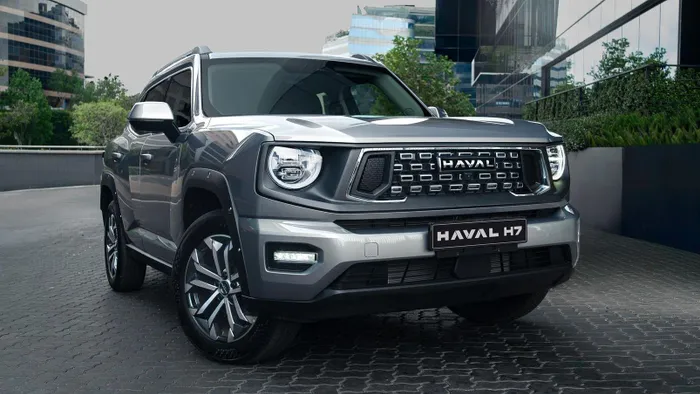
With its upright stance and bold design, the Haval H7 is hard to ignore on the road.
Image: Supplied
Given its size, stature and power, I wasn’t expecting any miracles on the fuel consumption front, but with a relatively light foot I managed to average 8.5 litres per 100km on the 1,400km round trip. If you are keen to save some fuel, there is a hybrid version for R60,000 more, although you have to give up the four-wheel drive.
The interior, like the exterior, is an interesting mix of modern and sporty, with a few rugged touches and plenty of faux carbon fibre thrown in for good measure.
Haval says the cabin is the product of many hours of “meticulous study of human ergonomics and typical family needs.” There are some interesting additions, like a removable rear luggage floor with retractable legs that allow it to double as a camping table. The interior also boasts plenty of hidden storage compartments and multiple cupholders.
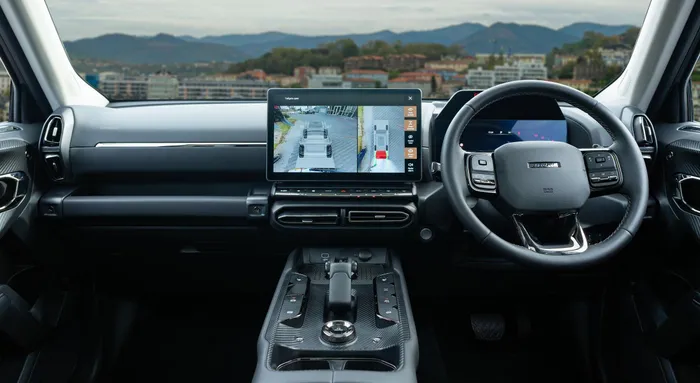
A large touchscreen and premium features add to the Haval H7’s modern interior appeal.
Image: Supplied
Taking centre stage in the cockpit is a large 14.6-inch central infotainment system, supplemented by a 12.3-inch digital instrument cluster. The infotainment system boasts impressive colour density and resolution, and it links up to wireless Apple CarPlay and Android Auto. The system also features a dedicated off-road screen that provides a bird’s-eye view of the surroundings and an AI-enhanced image of the surface below the vehicle.
While most of the climate functions are operated via the screen, there are a few piano-like physical controls beneath it for adjusting things like fan speed.
Standard features include leather upholstery, a panoramic sunroof, electric front seat adjustment, a 360-degree camera system, an electric tailgate and a slew of advanced driver assistance systems, including Adaptive Cruise Control.
But is the Haval H7 practical? This is a sizeable vehicle, with an overall length of 4.7 metres. Rear legroom is ample, and the boot is fairly deep, boasting a capacity of 483 litres with all seats up. Interestingly, this vehicle is just 3mm longer than its H6 sibling and has a slightly smaller boot capacity.
The Haval H7 has a lot going for it and will appeal to those looking for a bold and distinctive package that marries on-road refinement with mild off-road ability and all-round comfort and luxury. It ticks many boxes, but it’s likely that the target buyer is probably not a box ticker. Polarising as it may be, this vehicle certainly has emotive appeal.
IOL Motoring