One of the team is at the helm
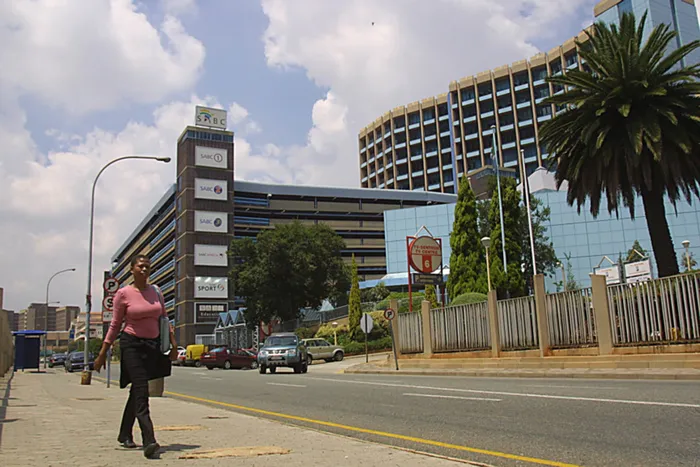
22/2/05. SABC offices in Aukland, Johannesburg. 22/2/05. SABC offices in Aukland, Johannesburg.
Phil Molefe, the acting group CEO of the SABC, has always been a man who believes in an open-door policy. To the sceptics, Molefe – a renowned journalist of impeccable character – likes to give the following reassurance: “My open-door policy is sincere and genuine. It is certainly not a trap door.”
Having known Molefe both professionally and socially for over 20 years, I was not at all amazed that barely a month after being appointed to the top job at the public broadcaster, he has hit the ground running, tackling some of the burning issues which have been lingering for a while.
Among the issues has been the saga of the Independent Producers Organisation (IPO), in my opinion the most critical stakeholders of the SABC.
The IPO is a critical mass of organised professionals who produce phenomenal local content, which in turn is consumed by millions of viewers and listeners on both television and over a dozen public service stations around the country.
For far too long the IPO has been treated shabbily by previous regimes at Auckland Park. When I worked there a few years ago as political editor I found myself embroiled in some vexed deliberations about their fate. How backward could we be? It had irked me that in the UK, for example, the BBC cannot be allowed to veer off from the continuous production of local content.
South Africa is a developing democracy. The ANC-led government has decreed that ours is officially a developmental state.
Our priorities, therefore, ought to have a shameless bias towards the upliftment of a society which by and large remains trapped in wanton underdevelopment, poverty, illiteracy and disease.
In this era of globalisation and the 21st-century marauding global cultural imperialism, which manifests itself in the overriding Western content on both our TV and radio, it is vital that our national asset – the SABC – is led by someone with an appreciation of the African renaissance agenda and its implementation.
I believe that in Molefe, the SABC board, which itself is hardly ever far away from courting controversy, deserves praise for the correct decision to put Molefe in the pound seat, albeit temporarily.
I first worked with Molefe in the early 1990s at The Star, shortly after Nelson Mandela was released from prison and the ANC and PAC unbanned. It was an exciting period during which Big Business pushed the transformation agenda to the top of their priority list. Molefe was one of the few black beat reporters and he was put in charge of the education desk. A former primary school teacher and the son of a priest, he took the opportunity with both hands and he excelled beyond expectation.
Week in and week out Molefe broke stories about the misdemeanours of teachers either bunking school or playing truant with female pupils.
His life was once threatened over this, but he was unfazed. Instead, he spent even more time in shebeens frequented by teachers and wrote analytical articles regarding the state of education in the country.
Molefe is also very passionate about township life, having grown up in the Vaal townships of Sharpeville and Sebokeng and having worked on the social responsibility programmes of his father’s church.
I suspect that his deep sense of justice and fair play would have been one of the reasons he committed to fostering a close working relationship with the previously marginalised independent producers.
IPO co-chair Desiree Markgraaff was optimistic after meeting with Molefe this week. She was quoted as saying her organisation sought to develop “a sustainable production sector that provides stable employment for thousands of people”.
Molefe would be acutely aware that the fate and welfare of these multitudes rests like water in the palm of his hand.
I would be very disappointed with my own sense of judgment should Molefe fail to make good on his undertaking to assist in the alleviation of their plight and unlock access to more opportunities.
The SABC, being such a contested terrain which is prone to political interference, needed someone like Molefe who also has Struggle credentials, and therefore would not budge under the weight of political pressure to be biased towards one party.
Over and above, the SABC is fundamentally about the gathering and dissemination of news. Millions of South Africans depend on the SABC to be informed about the daily goings-on throughout the country.
As acting group CEO, Molefe is also automatically the editor-in-chief of the country’s biggest media house.
For journalists, there is nothing as disheartening and demoralising as reporting to someone who has no clue about news.
I’ve been there before. Many scribes, I am certain, have been there too.
We once reported to an electrical engineer who was put at the helm of our media company as part of affirmative action (gone horribly wrong). The first thing he did was to close down the cadet school, which had been for decades a production stable for ready-made reporters who needed very little further training afterwards.
The vast newsrooms at the SABC must be enthusiastic and inspired about one of them being at the helm. At least Molefe will in most likelihood appreciate the daily and periodic challenges of his journalists.
He is indeed a perfect choice.
l Makoe is the founder and editor-in-chief of the Royal News Services