SA Press Council: a brave voice for media freedom
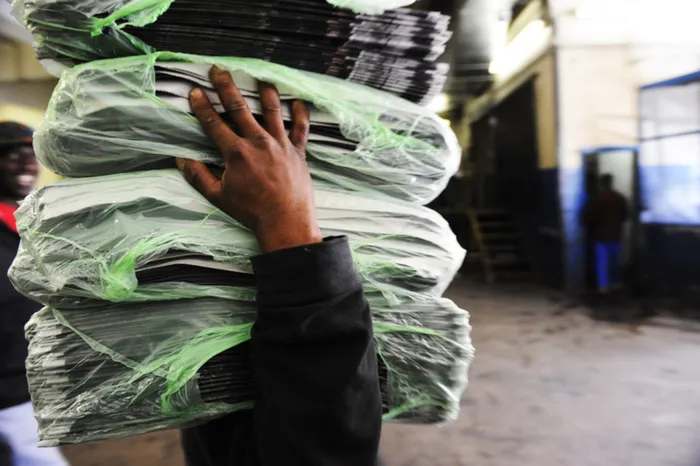
ODDS STACKED: Even without the threat of the media appeals tribunal, our journalists are stifled, says the writer. Picture: Michael Walker ODDS STACKED: Even without the threat of the media appeals tribunal, our journalists are stifled, says the writer. Picture: Michael Walker
A year ago the SA Press Council began a process of review, to re-examine its constitution, complaints procedure and the press code. Part of this process included inviting written submissions from anyone with suggestions on how to improve the press self-regulatory body, as well as public hearings held in five cities across the country, where people could discuss suggested revisions to the Press Council and its policies.
The Press Council received 58 submissions, and late last week released its 100-page review at Constitution Hill outlining the changes that had been accepted by the council. The review took place partly due to massive pressure from the ANC, which has, since its 2007 Polokwane resolution, been lobbying for statutory regulation of the press in the form of a vaguely described media appeals tribunal.
When the review process began, Press Ombudsman Joe Thloloe emphatically stated that the outcome of the review process would not be steered towards appeasing the demands of the ANC, but be guided to improving journalism and the system of self-regulation in South Africa.
A few of the points included in the review report are significant, because they show that in terms of not yielding to demands of the ruling party at least, Thloloe kept his word.
During the Press Council hearings in February and March, heated debates consistently arose around two issues included in the current press code: the waiver, and the lack of sanctions.
Various parties were concerned that the Press Council did not fine journalists, editors or publications found to have contravened the press code.
Critics, most notably the ANC, took this as a cue to call the Press Council a “toothless” mechanism of self-regulation and insisted that harsher measures be meted out on an offending publication rather than simply publishing a suitably sized and prominent apology.
The second major issue was the inclusion of the waiver in the Press Council’s complaints procedure.
Anyone lodging a complaint with the Press Council because they feel they have been unfairly represented in the press must sign a waiver, which really means that should such a person be dissatisfied with the outcome of the Press Council’s ruling on the matter, they cannot thereafter take the matter to the courts.
In other words, if you are unhappy with the ruling of the ombudsman, you cannot sue the newspaper that slandered your name. Of course, this became a bone of contention during the hearings.
At the release of the report, the Press Council announced first that it had rejected the notion of fining newspapers, saying that “the continued use of peer pressure and the publication of findings” were the “best form of leverage”.
Second, on flipping through a copy of the report, I quickly found it. The waiver. Still there.
But arguments for and against the fining of journalists and the inclusion of a waiver aside, the Press Council’s refusal to budge on either of these two points does reveal one crucial thing: the SA Press Council has not bowed to political pressure from the ANC.
The Press Council is a tiny institution, so it is a bit of a David and Goliath affair. But Thloloe reiterated at the release of the report that the Press Council is not willing to put pressure on journalists simply because it is under pressure from the government.
Predictably, the ANC has slammed the report, saying that the Press Council’s plans are too “tame”. ANC spokesman Jackson Mthembu complained that the report does not go far enough and that an appeals panel (one assumes he means a media appeals tribunal) should be established with the power to suspend, fine or fire errand journalists.
Let us remember, however, that this is coming from the same ANC that did not make any submissions to the Press Council during its review process, so one has to question how seriously the the party regards the process at all.
I have to admit that I am not thrilled with the content of the review report myself. For one thing, the Press Council rejected the suggestion that I made in my own submission of allowing for third-party complaints, which would mean that any citizen could complain about anything that is published in the press.
The current press complaints procedure allows only for complaints to be lodged by people who are directly affected by something that has been published in print.
I find this silly, because if I hear something on radio or see something on television that offends me, I can quite easily lodge a complaint with the Broadcasting Complaints Commission. But if I were to see, say, two uniformed police officers engaging in an explicit sex act on the front page of a newspaper, and I found this to be offensive, I cannot lodge a complaint about it with the Press Council.
Why? Because I am not the person in the picture having the sex.
Parents who don’t want their young children to be exposed to pornography on television during prime time are the same parents who don’t want their kids to see this stuff on newsstands.
But the process of review is not over. The review report still has to be considered by the industry bodies making up the Press Council, and the newly established Press Freedom Commission will conduct its own independent review of press self-regulation in South Africa, with another round of public hearings.
So I will get another chance, and I will be there, beating the same “third party complaints” drum.
In its defence, the Press Council, during its process of review, opened itself up for, and received, a barrage of intense criticism. And as far as appearances go, it did so with humility. You have to ask, how many of South Africa’s institutions, political or otherwise, would be willing to do that? One also has to remember that this is an institution that is seriously under-resourced and a mere five years old.
So, imperfections with its procedures and structures are to be expected.
At the release of the review report event, the room was packed with journalists, academics and members of civil society, some of whom had made submissions to the Press Council.
As proceedings were coming to a close, Thloloe thanked his colleagues, and spoke of the significance of holding the release of the report event at Constitution Hill.
“It was after the riots of 1976, and I was a young boy of 17, when I was brought here to this place and locked up. For months.
“It was during my time here that I was inspired to become a journalist,” he said.
Thloloe reminded us that we were sitting in the same place (then Johannesburg Central Prison) where Drum journalist Henry Nxumalo had been detained, after which he published an exposé on the mistreatment of black inmates under apartheid, which was followed by the institution of the Prisons Act.
This piece of legislation made it impossible for journalists to publish anything about the goings-on inside South African prisons. Although Thloloe didn’t utter the connection, it does not require a far stretch of association to see the correlation between that act and the Protection of Information Bill, now being discussed in Parliament, which would close down the possibility for investigative journalists to pursue information pertaining to any of the state security services.
Thloloe wiped away tears as he received a standing ovation.
Though we may find it uncomfortable to believe, we are facing times where journalists are being continuously intimidated, the police are becoming increasingly militarised and violent, and the ruling party is making concerted efforts to inhibit free access to information, thereby damaging any hope of a governance of transparency and accountability.
And this is apart from the threat of a media appeals tribunal.
If we are to preserve freedom of expression in this country, then the small voices of reason, such as those emanating from the Press Council, are perhaps one of the best defences that we have.
l Julie Reid is a lecturer in the Department of Communication Science at Unisa.