A gesture of reconciliation
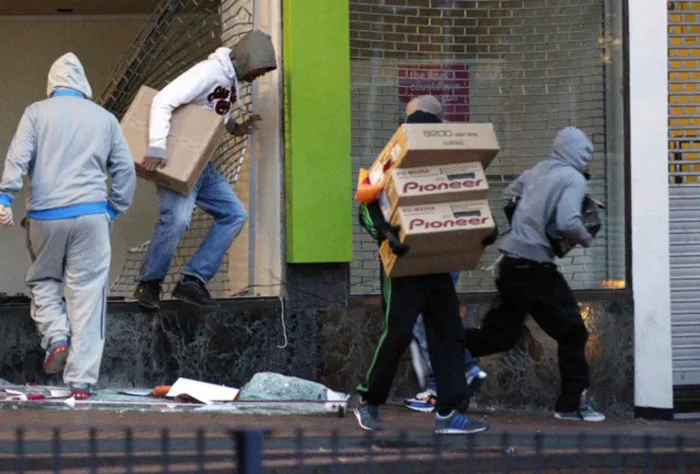
ON A RAMPAGE: Looters carry boxes out of a home cinema shop in central Birmingham, central England earlier this month. What has been described as recreational vandalism may yet have repercussions throughout the world, says the writer. Picture: Darren Staples / Reuters ON A RAMPAGE: Looters carry boxes out of a home cinema shop in central Birmingham, central England earlier this month. What has been described as recreational vandalism may yet have repercussions throughout the world, says the writer. Picture: Darren Staples / Reuters
The scornful mirth with which some South Africans discussed Britain’s recent riots left me feeling quite queasy. There but for the grace of God go we, I thought every time I watched the shocking mayhem on TV.
Of course, it is deeply ironic that South Africans get the chance to gloat over their relative social stability (notwithstanding wanton destruction in the wake of local strikes) where hitherto peaceful England is concerned. Someone in our government couldn’t resist warning travellers to steer clear of burning London, and I must confess to being unable to pass on a dig this week at a Brit who remarked that she couldn’t imagine ever living behind bars and electric fences the way we do in this country. “You might have no choice someday,” I pointed out.
Here’s hoping the chaos caused by hooded youths on the streets of English cities is an isolated phenomenon. But I fear that what has been described as recreational vandalism may yet have repercussions throughout the world. Bored kids watch a lot of television. Over the last few months, while seeing youngsters toppling governments in several Arab states, some will have realised that they have untold power to score bad as well as good goals.
While analysts in Britain try to fathom the reasons for the anti-social behaviour of their youth – reasons which certainly include disrespect for adults such as irresponsible and overpaid bankers, policemen who take bribes from journalists, and politicians who fabricate their expenses – I ponder where these images of social criminality leave us in South Africa.
Mind you, I’ve often wondered why disaffected, unemployed kids in Alexandra, for example, destroy their own facilities on occasional binges of boredom or anger, when they could so easily hop across the street and trash Sandton instead.
Which brings me to Archbishop Emeritus Desmond Tutu’s initially clumsy suggestion that wealthy white South Africans should pay a one-off guilt tax in order to ease inequality in our country. Fifteen years after the Truth and Reconciliation Commission (TRC) – when the government still hasn’t paid out the paltry reparations promised to the 21 000 victims of apartheid who participated in the TRC – is a bit late for the reconciliation chief to be seemingly punishing whites for apartheid. Even President Jacob Zuma has said that South Africans can no longer blame apartheid for everything that is wrong in our society.
Many commentators have said that such a tax levied against whites who benefited from apartheid, which is how the Arch framed his idea, would be unfair, unconstitutional and even racist. What about other wealthy groups, such as rich Indians and BEE beneficiaries?
However, I agree with law professor Pierre de Vos, not on levying a guilt tax as such, but on a “gesture towards reconciliation and redress”. He said, as did Tutu, that all white people, whether born before or after the country achieved democracy in 1994, had benefited from the system. Some, “out of shame or ignorance or maybe a bit of both” did not want to admit it. Advocating a special educational fund administered by an expert panel, De Vos recommended the construction of schools, libraries, laboratories, computer centres and sports fields.
“What a magnificent gesture it would be, now in the context of a global financial recession and widening wealth gap at home, were relatively wealthy South Africans to contribute to a national effort to uplift the poor,” Tutu said in an article he wrote in response to an outcry from white people who, alienated by soaring electricity costs, the upcoming NHI and other inescapable charges, not to mention rampant corruption among some state officials, are inclined to feel looted these days.
“Imagine if a group of eminent South African bankers and business people came together with a plan for the administration of a national wealth tax – to be managed by captains of industry, not government. I have no doubt there are many South Africans who would want to give generously,” he continued.
“Imagine if we were creative enough to establish a system in which companies and individuals could receive formal recognition for contributing to such a fund to rebuild our society? Where contributions could perhaps even be taken into consideration in BBBEE scorecards.
“The value of the exercise extends way beyond the physical exchange of cash. It is a gesture in restoration and reconciliation; a vehicle to assuage pent-up guilt, to share, to show that we care; an opportunity to lay another brick in our road to a better society,” Tutu said.
He is right. As our most esteemed moral leader, we should pay close attention when the Arch says that richer South Africans have failed to acknowledge the pain and the patience of poorer South Africans, who have for far too long endured what pretty much amounts to a continuation of the socio-economic status quo that prevailed before 1994.
“And I think white South Africans have failed to acknowledge or respond to the magnanimity expressed in black South Africans’ willingness to forgive in the 1990s, to reconcile, to heal,” Tutu believes.
Many black South Africans will be watching the response of their white compatriots to Tutu’s challenge. Let’s hope for all our sakes that a lot of whites hear the Arch’s timely warning when he asks: “Should we not all be alarmed by the widening wealth gap in our country? What does this mean for our children? At what point does the chasm grow so wide that the elastic band snaps?”
l Heidi Holland is the author of several books, including the acclaimed Dinner With Mugabe.