The roots of corruption in SA
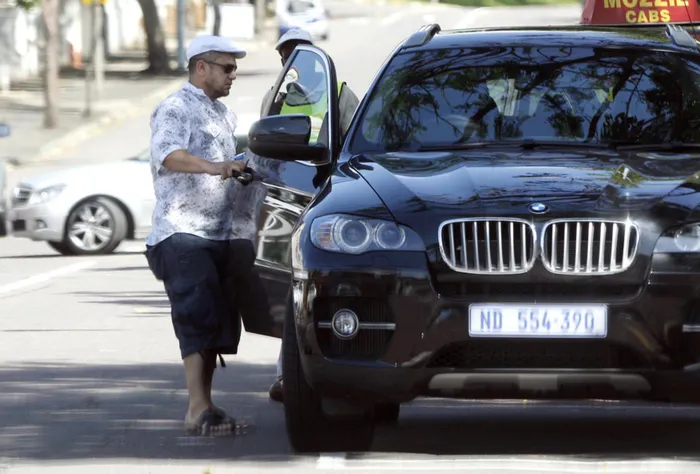
Life of luxury: President Jacob Zuma's former financial adviser Schabir Shaik, left, was found guilty of fraud and corruption in 2005. He was released on parole after serving two years of his |15-year prison term. Lavish lifestyles on view in SA's rich suburbs may |have contributed to corruption by encouraging the new political class to aspire to these standards, says the writer. Picture: Julian Rademeyer Life of luxury: President Jacob Zuma's former financial adviser Schabir Shaik, left, was found guilty of fraud and corruption in 2005. He was released on parole after serving two years of his |15-year prison term. Lavish lifestyles on view in SA's rich suburbs may |have contributed to corruption by encouraging the new political class to aspire to these standards, says the writer. Picture: Julian Rademeyer
SA’s post-liberation history is riddled with unintended consequences and tragic oversights. The latter may help to explain the corruption we see all over this country in an epidemic of greed that apparently worries some among the law-abiding leaders of the ruling party, while leaving the rest of us hypocritically horrified.
A couple of awkward questions arise out of our dismay at the scale of ANC greed, the first of which concerns those among us who had the means to make a difference on the important matter of financial corruption in its earliest stages when the ANC was initially unbanned in 1990: what were the thousands of returning exiles and released prisoners supposed to live on during the closing years of apartheid?
Hardly any of us gave the matter a passing thought. The ANC’s formerly outlawed politicians, including Umkhonto we Sizwe (MK) freedom fighters, were, in fact, given a monthly allowance of R2 300 by the Swedish government. In some cases, the party’s members were also provided with sponsored housing in high-density places such as Hillbrow’s Ponte City. By comparison, someone like home-based Frank Chikane, then head of the SA Council of Churches, lived modestly on a salary of about R12 000. The average white corporate executive was earning six or seven times as much as Chikane 20 years ago.
Add to the ignominy of the ANC returnees’ measly monthly incomes over the four years of Codesa’s power-broking the fact that most of them, and for that matter the United Democratic Front’s official membership, were poorly educated, barely skilled as well as lacking work experience, and you have the roots of corruption. How else was the Struggle generation going to earn its keep, much less live in the manner to which the existing elite had become accustomed?
South Africans returning from meagre lives in exile – whether from MK training camps in Tanzania, ANC compounds in Lusaka or marginalised existences in European cities like London – looked around at the opulence of white South African life and resolved to catch up with all possible speed. As Madiba once told businessman Ghaleb Cachalia in response to a question about spiralling corruption among state officials, those ANC members grabbing whatever they could lay hands on from government coffers were like deprived kids let loose in a sweet shop for the first time.
Indeed, the lavish lifestyles on view in suburbs like Sandton and Constantia may in themselves have contributed to corruption by encouraging the incoming political class to aspire to standards that are unattainable, never mind sustainable, for all but the über-wealthy.
As mentioned earlier, the new rulers were way behind the curve not only in material terms, but in respect of employment prospects, too. Without the qualifications to compete for jobs, patronage was the only hope of income with which to purchase a house, a car, some flashy clothing and a decent education for your kids.
Knowing that the minister you’d sucked up to might not be in office for ever meant an unseemly dash to acquire whatever assets came your way. People like Jacob Zuma, with a huge family, would have been under particular pressure to make up for lost time, though he was not smart enough in economic manoeuvring to help himself, hence the Shaiks, Guptas, et al.
Looking back, corruption was depressingly predictable. Why didn’t people with names ending in Oppenheimer, Rupert or Mennell anticipate the problem and set up funding for the welfare of the incoming elite? It could have been promoted by them to business as enlightened self-interest.
Why was it left to the Swedish taxpayer – who had already given 65 percent of the UDF’s expenses since its inception in 1983 as well as donating half of the ANC’s overheads, excluding MK’s, since 1972 – to ensure that the country’s future leaders and administrators scraped by until SA became theirs to loot with a vengeance through public sector patronage, tenderpreneurship and other catastrophes?
It was black economic empowerment that eventually redistributed some wealth to a small number of new ANC tycoons and a dramatically expanded black middle class. But what happened to the mindsets of those returnees while they were subsisting on Sweden’s R2 300 monthly may provide historians with insight into the get-rich-quick culture and callous disregard for the poor that followed the ANC into office.
Other causes of ANC corruption might include another awkward question about ourselves as intuitively greedy South Africans. It was posed to me by a recent visitor to my B&B, The Melville House, by the individual in Sweden’s Foreign Ministry who arranged the vast sums donated by the Scandinavian country to our liberation movement. Bengt Save-Soderbergh was in town to gather information for a book on his career as what he jokingly calls “the funder of terrorists”. While here, he talked to several of SA’s most powerful leaders, one of whom was busy with COP17 and invited Save-Soderbergh to interview him overnight in Durban.
Returning to The Melville House, the Swede described the guest lodge suite he’d been given at state expense, a room so enormous that it could have housed a dozen of his professionally distinguished countrymen plus their families.
The place was like a palace, he said, noting how many costly cars he had seen driving to and from the airports of Joburg and Durban.
“What is it about you South Africans that you have to live so extravagantly?” he asked. “It is going to be your downfall that you can’t live more modestly, but instead you seem content with gross excess for the few and the most terrible deprivation for the rest.”
l Heidi Holland is a journalist and author of several books, including a new one on the ANC, which is to be published in January to coincide with the organisation’s centenary.