Wake up citizens, before it’s too late!
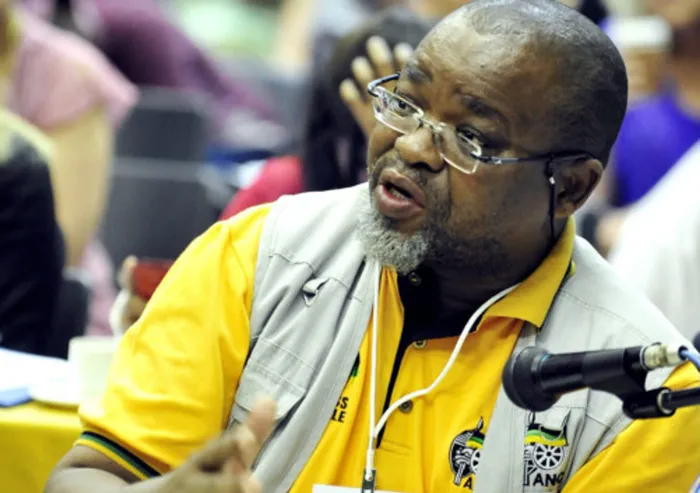
THOUGHT CONTROL: Gwede Mantashe, secretary-general of the ANC, defends his party's proposals for a media tribunal at the the Press Freedom Commission hearings in Braamfontein last month. Picture: Bongiwe Mchunu THOUGHT CONTROL: Gwede Mantashe, secretary-general of the ANC, defends his party's proposals for a media tribunal at the the Press Freedom Commission hearings in Braamfontein last month. Picture: Bongiwe Mchunu
Extraordinary efforts have been made by civil society, journalists, jurists and even foreign diplomats to awaken South Africans to the dangers of their government’s determination to muzzle the media and tamper with judicial independence. Yet so few members of the public attended the recent Press Freedom Commission, for example, that one might be forgiven for wondering if SA voters consider the looming loss of media freedom and judicial integrity unimportant.
Here was an opportunity for everyone, not just journalists, to try to thwart some of the regulatory measures that will enable government individuals to commit all manner of misdeeds in secret while denying reporters and whistle-blowers a public-interest defence in exposing the crimes.
Perhaps people on the street are just too preoccupied making ends meet in these stringent economic times to worry about the condition of their democracy. But here’s the real and daunting deal: nothing threatens our future as citizens of this country as much as the state’s hostility towards journalists and judges.
Make no mistake: attempts to frustrate investigative journalism and to pack the judicial cluster with ruling party loyalists are invariably steps on the way to authoritarianism and dictatorship. Look no further than our northern neighbour, Zimbabwe, for confirmation of this scary truth.
Wakey-wakey, citizens! Why does the ANC want to silence the print media? Why is the state increasing the number of judicial officials who support President Zuma’s questionable causes rather than the best interests of “the people”? What is the government afraid of? What are politicians doing with our money that we must not see?
Please notice how our new Brics role models, Russia and China, exhibit the same freedom deficits that threaten us. And remember that the media is the only reason we know as much as we do about corruption in government. It is also the vehicle through which the poor – as well as victims of crime, official incompetence or state brutality – are heard.
In a sound democracy, journalists act like vigilant night watchmen on our behalf. They shine torches into the dark corners of society where crooked people are trying not to be observed as they hide their dishonest business and creep towards impunity.
Without newspapers being free to highlight social injustice, “policy-making by the government becomes like fumbling in the dark”, warns the SA Institute of Race Relations’s CEO, John Kane-Berman.
Alongside the judiciary, journalists are the most important protectors of all our rights, of our liberty and of democracy itself. Furthermore, in a country like ours, where the official opposition has no realistic prospect of coming to power, a healthy democracy depends more on the media to protect the citizenry from corrupt excess than on competing politicians. Journalists and jurists are, in fact, the ANC’s only really effective opposition.
It is sad to see the SA state attacking our judiciary when we thought until recently that we were going to be the democratic dream-come-true in Africa.
We must now beware of President Zuma’s challenging view that “the executive, as elected officials, has the sole discretion to decide policies for government” because it is only half the truth. “The other half,” according to former chief justice Arthur Chaskalson, “is that policy must be consistent with the constitution, and if it is not, it’s the duty of a court to declare it invalid to the extent of its inconsistency.”
Chaskalson explains that the test applied by the courts is that “an administrative decision will be reviewable if… it is one that a reasonable decision maker could not make”. The purpose “… is to uphold legality and promote fairness, accountability and transparency in government”.
Given that our president suffered a number of humiliating court defeats in 2011 – including a ruling by the Constitutional Court to reinstate the crime-fighting Scorpions, a decision by the Supreme Court of Appeals that Zuma’s appointment of loyalist Menzi Simelane as national director of public prosecutions was invalid, and a winning case before the Concourt that forced Zuma to institute an arms deal inquiry to avoid having more egg on his face – the president’s assault late last year on the judiciary as an institution was clearly vindictive.
“Such attacks coming from senior politicians undermine the constitutional order and pose a threat to our democracy,” scolded Chaskalson, whose current successor as chief justice is alarmingly pro-Zuma.
One of the president’s motives for gagging the media, however, is to control his political opponents in the run-up to the ANC’s Mangaung conference in December. Although we hear relatively little about vengeful whistleblowers as opposed to “sloppy” journalists from the government’s proponents of state regulation, this is because it bruises the ANC’s centenary unity campaign to admit that leaks to the press from within its own divided ranks are its biggest problem.
That SA is about to damage its international reputation for fair play – partly the result of press freedom and independent judges – just because of factionalism in the currently chaotic ruling alliance is both tragic and farcical.
Everybody except the ANC’s politicians stands to lose if state regulation of the media and a tighter grip on the judiciary take hold in our beloved country.
The SA brand, once so respected for its advanced constitution and miraculous human rights recovery, will be the biggest casualty.
But every aspect of social cohesion will suffer if the ruling party succeeds in its current attempts to remove the checks and balances that curb the ANC’s increasingly corrupt power.