

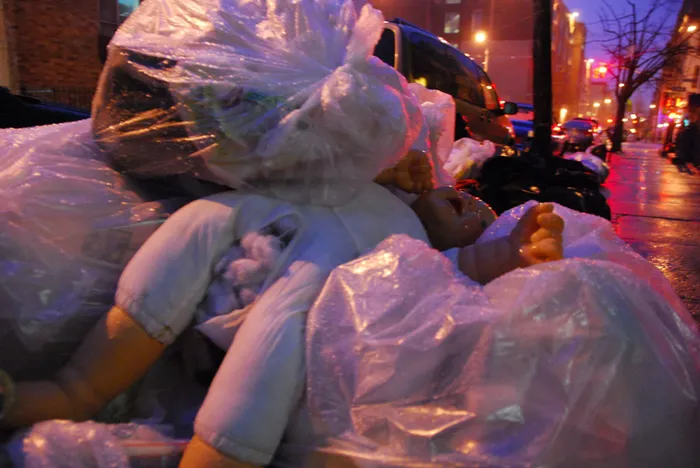
File picture by Paul Keller File picture by Paul Keller
Cape Town - The City of Cape Town was serious about its mandate to crack down on illegal littering and dumping within the city, the City said on Tuesday.
Since launching its awareness campaign in February this year, the city had been keeping track of how its anti-dumping campaign was progressing.
Each month, the city engaged in week-long crackdown on illegal littering and dumping, and issued fines to any dumpers caught in illegal littering and dumping activities.
Councillor Ernest Sonnenberg, the city’s mayoral committee member for utility services, said that the May report showed that the combined efforts of different department who had joined forces to tackle illegal dumping was showing results.
He said during an intense week-long blitz on illegal dumping activities, 822 dumping hotspots were patrolled in May. Sonneberg said a total of 127 fines to the value of R210 000 were issued to offenders.
“Since the campaign started, a total of 610 fines with a total value of R588 520 have been issued,” said Sonnenberg. He mentioned that this number of fines excluded fines that were issued outside the week-long crackdown on illegal dumping.
The crackdown, said Sonnenberg, also extended to “taking action against landowners who have allowed illegally dumped material to accumulate on their properties.”
The departments which united with the utility services to crackdown on illegal dumping included the solid waste by-law enforcement unit, metro police, and the city’s health and traffic services departments.
Sonneberg said: “I would like to thank the various units who remain committed to bringing offenders to book through this campaign. This ongoing work being done by City officials shows that we will not be defeated in the fight against a practice that is unnecessary and highly expensive to ratepayers. Many residents underestimate the impact that illegal dumping has on the City, and believe that anti-dumping laws are something they can ignore, but it affects every one of us.”
The cost of illegal dumping, Sonneberg explained, was in the region of R350 million each year when the city provided residents with a refuse collection service 365 days a year and designated waste drop-off points. Illegal dumping, Sonneberg said, cost the city money, time and resources in “efforts to keep pace with the volumes of illegal dumping that appear across the city”.
“This is money that could have been spent on a new sports facility or on social welfare programmes,” said Sonneberg, “but instead it is being used to compensate for a few irresponsible residents.”
Illegal dumping puts residents and communities at risk when waste is not disposed of in a “safe and legal” way, he added.
Illegal dumping can be reported to the city’s call centre on 0860 103 089.
ANA