Serious Accusations Against South Africa: Alleged Collaboration with Hamas Sparks Diplomatic Storm
CONTROVERSIAL CLAIMS
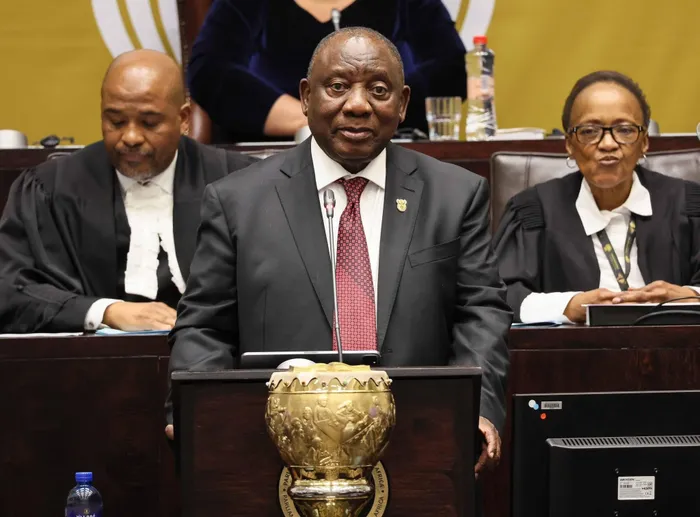
US-based lawsuit worth $400 million is being prepared against President Cyril Ramaphosa and other officials.
Image: Supplied/Presidency
A lawsuit alleges that South Africa, alongside Iran, engaged in active coordination with Hamas that ultimately led to the October violence, which claimed the lives of hostages of at least forty‑seven American citizens.
Image: Supplied/Presidency
South Africa is facing serious accusations of collaborating with Hamas in the lead-up to the October 7 attacks on Israel.
These grave claims have ignited controversy both at home and abroad. Journalist Paula Slier, in a blog post published in the Times of Israel on July 11, 2025, reported that a US-based lawsuit worth $400 million is being prepared against President Cyril Ramaphosa and other officials.
The suit alleges that South Africa, alongside Iran, engaged in active coordination with Hamas that ultimately led to the October violence, which claimed the lives of hostages of at least forty‑seven American citizens.
The allegations are primarily based on the work of UK consultant Justin Lewis, who claims to have uncovered evidence of diplomatic collusion. Lewis argues that South African officials not only provided rhetorical support but also facilitated Hamas’s access to international legal platforms, specifically the International Criminal Court and the International Court of Justice — access that Hamas would not have otherwise enjoyed.
Dirco Rejects Allegations as Baseless
In an open letter responding to Slier and the Times of Israel, Department of International Relations and Cooperation (Dirco) spokesperson Chrispin Phiri expressed “bemusement” at the publication's decision to elevate what he described as “extreme, dangerous and unverified assertions.” Phiri criticised the amplification of Lewis’s claims, noting that they are unsupported by any credible evidence.
He emphasised that South Africa’s diplomatic efforts in support of Palestinian rights are rooted in international law, not political alignment with Hamas. According to Phiri, raising such serious allegations without verifying facts not only undermines public trust but also jeopardises the reputation of both South Africa and the global media.
Legal Framework: South Africa’s Case Against Israel
The South African government’s approach to the Israel-Palestine conflict has always been anchored in legal rather than ideological grounds. Cape Town lodged a case at the International Court of Justice, alleging that Israel has violated the Genocide Convention and breached multiple UN resolutions and human rights treaties. South Africa contends that Israeli settlement expansion, forced displacements, and disproportionate use of force in Gaza constitute a clear pattern of settler colonialism and ethnic persecution. These claims are framed entirely within the ambit of international humanitarian law.
Phiri stressed that South Africa’s legal case against Israel is not directed at Judaism or the Jewish people. Nor is it politically motivated. Instead, it relies on documented evidence of rights violations with a historical basis extending back decades. The government's stance is one of accountability under international legal norms.
ANC’s Longstanding Relationship with the Jewish Community
Historically, the ANC has had close ties to South Africa’s Jewish community. Many Jewish anti-apartheid activists stood side-by-side with ANC leaders during the liberation struggle. Notable figures such as Helen Suzman and others actively supported the fight against apartheid. In recognition of this shared history, the ANC has consistently acknowledged the contributions of Jewish individuals in advancing democracy in South Africa.
The ANC leadership often highlights this legacy to counter claims that South Africa’s foreign policy is motivated by anti-Jewish sentiment. On the contrary, the party asserts that its support for Palestine is informed by a deep commitment to human rights and justice — not ethnicity or religion.
Ongoing Media Scrutiny and Commitment to Investigative Due Diligence
Despite the weight of Dirco’s denial, Slier has made clear that she intends to continue her investigative work. She acknowledged that Lewis is not personally filing the lawsuit but serves as an adviser to third parties contemplating legal action. Slier stressed that the situation remains fluid, and she is committed to pursuing credible sources, legal experts, and scholars to determine whether there is any basis to the allegations of prior knowledge or collusion.
"I will report on any credible evidence of collaboration, foreknowledge, or financial transactions linked to South African officials," Slier said, "but only after rigorous verification." She also noted that some colleagues questioned the credibility of Lewis, pointing to a lack of legal credentials and an absence of evidence supporting his claims.
ANC Denounces Allegations as Meritless
Amid the ongoing uproar, the ANC has issued a firm statement dismissing the allegations as meritless and politically motivated. The party said the claims are part of a broader campaign to discredit its principled stance on the Israeli-Palestinian conflict. The ANC urged the media and legal representatives to investigate carefully and vet sources before making sensational claims.
"The ANC strongly rejects these allegations," the party noted. "They are baseless, reckless and run counter to our long-standing commitment to justice, human rights and international law."
Wider Implications for South Africa’s Global Role
The controversy is raising broader questions about South Africa’s role in global diplomacy. Critics argue that if the allegations were true, they would signal a troubling trend: the use of state influence to support militant organisations. Allies warn that such perceptions could hamper South Africa’s ability to work with Western partners and international organisations.
Supporters counter that South Africa has a right to pursue legal remedies through international justice mechanisms and to speak out against what it considers violations of international law, regardless of political or strategic fallout. They argue that South Africa has always used its UN membership and moral authority to promote peace and human dignity.
Looking Ahead
At present, there is no legal proceeding underway in any court against South African officials. The alleged lawsuit remains an exploratory effort by unnamed US citizens, reportedly based on unverified evidence. Dirco insists that no formal case has been initiated or filed.
Meanwhile, the ANC and Dirco maintain a united front: they reject the allegations and reaffirm South Africa’s unwavering commitment to the rule of law. Journalist Slier remains vigilant, promising to continue her investigation. As the country navigates this diplomatic minefield, the integrity of its legal processes, journalistic scrutiny, and media standards will come under intense focus.