

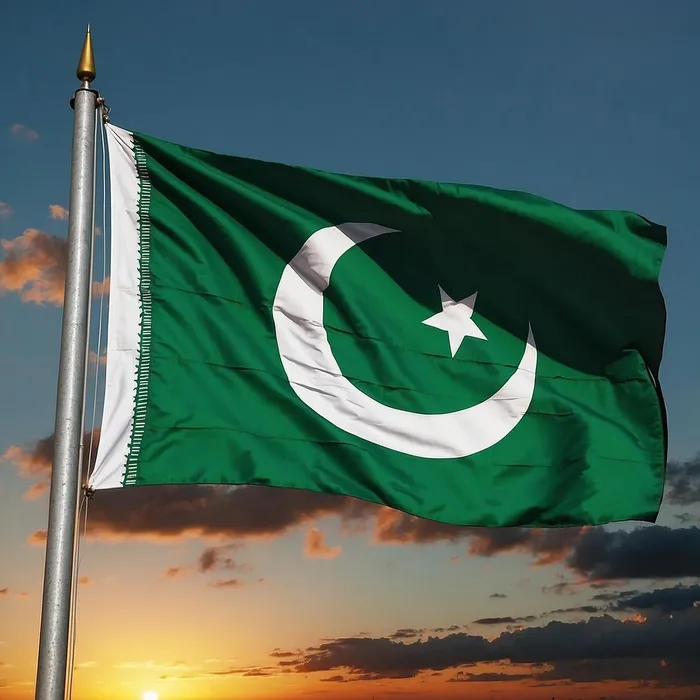
Pakistan’s seemingly inability to protect its minorities is not just a moral disaster. It is a sign of national decline. A country that suppresses its own diversity is choosing decay over development.
Image: pixabay
A Sindhi political leader has asked the United Nations to investigate what he describes as serious human rights abuses and oppression in Sindh, a province in southern Pakistan. He is calling for the world to take urgent action before the situation gets worse.
Shafi Burfat, who leads the Jeay Sindh Muttahida Mahaz (JSMM), has written to the United Nations Secretary-General Antonio Guterres, asking for a fact-finding mission to be sent to Sindh. In his letter, Burfat accuses the government of Pakistan of treating the Sindhi people unfairly, exploiting their resources, and trying to divide their land and culture.
Sindh is one of the four provinces in Pakistan. It lies in the southeast of the country and shares a border with India. The province is home to Karachi, Pakistan’s largest city and economic hub. Sindh has a rich cultural history that dates back thousands of years. The people of Sindh, known as Sindhis, have their own language and identity.
Many Sindhis feel that their culture, economy, and political voice have been ignored or even attacked by the central government in Islamabad. Some activists, including Burfat, believe that Sindh should be an independent country. They call this future state “Sindhudesh.”
Although Pakistan considers groups like JSMM to be illegal and labels their demands as threats to national unity, many Sindhis support greater autonomy and want more control over their land and resources.
In his appeal to the UN, Burfat said that the Pakistani government is trying to divide Sindh by creating tensions between different ethnic and language groups. He believes this is a strategy to weaken the Sindhi identity and stop the movement for independence.
“The government and military are deliberately trying to divide us,” Burfat wrote. “This could lead to conflict and destroy the unity of our people.”
He said that people in Sindh face many forms of suffering, including poverty, violence, discrimination, and the loss of cultural heritage. He highlighted that women and religious minorities are especially at risk.
According to Burfat, many women in rural Sindh are victims of gender-based violence, while religious minorities such as Hindus and Christians are regularly targeted with abuse and discrimination. He also mentioned bonded labour, a form of forced work where poor people are made to work off debts in unfair and unsafe conditions.
“These acts should be considered cultural genocide,” Burfat stated, referring to international laws that protect groups from having their identity destroyed by force.
Burfat’s letter asked the UN to take a number of specific steps to help the Sindhi people. These include Sending a fact-finding mission to Sindh to document human rights abuses and investigating the use of Sindh’s natural resources and who benefits from them. The letter asked that the UN assists in looking into attempts to divide the province along ethnic or political lines and imposes sanctions on Pakistani officials responsible for the oppression.
Burfat said his movement is not based on violence or hatred. Instead, it is about dignity, equality, and justice for all people living in Sindh.
“We believe in a free and united Sindh, where everyone has a place,” he wrote. “Our call for independence is not just for Sindhis but for all communities who call Sindh home.”
He also warned that ignoring the crisis could lead to more instability in the South Asian region, where political tensions are already high. Pakistan and India, both nuclear-armed countries, have a long history of conflict, and unrest in one part of the region could create larger problems.
The idea of a separate Sindhi homeland has existed for decades. However, Pakistan’s government strongly opposes any talk of separation and has cracked down on nationalist groups. JSMM has been banned, and Burfat has lived in exile for many years. He currently speaks to the world from abroad, using social media and international forums to raise awareness of Sindh’s situation.
Pakistan’s authorities have not yet responded to this latest appeal. In the past, they have said that these types of complaints are part of anti-state propaganda. The government claims it is working to improve conditions across all provinces and that groups like JSMM are trying to divide the country.
Despite these challenges, Burfat says he will continue to speak out. He believes the international community has a responsibility to protect those whose voices are being silenced.
“The world cannot stay silent while we suffer,” he said. “Sindh needs the attention of the global community. We need justice, and we need it now.”
So far, the United Nations has not made any public statement regarding Burfat’s request.