

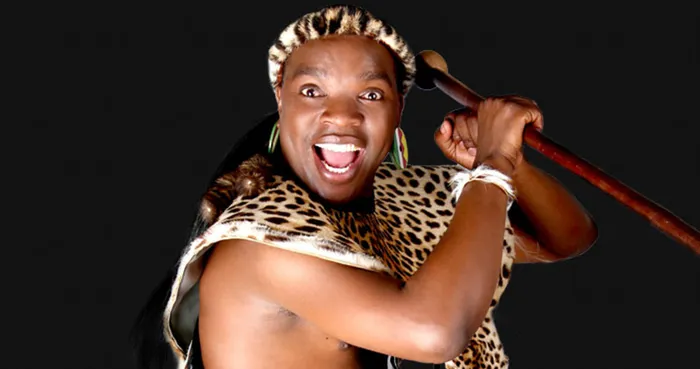
Media personality Ngizwe Mchunu.
Image: Supplied
Mxolisi Makhubu, a former senior member of the African Transformation Movement, has formally lodged a complaint with the South African Human Rights Commission against media personality Ngizwe Mchunu.
The complaint follows a widely circulated video in which Mchunu said that gay people should not wear Zulu traditional clothing and should “find their own country.” The video, though later deleted, reached over one million views and was flooded with disturbing comments calling for the public execution of queer people.
Makhubu’s complaint is just one of many the Commission has received. He argues that Mchunu’s remarks amount to hate speech, incitement to violence, and an attempt to exclude queer South Africans from their cultural heritage. “This is not just offensive. It is dangerous,” Makhubu said. “When public figures use their influence to call for the erasure and displacement of queer people, they are inciting violence.”
He referenced several key laws that criminalise such conduct. These include the Promotion of Equality and Prevention of Unfair Discrimination Act, the Hate Crimes and Hate Speech Act signed into law in 2023, and other statutes that prohibit the distribution of hateful content, whether in person or online.
Despite the backlash, Mchunu remains unapologetic. In a second video, he stood by his words and repeated that queer people dishonour Zulu traditions by wearing cultural attire. “If they want to be gay, they must do it elsewhere,” he said. “Not in our traditional clothing.” These remarks have continued to draw outrage, particularly as violence against LGBTQIA people in South Africa continues to escalate.
United Democratic Movement Councillor Yongama Zigebe has also intervened by addressing an open letter to Minister Sindisiwe Chikunga of the Department of Women, Youth, and Persons with Disabilities. Copies were sent to Deputy Minister Mmapaseka Steve Letsike and to the Chairperson of Parliament’s Portfolio Committee on Women, Youth, and Persons with Disabilities, Liezl Linda van der Merwe. In the letter, Zigebe condemned Mchunu’s statements, which followed the public celebration of a queer wedding where both partners wore Xhosa and Zulu traditional attire.
“What should have been a proud moment of cultural unity and love turned into a trigger for hatred,” Zigebe wrote. “Instead of celebration, their dignity was attacked and their love made the subject of a hateful rant. This cannot stand.”
He went on to describe the real consequences of such rhetoric, highlighting a surge in violence against LGBTQIA people across provinces. “This violence is fertilised by hateful speech which gives people permission to believe that queer lives are expendable,” he wrote. “The causal link between hate speech and physical violence is undeniable.”
Zigebe called on the department to take urgent action, citing multiple statutes including the Films and Publications Act, the Cybercrimes Act, and the Protection from Harassment Act. He also reminded the ministers of South Africa’s binding obligations under international law to prevent hate speech and protect vulnerable groups. He named several queer South Africans who have been murdered in recent years, including Sphamandla Khoza, Andile Ntuthela, Lindokuhle Cele, and Nonhlanhla Kunene, as examples of the human toll of inaction.
Multiple civil society organisations have also filed complaints with the Human Rights Commission. These include OUT LGBT Wellbeing, Iranti, Access Chapter Two, and others. A newly formed coalition of activists and lawyers in Gauteng has announced it will pursue a criminal case of crimen injuria against Mchunu. The group is also investigating whether Mchunu’s business interests are linked to any government contracts or organisations that claim to support diversity and inclusion.
“We will not allow public funds to support anyone who incites hatred against marginalised communities,” said a spokesperson for the group. “If he profits from state partnerships or inclusive brands, those institutions must be held to account.”
In response to the growing uproar, the South African Human Rights Commission issued a media statement on Thursday confirming it has received and is processing the complaints. “The rights to freedom of expression and cultural belief are not absolute,” the Commission stated. “The Constitution and equality legislation prohibit any form of speech that is harmful or promotes hatred based on sexual orientation.”
As public pressure continues to build, Makhubu and Zigebe say this moment represents a critical test of South Africa’s commitment to human rights. “We must make it clear that there is no place for hate in our democracy,” Makhubu said.
“Homophobia is not African,” Zigebe added. “It is a colonial lie. Our people have always embraced diversity. We will not allow culture to be twisted into a weapon of hate.”
The Human Rights Commission is expected to conclude its assessment and announce its next steps in the coming weeks.