Singh’s bail hearing highlights flaws in Pre-Trial Detention System
Rushil Singh's sister Nishani died in custody after repeated bail denials. Legal experts say the case exposes violations of the human rights of accused persons
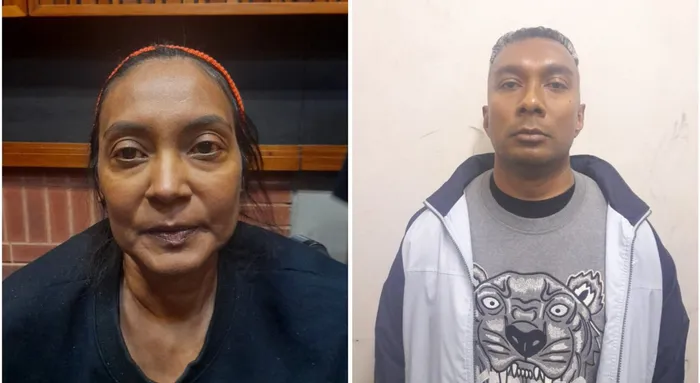
Siblings, Nishani Singh and Rushil Singh have been charged for fraud. Nishani died in prison after continued declines to her bail application
Image: Independent Newspapers
After 14 months behind bars, businessman Rushil Singh is set to return to the Palm Ridge Specialised Commercial Crime Court on Thursday for his long-awaited bail hearing, as the prosecution’s fraud case against him continues to unravel. The case, which involves alleged financial misconduct related to Stanbic Bank Ghana guarantees, has drawn attention to systemic issues in South Africa’s pre-trial detention system.
Singh has been detained since October 2023, accused of fraud, forgery, and uttering linked to financial guarantees issued by his company, Big Business Innovations Group (Pty) Ltd (BIG). These guarantees were reportedly presented to Investec Bank in support of loans exceeding R178 million—loans which Stanbic Bank Ghana later disavowed.
However, new evidence and witness concessions have increasingly undermined the State’s case. The first prosecution witness confirmed under oath that the two affidavits used to obtain Singh’s arrest did not implicate him in wrongdoing. Further affidavits alleging his involvement were only created after the death of his sister, Nishani Singh, who served as the company’s financial director and main operational figure in the disputed transactions.
“The documents originally used to arrest him do not point to any culpability on his part,” said Singh’s defence team. “Evidence now suggests his sister bore primary responsibility for the transactions, and the new affidavits appear to have been constructed posthumously to implicate Rushil unfairly.”
Adding to the case against the prosecution, a witness admitted that the signature on the allegedly falsified financial statements was not Singh’s but that of another company director. This aligns with the defence’s claim that Singh was falsely linked to documents he neither signed nor authorised.
Singh’s case has also drawn attention because of the treatment of his sister, Nishani Singh, who died while in custody. At her bail hearing, Nishani appeared in a wheelchair and pleaded with the court, citing tuberculosis and pneumonia and expressing fear that she would not receive adequate medical treatment in prison. Despite her condition, bail was denied, and she remained in custody, later being admitted to Baragwanath Hospital as her health deteriorated further.
“Even in the face of severe illness, the court refused bail,” said a legal expert familiar with the case. “This raises serious questions about the proportionality of pre-trial detention in South Africa, particularly in complex financial crime matters.”
Prominent legal commentator Chris Wessels emphasised the broader implications. “A person awaiting trial must not be treated as a convicted felon. The State has a duty to prove guilt in court, and pre-trial detention should be applied only where absolutely necessary,” Wessels said. “Rushil Singh’s case illustrates the imbalance that can occur when evidence is weak and delays are prolonged.”
Singh’s prolonged detention stands in contrast to other high-profile financial crime cases in which accused individuals were granted bail, despite the scale of allegations. Examples include Gustav de Kock, involved in multi-million-rand bank fraud, and foreign nationals facing complex financial crime charges, who were allowed pre-trial release while their cases were adjudicated. Legal analysts argue that granting bail in such cases is standard practice and should extend to Singh, given the evident weaknesses in the State’s case.
The bail hearing also highlights the dangers of delayed justice. Singh criticised repeated postponements of his case, arguing that his prolonged detention put him and his family at risk.
The Department of Justice and Constitutional Development has confirmed that it is reviewing the matter. Justice Minister Mmamoloko Kubayi reaffirmed the government’s commitment to pursuing all legal avenues to ensure justice, while emphasising confidence in both South Africa and Malawi’s judicial systems.