
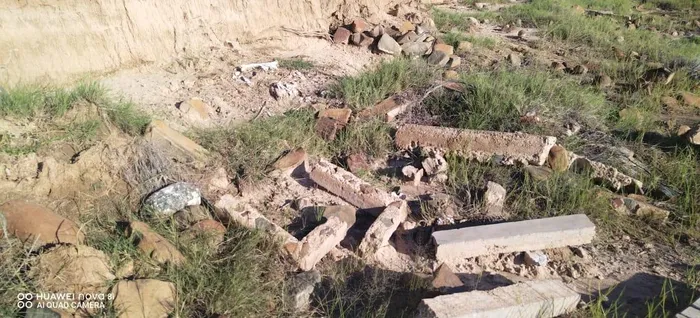
The "graves of remembrance" made with bricks and mud.
Image: Supplied
In the small village of Fattu Shah in northern Sindh, a field covered with dirt and bricks hides the graves of women and men killed in the name of family honor. There are no names, no headstones, and no ceremonies. This site is known locally as Kariyon ka Qabristan, which means the graveyard of the dishonored.
Women’s rights activist Aisha Dharejo has been visiting this place for more than fifteen years. She says each grave represents a woman who was silenced. “Each grave tells the story of a life that ended because of family shame,” she explains.
Victims of so called honor killings are often buried without proper burial rites. Their bodies are placed in shallow pits and covered with mud and bricks. The nearby community cemetery, where families bury their loved ones with care, shows a sharp contrast.
Local activist Zarqa Shar says this graveyard has existed for over a century. She explains that the feudal system in Sindh allows such practices to continue. “The landlords control jobs and resources. People are scared to speak out,” she says.
Honor killings in Pakistan usually involve relatives killing someone they believe has brought shame to the family. This can happen if a woman chooses her own husband, asks for a divorce, or talks to a man outside her family. According to the Human Rights Commission of Pakistan, 405 people were killed for family honor in 2024. Most victims were women, and experts say many more cases go unreported.
Dharejo says these killings are not really about honor or tradition. “They often happen because of land disputes or family rivalries,” she says. Through her organization, Sindh Suhai Sath, she helps women who survive such violence and supports them with legal and financial aid.
One survivor is twenty two year old Sobia Batool Shah from Naushahro Feroze. Her father and other male relatives attacked her with an axe after she asked for a divorce. “They wanted to kill me,” she says. “They cut my legs and left me disabled.” Her father is now in jail awaiting trial, but Shah continues to seek justice against the others involved.
Another survivor, Haleema Bhutto, was married at age twelve. Her husband later accused her of having an affair after she refused to give him property. She fled her home and protested for months outside Islamabad’s Press Club, demanding government protection. In 2011, Pakistan’s Supreme Court granted her a divorce and restored her inheritance. “My case showed that women can win if they do not give up,” she says.
Police officials in Sindh say they are trying to stop honor killings. Senior Superintendent of Police Muhammad Anwar Khetran says the practice will end with time. “It is not honorable. It is a crime,” he says. He believes progress is being made through education and by hiring more female officers.
Another police officer, Mir Rohal Khoso, says education and economic freedom are key to protecting women. “When a woman is educated and earns her own income, she knows her rights,” he says.
Dharejo agrees but warns that feudal power and poverty still trap many women. “They stay in danger because they depend on others for survival,” she says. “We cannot wait for change to come slowly. It must be pushed now.”