
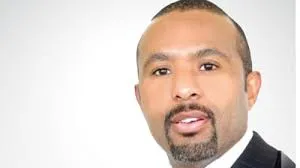
Desmond Golding
Image: supplied
The National Housing Finance Corporation (NHFC), the public entity responsible for providing affordable housing finance, is under the spotlight after civil rights organisation Right to Justice (RTJ) raised concerns over its leadership. RTJ has written to Minister of Human Settlements Thembi Simelane and the Chair of the Portfolio Committee on Human Settlements, warning that the current NHFC board is “improper” and unfit to oversee public resources.
“The board is therefore not fit,” said Siphesihle Jele, chair of Right to Justice. “This is a public entity that touches the lives of millions of South Africans. Yet its leadership is mired in scandal, mismanagement, and unresolved legal issues. The public cannot trust this board with the country’s housing mandate.”
At the centre of the controversy is the appointment of Desmond Golding as board chair. Golding, a former head of the KwaZulu-Natal Department of Economic Development and Tourism, is linked to the failed 2012 North Sea Jazz Festival, where R28.5-million was allegedly diverted to service providers for an event that never took place.
Golding, along with former ANC heavyweight Mike Mabuyakhulu, faced charges of fraud, money laundering, and corruption. While the High Court discharged the accused due to insufficient evidence, the state has now revived its appeal to the Supreme Court of Appeal.
The Supreme Court of Appeal (SCA) has directed that KwaZulu-Natal high court judge Mahendra Chetty’s refusal to grant the state special leave to appeal be sent back to the SCA for fresh consideration. The matter may also proceed to oral argument, including on the merits, if the court requires it.
In May 2023, at the close of the state’s case, Chetty granted an application for the accused to be discharged, effectively acquitting them without requiring any defence testimony. He ruled that the state had produced no evidence capable of sustaining a conviction.
Delivering a 100-page judgment that took three hours to deliver, Chetty analysed each count against each accused, repeatedly highlighting the weakness of the evidence. He remarked that some allegations were overly speculative and that mere suspicion cannot sustain a criminal prosecution.
He further found no reasonable prospect that the SCA would conclude he had erred in law in a way that could lead to convictions.
Mabuyakhulu, who was the MEC for economic development and tourism at the time, was accused of accepting a R300,000 bribe in exchange for awarding the festival contract to the joint-venture organisers.
The discharge was granted under section 174 of the Criminal Procedure Act, which allows a judge to acquit accused persons at the end of the state’s case if the prosecution has not presented evidence capable of supporting a conviction.
KwaZulu-Natal NPA spokesperson Natasha Ramkisson-Kara said: “The NPA welcomes the opportunity to argue before the SCA that Judge Mahendra Chetty erred in law in discharging the accused; that there are reasonable prospects of success; and that compelling grounds exist for the appeal to be heard. Prosecutors will continue to challenge any ruling believed to be legally incorrect, using all available remedies.”
Golding maintains that he is innocent and judge Mahendra Chetty was justified in the acquittal. "This is just malicious. I am innocent and the court has agreed with that. I have the right to work in South African" he said.
Public boards are governed by multiple legal frameworks. The Public Finance Management Act 1 of 1999 requires accounting authorities to be fit and proper and to manage public funds responsibly. The Companies Act 71 of 2008 mandates that directors act with care, skill, and in good faith. The Public Service Act 103 of 1994 requires merit-based appointments, while the Promotion of Administrative Justice Act 3 of 2000 ensures transparency and procedural fairness in public appointments.
“None of these standards have been met,” Jele said. “Political influence appears to have overridden merit and competence. This board is unlawful and cannot execute its mandate properly.”
Challenges within the NHFC are not new. In 2020, top executives were implicated in two internal investigation reports for financial misconduct. Those named included Chief Executive Samson Moraba, the heads of human resources and legal, and several general managers.
The investigations, carried out by Ngubane & Co auditors, were launched after the National Treasury refused to approve R3-million in irregular expenditure during a single financial year. The reports found that the NHFC repeatedly failed to follow proper tender procedures when hiring law firms, consultants, research companies, and travel agents, as well as paying for training and team-building activities.
“The board’s failure to address misconduct shows it is incapable of governing the entity effectively,” Jele said. “An improper board cannot oversee billions in public funding without exposing taxpayers to risk.”
Golding’s appointment as NHFC chair comes amid ongoing legal scrutiny. The state is seeking to appeal the discharge of Golding, Mabuyakhulu, and others in the 2012 North Sea Jazz Festival case. The allegations included irregular payments and kickbacks.
“The fact that Golding has pending legal exposure only underscores why this board is unfit,” Jele said. “Leadership that cannot withstand public and legal scrutiny should not oversee public funds. The NHFC board is a ticking time bomb for governance and financial accountability.”
The NHFC plays a critical role in providing affordable housing finance for low and middle-income households. It is also central to the development of the Human Settlements Development Bank, announced by President Cyril Ramaphosa during his State of the Nation address in 2020.
“If we are to address the substantial housing backlog, we need innovative models of financing,” Ramaphosa said. “The Human Settlements Development Bank will leverage both public and private sector financing to aid in housing delivery.”
RTJ warns that the improper board could undermine the NHFC’s mandate, putting both the housing backlog and public funds at risk. “We will take legal action if necessary,” Jele said. “We cannot allow an illegal, politically compromised board to govern a public entity critical to millions of South Africans.”
Right to Justice is calling for an urgent overhaul of the NHFC board to ensure compliance with legal and governance requirements, ethical leadership, and accountability.
“The NHFC board is a public institution. It should be led by individuals above reproach. Golding’s unresolved legal matters alone make his appointment questionable,” Jele said. “This is not just about one person. The entire board is improperly constituted, ignoring legal and governance requirements for public entities.”
“This is not a partisan issue,” Jele said. “This is about protecting the public, ensuring housing for those who need it, and safeguarding billions of rands in taxpayer funds. An improper board is a threat to all three. Parliament, the Ministry, and oversight bodies must act immediately to remedy this governance failure.”
*This story has been updated with the NPA' comment and Golding's comment.
This is a developing story.