


The mother of the slain Eldorado Park teenager, Nathaniel Julies, says “it feels like a piece of my heart is missing,” a year after her son’s fatal shooting.
Image: Picture: Siphiwe Sibeko/Reuters.
More than 60% of child murder victims are killed by someone they know, such as a parent, relative, or neighbor, and the Western Cape, KwaZulu-Natal, and Gauteng collectively account for more than 60% of all child murders in South Africa.
This is according to the new report released by non-profit organisation Action Society, in which they revealed that children remain under siege with protective systems that are meant to safeguard children, simply not functioning.
Ahead of the 16 Days of Activism for No Violence Against Women and Children, starting 25 November, Action Society has published its new research report, “The Crisis of Crime Against Children in South Africa: A Call for Accountability and Urgent Reform”, which presents overwhelming evidence that the country is failing to protect its youngest citizens.
Drawing on Statistics South Africa’s Crime Against Children series (2019/20 –2023/24), SAPS data, and Action Society’s direct case involvement, the report shows a collapsing justice system.
“From the prevention of abuse to the quality of investigations and forensic turnaround times, the protective systems meant to safeguard children are simply not functioning. While public awareness campaigns help to highlight the scale of the crisis, the findings make clear that symbolic gestures are not enough. South Africa needs accountability, capacity, and decisive system reform.
“The data confirms that rape remains the most prevalent violent crime committed against children, with the 2022 and 2023 child rape rate recorded at 87 per 100,000,” they said.
“Child murders have remained unchanged for almost a decade, with between 700 and 1,000 victims every year. Child abductions have escalated sharply, particularly in KwaZulu-Natal, where the provincial share of national cases climbed from 11.7 % in 2015 and 2016 to 49.1% in 2019 and 2020.
“These patterns are compounded by forensic backlogs that at times exceeded 200,000 DNA samples, paralysing rape and murder prosecutions and deepening the trauma for families waiting for justice,” they said.
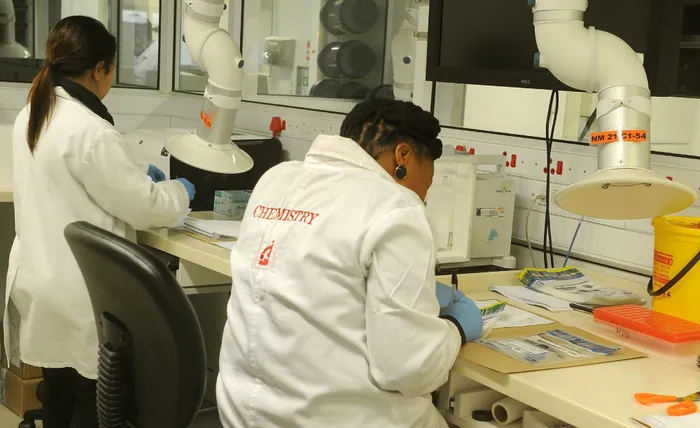
A report revealed that forensic backlogs at times exceeded 200,000 DNA samples, paralysing rape and murder prosecutions and deepening the trauma for families waiting for justice.
Image: Tracey Adams / Independent Newspapers
They also found that:
16 Days of Activism.
Image: Independent Newspapers
The report also foregrounds the lived experiences cases they support, including *Aster, a 15-year-old raped by her pastor in Delft, and *Poppy, a four-year-old raped by her crèche transport driver in Mfuleni. Nine-year-old *Lavender was attacked by a repeat offender on parole for a previous child-sex crime (*not their real names).
They said the murders of Tamia "Mia" Botha and Bokgabo Poo show the fatal consequences of delayed missing-person responses and stagnant forensic progress, while the case of Fern, a 14-year-old girl raped by boys as young as six, illustrates the growing trend of youth-on-youth sexual violence and the normalisation of brutality among children.
The report also includes urgent recommendations, such as:
Ilitha Labantu spokesperson Siyabulela Monakali said that the findings reflect the ongoing scourge of violence perpetrated against children in communities with high rates of violence and mirror the lived realities of children growing up in contexts where violence has become entrenched.
“This year has seen a notable increase in incidents of violence against children across the country. Of deep concern, as noted in the report, is that rape remains the most prevalent violent crime committed against children, with many of the alleged perpetrators being individuals known to them, including parents, family members, guardians and others within their immediate environment.
“This points to a profound collapse of the protective structures that are meant to safeguard children and signals a growing normalisation of violence occurring in spaces where care should be present,” Monakali said.
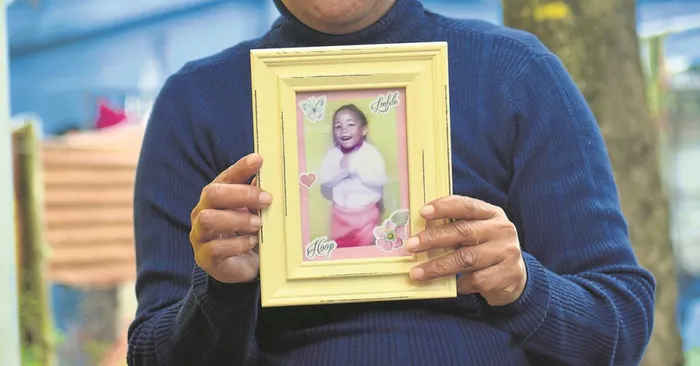
Action Society has previously condemned the silence and shocking lack of progress in the investigation into the brutal murder of four-year-old Tamia (“Mia”) Botha from Paarl East.
Image: Action Society/Supplied
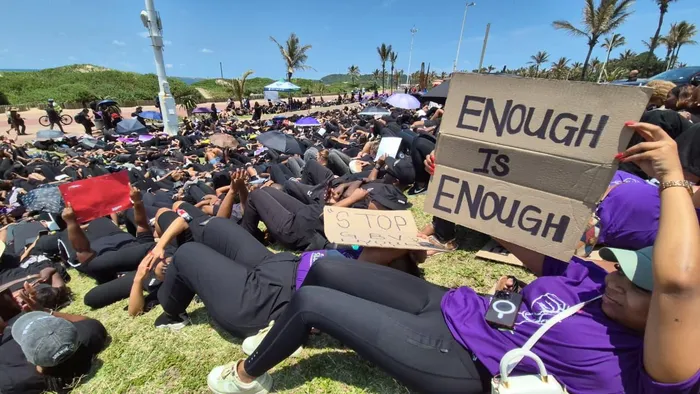
Hundreds gathered in Durban to stand against gender-based violence and femicide, calling for urgent action and solidarity for all victims.
Image: Sibonelo Ngcobo / Independent Media
“As the country enters the 16 Days of Activism, we must caution against the continued reliance on symbolic gestures and momentary outrage. Awareness campaigns alone do not address the pervasive failures that allow violence against children to persist.
“We require a decisive shift towards interventions that are adequately resourced, trauma-informed and grounded in the lived realities of those affected. The urgency of the crisis must be matched with measurable action that centres the experiences of survivors rather than responses shaped by external reports or news cycles. Anything less will continue to compromise the safety, dignity and long-term well-being of children in South Africa,” Monakali said.
Government will launch this year’s 16 Days of Activism campaign under the theme: “Letsema: Men, Women, Boys and Girls working together to end Gender-Based Violence and Femicide (GBVF)”. This year’s campaign will mark the 27th anniversary of its adoption.
The full report can be found here: https://actionsociety.co.za/wp-content/uploads/2025/11/Report-The-Crisis-of-Crime-Against-Children-in-South-Africa.pdf