
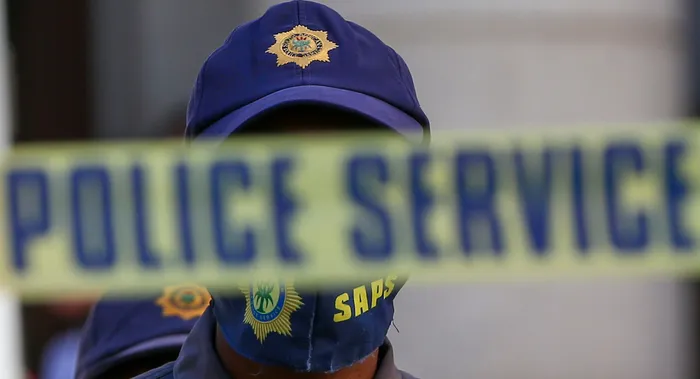
Policing reform is needed.
Image: File
The newly released crime statistics for the first two quarters of the 2025/26 financial year unveil a troubling reality for South Africa, demonstrating that the fundamental principles of policing are failing. Action Society, a non-profit organisation that champions the rights of women and children, has articulated a bleak perspective on the current situation, stating that no national disaster declaration, awareness campaign, or public statement can address this crisis without restoring basic policing capacity at the grassroots level.
The delays in publishing these statistics, attributed to a swirling corruption scandal within the South African Police Service (SAPS), have only served to diminish public confidence. Action Society argues that these interruptions highlight the pressing need for transparent and functional systems capable of delivering accurate crime data free from the taint of impropriety.
The latest figures paint a grim picture: across both quarters, violent crime remains endemic, with little evidence of change in governmental responsiveness to crimes perpetrated against women and children. In the first quarter, killings reached 5,770, averaging 64 murders each day, while the second quarter showed a marginal increase to 5,794 murders. In terms of attempted murders, the country witnessed an alarming 6,401 cases in Q1 and 7,255 cases in Q2, equating to daily averages of 71 and 81, respectively.
Assault with the intent to cause grievous bodily harm (GBH) was equally high, with Q1 seeing 37,569 recorded cases—around 417 per day—soaring to 41,978 cases in Q2, or 466 daily assaults. Moreover, the alarming rate of sexual violence continues, with police recording 9,233 rapes in the first quarter, escalating to 10,154 in Q2, translating to 103 and 113 rapes per day, respectively.
Despite the consistent outcry for detailed data on the impact of crime on vulnerable groups—particularly women and children—no breakdown has been provided since Q4 of the previous financial year. These statistics represent not mere numbers but families grappling with trauma, justice that remains inaccessible, and children living under a constant threat due to judicial inefficiencies.
Juanita du Preez, a spokesperson for Action Society, emphasized the dire consequences of these realities, urging the government to move beyond national disaster declarations and towards substantive operational reforms. "These numbers have painted the same picture year after year. Declaring a national disaster does not build capacity. It does not deploy detectives. It does not fix forensics," she stated passionately. "South Africa needs the basics to work." Du Preez insists that without effective implementation at the ground level, the country will continue to fail in its obligation to protect women and children.
Releasing these troubling figures during the annual 16 Days of Activism against Gender-Based Violence serves as a wake-up call for the government. Action Society contends that reliance on awareness campaigns is insufficient, as South Africans demand functional systems, accountability, and properly trained personnel.
As part of its assessments, Action Society calls for immediate and measurable accountability within SAPS leadership and urges Parliament’s Police Portfolio Committee to enforce timelines on forensic backlogs and the operational capacity of Family Violence, Child Protection, and Sexual Offences units.
To that end, Action Society has proposed several urgent reform solutions aimed at enhancing child protection and improving the justice system. Key suggestions include establishing a functional integrated case management system for child protection, expanding specialised units with trained detectives, fast-tracking forensic processing, and strengthening community safety partnerships.
Action Society remains committed to monitoring these reforms, pledging to report any failures or regressions within SAPS to ensure the ongoing plight of women and children is not ignored.