

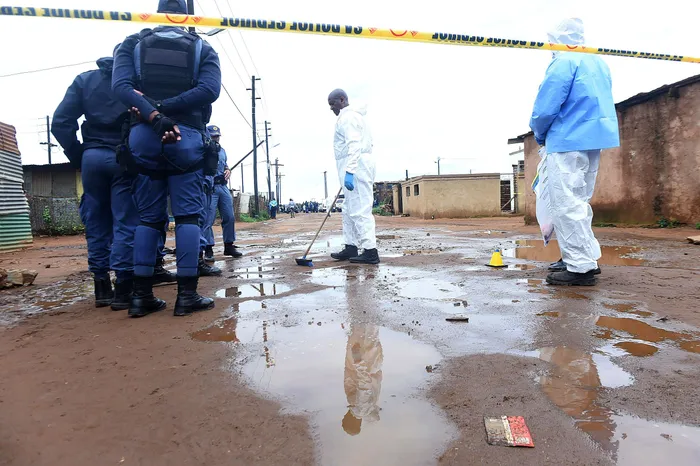
On Sunday, December 21, gunmen opened fire at a licensed tavern in Bekkersdal, a township in the Gauteng province, killing at least nine people.
Image: Itumeleng English Independent Newspapers
Gauteng is facing a worsening violent crime crisis, with the delayed release of first and second quarter crime statistics for 2025-2026 highlighting the scope of the problem.
Every day, on average, 63 people are murdered, as violent and organised criminal networks continue to operate with impunity.
On Sunday, December 21, the situation worsened when gunmen opened fire at a licensed tavern in Bekkersdal, a township in the Gauteng province that is located 14 km south of Randfontein and 7 km east of Westonaria. There were ten injuries and at least nine fatalities.
There has been more bloodshed in the province just this month. On 16 December, in the Johannesburg CBD, near Carlton Centre, Warris Stock, popularly known as DJ Warras (40) lost his life during a broad daylight shooting.
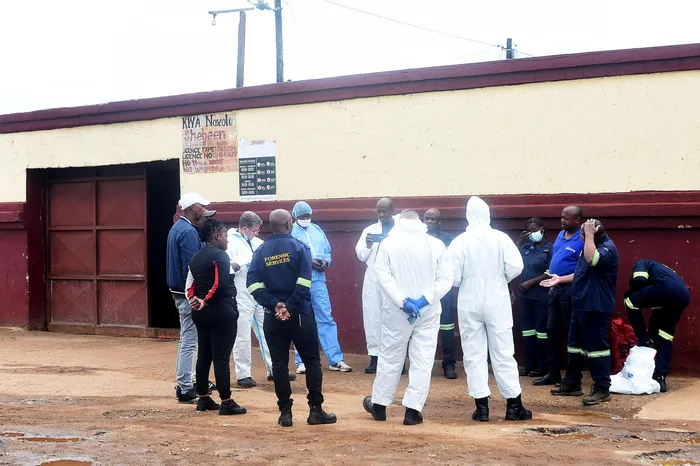
On Sunday, December 21, gunmen opened fire at a licensed tavern in Bekkersdal, a township in the Gauteng province, killing at least nine people.
Image: Itumeleng English Independent Newspapers
In another high-profile killing, Marius Van der Merwe, 41, was shot dead in front of his family on 5 December, just weeks after testifying at the Madlanga inquiry.
The latest killing figures have reignited public fear in Gauteng, which has seen a string of mass murders that have left communities traumatised and exposed gaps in law enforcement.
Moreover, in recent months, a gang-related shooting in Westbury claimed the lives of two teenagers, leaving others injured, while survivors recounted the horror of watching friends gunned down.
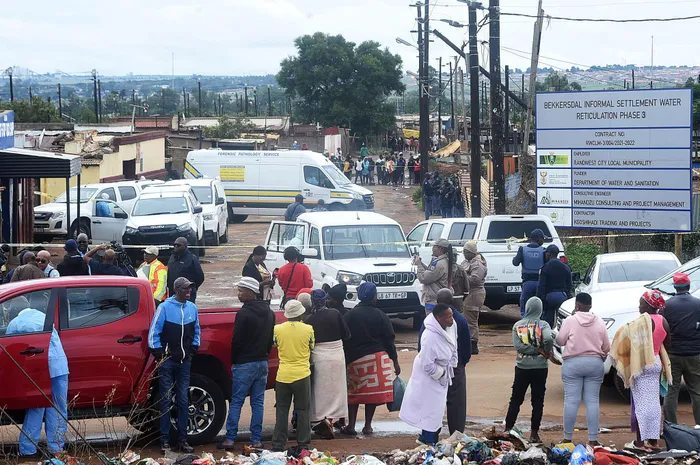
On Sunday, December 21, gunmen opened fire at a licensed tavern in Bekkersdal, a township in the Gauteng province, killing at least nine people.
Image: Itumeleng English Independent Newspapers
In Reiger Park, a drive-by shooting killed six people and injured three, highlighting the rising threat of public attacks in township communities. Meanwhile, illegal taverns have emerged as deadly hotspots.
The Saulsville hostel massacre in Atteridgeville left at least 12 dead after gunmen opened fire in an unlicensed liquor outlet, underlining the link between unregulated venues and escalating violence.
In March this year, four people were gunned down in Jeppestown, Johannesburg. In the same month, a shooting at the Marry Me informal settlement, north of Pretoria, left eight people injured and four dead and partially burned.
Regarding the attack on December 21 (Sunday), Gauteng police spokesperson Brigadier Brenda Muridili stated that about 12 suspects in a white kombi and silver sedan stormed the venue in the early hours, firing indiscriminately before fleeing.
The injured were rushed to various medical facilities, while many others were left traumatised by the brazen assault. Police have launched an intensive investigation, deploying forensic teams, detectives, and Crime Intelligence, but the motive for the attack remains unknown.
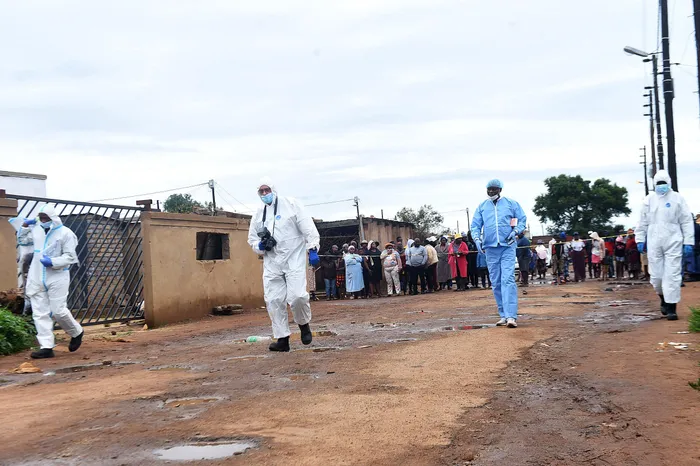
On Sunday, December 21, gunmen opened fire at a licensed tavern in Bekkersdal, a township in the Gauteng province, killing at least nine people.
Image: Itumeleng English Independent Newspapers
Some community members in Bekkersdal claimed they are left helpless and vulnerable as the local police station closes at 10 pm, allegedly because the officers fear for their safety.
However, Brigadier Muridili dismissed these claims, stating that all SAPS Gauteng stations operate 24/7, except for contact centres.
“Bekkersdal is a fully fledged police station, and it operates 24 hours,” she said.
Muridili also noted that SAPS, together with stakeholders including the Community Police Forum and the Liquor Board, has met with tavern owners to enhance security measures.
“We are working together with private security companies, patrollers, and other law enforcement agencies to ensure increased visibility and safety for patrons,” she added.
The Gauteng Provincial Legislature’s Portfolio Committee on Community Safety recently called for an intensified clampdown on illegal taverns following another massacre in a tavern in the Choba informal settlement, Olievenhoutbosch, Pretoria, where six people were killed and three others injured when ten people entered the tavern and fired indiscriminately at patrons.
According to the committee, the motive for that July attack was linked to ''turf wars involving illegal foreign nationals allegedly connected to illicit mining operations. It has also been reported that the tavern was operating without the required licenses and that its owner is an undocumented foreign national''.
The Democratic Alliance (DA) has condemned the wave of mass killings, describing them as symptomatic of sprawling organised crime networks. The party has demanded that Premier Panyaza Lesufi establish a specialised task team to investigate the deadly Bekkersdal shooting.
Jade Miller, DA Constituency Head for Rand West South, said Bekkersdal has long suffered under illegal mining and associated criminal activity, and the latest tragedy underscores a severe breakdown in safety and security.
“Gauteng cannot and must not become the mass-shooting capital of South Africa,” Miller said, calling for a task team equipped with intelligence specialists, crime analysts, and credible informants to dismantle criminal networks.
She also conveyed the party’s condolences: “Our thoughts and prayers are with the families of those who lost their lives. We stand with the Bekkersdal community and will continue to demand decisive action to restore safety and the rule of law in Gauteng.”
Despite the relatively strict gun control laws in South Africa, police officials said that illegal firearms are used in many murders.
According to IOL acting Police Minister Professor Firoz Cachalia’s spokesperson, Kamogelo Mogotsi, said, “The Acting Minister has maintained that the proliferation of illegal firearms remains one of the key drivers of violent crime in Gauteng and across the country.
“Intensified intelligence-led operations and stronger cooperation between the South African Police Service (SAPS), communities, and other law enforcement stakeholders are critical in addressing this challenge.
“Sustained visible policing, focused operations against organised criminal groups, and community-based interventions to prevent violent crime, particularly around high-risk areas such as taverns and entertainment precincts, are also key in ensuring the safety of our communities.”
The Star
Itumeleng English Independent Newspapers
Image: Itumeleng English Independent Newspapers
Itumeleng English Independent Newspapers
Image: Itumeleng English Independent Newspapers