

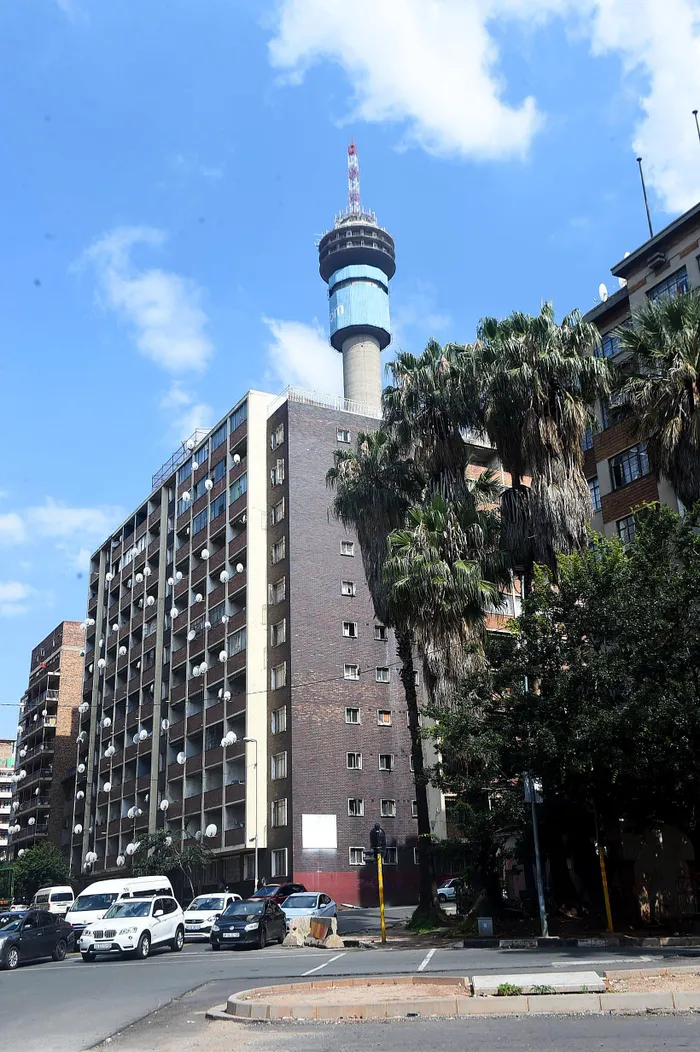
The residents of Clarendon Heights in Hillbrow were given a lifeline after the City of Johannesburg issued an eviction order against them, claiming the building was being hijacked. The residents filed an appeal against the decision.
Image: Itumeleng English/ Independent Newspapers
Despite a court order that had initially directed them to leave the building within 48 hours, residents of Clarendon Heights, a sectional title building in Hillbrow that has been described as hijacked, will be permitted to stay in their homes this Christmas.
The development coincides with an increased citywide crackdown on unsafe and hijacked buildings, spearheaded by MMC for Public Safety Mgcini Tshwaku and initiated by the City of Johannesburg after DJ Warras was shot and killed.
Concerns expressed by civil society organisations, who have long cautioned that evictions without sustainable housing alternatives only displace vulnerable residents rather than address the issue, have been rekindled by the increased enforcement effort.
The Prevention of Illegal Eviction (PIE) Act, which mandates that alternative housing be taken into consideration before any removals can occur, especially for vulnerable occupants, has been reaffirmed by city officials as a requirement for all evictions.
The occupiers – about 38 – against whom the order was earlier obtained in the Gauteng High Court, Johannesburg, tried in vain to obtain leave to appeal the eviction order. They will now petition the Supreme Court of Appeal (SCA) in a bid to appeal the eviction order.
While a pending appeal usually suspends an order, the Clarendon Heights Body Corporate and the City of Joburg, meanwhile, obtained an order that they must be evicted, even though the appeal is still pending.
In the latest saga, the residents appealed this order, and in a judgment delivered earlier this month, Judge Leonie Windell agreed to suspend the eviction order for now. This is because of the uncertainty of where the residents will go if they are evicted within 48 hours and the risk of potential homelessness.
While she acknowledged exceptional circumstances and ongoing harm to the body corporate and the city, there was insufficient evidence on the occupiers’ vulnerability, household composition, or the availability of temporary emergency accommodation.
The judge, however, ordered that interim interdicts regulating occupation, access, utilities, security, and management of the building shall remain in force pending final determination of the appeal or further order of the court.
In March this year, the body corporate and the City of Joburg instituted urgent proceedings in terms of the Prevention of Illegal Eviction from and Unlawful Occupation of Land Act (PIE), alleging that the building had been taken over and managed without the authority of the body corporate.
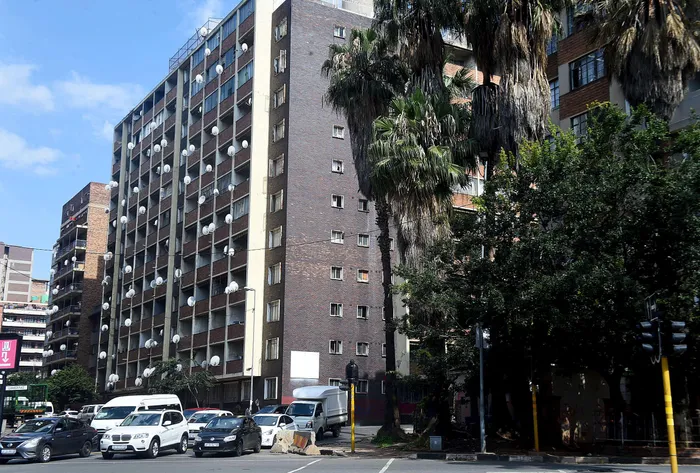
The residents of Clarendon Heights in Hillbrow were given a lifeline after the City of Johannesburg issued an eviction order against them, claiming the building was being hijacked. The residents filed an appeal against the decision.
Image: Itumeleng English/ Independent Newspapers
The allegations included that rental payments were being collected by persons other than the registered owners and that contractors and management were being denied access. The respondents further alleged that these circumstances resulted in what is referred to in urban housing matters as a “building hijack,” accompanied by serious security and safety concerns affecting residents and the property.
The city was directed to file a report on the availability of temporary emergency accommodation and engagement with the occupiers. It also had to conduct an occupancy audit and file a report on vulnerability, emergency accommodation availability, and relocation planning.
The court subsequently granted an eviction order against the occupiers. It noted that funds were being collected unlawfully, that contractors, agents, and plumbers had been denied access, and that threats and acts of violence had occurred when attempts were made to enter or maintain the building.
The property had deteriorated significantly, municipal utilities had been interfered with, and insurers had threatened to withdraw risk cover.
The occupiers applied for leave to appeal, which was dismissed. The petition to the SCA was lodged in August and remains pending.
Now dealing with the question of whether the eviction should proceed pending the appeal, Judge Windell ruled that the eviction’s consequences cannot be reversed if later found wrongful.
“That concern is heightened by the 48-hour time-frame in the original order. Short notice in an inner-city context involving multiple households carries a real risk of abrupt displacement, disruption to schooling or employment, and immediate loss of shelter. Harm of that kind cannot be remedied by the outcome of an appeal or by a costs award,” she said.
The eviction order accordingly remains suspended pending the outcome of the petition to the SCA and any further appeal that may follow.
As part of the broader enforcement drive, the city has so far inspected around 331 properties across Johannesburg during coordinated multi-department operations aimed at restoring safety and order in the inner city. The inspections target hijacked, abandoned, and non-compliant buildings long linked to crime, unsafe living conditions, and illegal electricity connections.
Speaking to The Star, Public Safety spokesperson Rhulani Mgwambane said residents will begin to see a stronger law-enforcement presence and more frequent inspections as the city intensifies its response.
“Residents will see increased law enforcement presence and more inspections. The city has stepped up joint operations with law enforcement agencies to deal with unsafe and non-compliant buildings. Officials are inspecting properties more frequently, checking compliance with by-laws, and acting on issues such as illegal electricity connections, dumping, and dangerous living conditions. Where violations are found, formal notices are being issued,” he said.
Mgwambane said the city has already taken direct action at known hijacked buildings, including an inspection of a property in Marshalltown following the death of DJ Warras, where occupants were formally notified to vacate.
He added that the city’s Inner-City Buildings Revitalisation Strategy, approved in 2025, clearly identifies unsafe buildings earmarked for evacuation and rehabilitation, including M.O.T.H, Vannin and Casa Mia. City leadership has also committed to closer cooperation with SAPS and private partners to reclaim buildings and improve inner-city safety.
Mgwambane said several unsafe buildings have already been earmarked for evacuation and further enforcement action, although the city has not yet published a comprehensive public list of all buildings that will ultimately be closed or reclaimed.
Civil society organisations have long warned that removing people without long-term housing solutions risks simply shifting the problem elsewhere. In response, Mgwambane stressed that all evictions must comply with the Prevention of Illegal Eviction (PIE) Act.
Mgwambane said that the shortage of alternative accommodation remains one of the main reasons progress has been slow.
The Star