

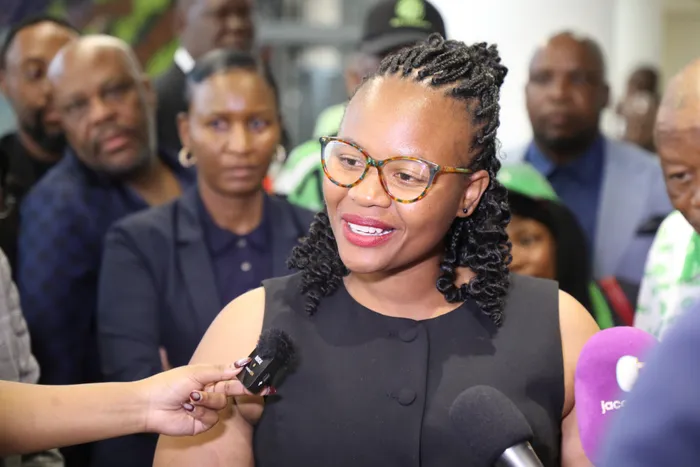
City of Tshwane Mayor Nasiphi Moya led the city’s revenue collection drive called Tshwane Ya Tima, targeting Madibeng Municipality over R20 million unpaid electricity debts.
Image: Oupa Mokoena / Independent Newspapers
The Madibeng Local Municipality in the North West Province has again found itself in trouble with the City of Tshwane over unpaid electricity bills amounting to R20 million.
The city's mayor, Nasiphi Moya, led a revenue-collection drive called Tshwane Ya Tima, targeting government departments and municipalities in a bid to recoup R1.9 billion in debt.
Among the debtors was Madibeng, which had previously struggled with payments, forcing residents to face service delivery disruptions.
In 2022, the city took Madibeng to the Gauteng High Court, seeking to freeze its bank account over an unpaid R258m bill for bulk water supply.
At the time, Madibeng chief of staff Senzo Mgqongolo said the municipality entered into an agreement with Tshwane to pay its debt. However, he conceded that the debt was not serviced according to the agreement because the municipality was financially challenged.
On Monday, Moya said the city embarked on the Tshwane Ya Tima campaign to recoup R64 million from debtors, including R20m owed by Madibeng.
“We have been here before. We have switched them off, and they would ask for an arrangement and (then) they renege on the arrangement. It is unsustainable for us. We can’t provide them with electricity or the service that they don’t pay for. For me, I am going to take a very tough stance on this municipality because people are paying them, but they don’t prioritise us,” she said.
Moya explained that the city’s plan ensures residents receive a consistent supply of services, but stressed that these come at a cost.
“So, I made a commitment to raise revenue so that we can finance the plan that we have to ensure that we reduce the number of outages. The maintenance budget needs to be increased, but it means that we must raise revenue at least from electricity. So, today we have R64 million that we need to switch off for. We switch off, and then those departments must follow us to the office.”
Moya stated that she was particularly targeting the departments from national and provincial governments and municipalities receiving services from the city, adding that they are collectively owing Tshwane a total of R1.9 billion.
Madibeng’s Ward 30 councillor Graem Peplar said Tshwane supplies electricity to four areas, which are the Rietfontein wastewater treatment plant, Ifafi substation serving eastern Hartbeespoort, Refentse, and Sunway settlements.
He said Tshwane cut off electricity to Madibeng in June last year, demanding payment arrangements within 48 hours.
“In September, Tshwane cut off those accounts again, and it took Madibeng four to five days to come to an agreement to pay off their debts with Tshwane,” Peplar said.
He further said he was told by Madibeng's municipal manager that the municipality had made a payment arrangement on arrears in December, but failed to pay the November account, leading to Tshwane cutting off electricity supply.
Madibeng Mayor Douglas Maimane said the municipality has settled its electricity debt with Tshwane on Tuesday, but was unsure if the city has reconnected electricity to affected areas.
He attributed the power issues in Sunway and Refentse to rampant illegal connections, suggesting that the government should explore technological solutions to curb the problem.
Additionally, he said talks are under way to install prepaid electricity meters in the affected area, aiming to resolve future payment issues.
“Most of our people in these areas are illegally connected to the system, and they are getting free electricity,” he said.
He added that the municipality is not disputing the debt owed to Tshwane “because illegal connections make accurate billing impossible”.