

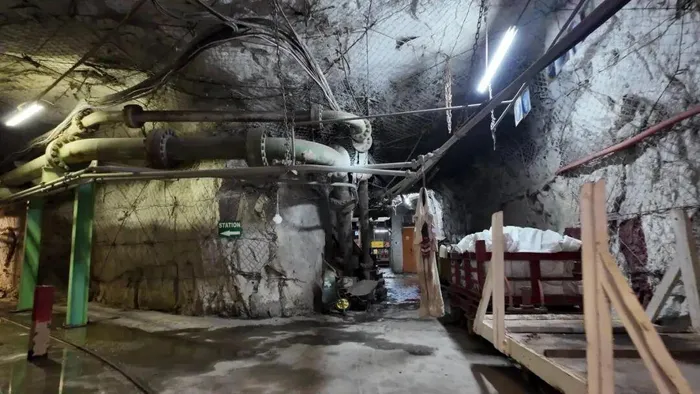
As an established mining leader, South Africa has strict certification systems for professional qualifications.
Image: Supplied
At a depth of 1,734 meters in South Africa's TAU Mine, Chinese mining companies face a dual challenge: extremely hard quartzite rock and what industry insiders call the most rigorous "rite of passage" in global mining. The Witwatersrand Basin, holding over half the world's gold reserves, presents a unique mining environment. In the industry, gold mining is often split into two categories: South Africa, and everywhere else.
But the geology is only part of the test. As a traditional mining powerhouse, South Africa has complete technical standards, legal frameworks, and mature supply chains, with deep-level mining technology leading the world. Here, Chinese companies cannot simply replicate domestic models or transplant entire Chinese teams. They must adapt and integrate.
"This is a challenge, but invaluable experience," said Li Xuecai, Chairman of Pengxin Resources' CAPM unit. "South Africa's talent pool is international. Succeeding here brings us closer to true globalization."
"We Simply Couldn't Operate the Conventional Way"
"In South Africa, Chinese companies cannot send complete domestic teams like in other countries," Li stated frankly. The common approach overseas—sending entire Chinese teams where Mandarin is the working language—proves unworkable here.
As an established mining leader, South Africa has strict certification systems for professional qualifications. Key positions like general manager require local credentials, which few Chinese engineers hold, coupled with tight work visa controls.
Even if they could send large teams, it would be ineffective. "Most Chinese gold mines are about 1,000 meters deep, while here they typically reach 2,000 to 3,000 meters," Li explained at the TAU Mine entrance. "South Africa has a unique deep-mining technology system, and the ore is extremely hard—this isn't our core expertise."
Challenges extend beyond technology. South Africa's development issues, including exchange rate swings and security concerns, have worried foreign investors.
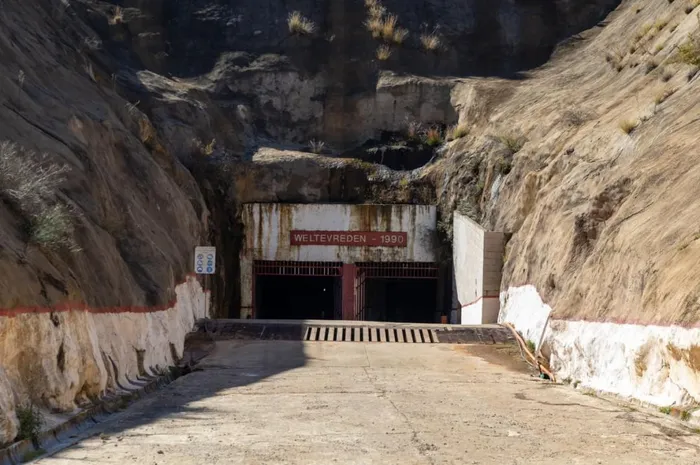
The Weltevreden Mine (W Mine).
Image: Supplied
The Weltevreden Mine (W Mine), one of the rare near-surface mines in the basin, illustrates the operational landscape. Ore is transported to the surface via a several-kilometer inclined shaft. At the entrance, a massive concrete slope allows mine carts to discharge ore into storage tanks rather than open piles.
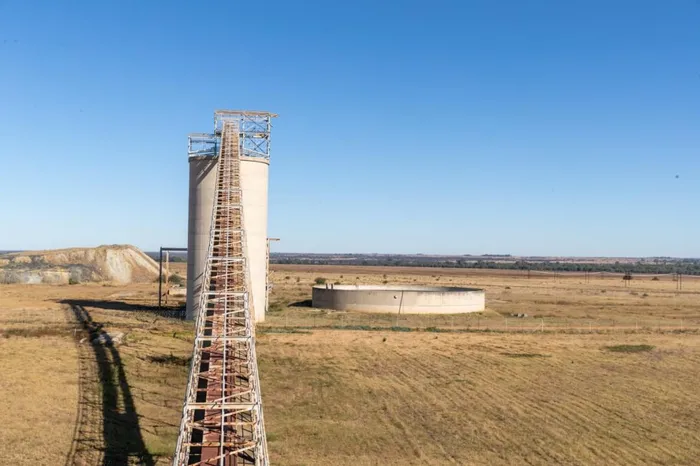
Ore is transported to the surface via a several-kilometre inclined shaft.
Image: Supplied
"We store ore in tanks to prevent gold loss and deter theft," explained Keith, the mine's manager.
Small Chinese Team, 2,800 Local Employees
Facing unfamiliar conditions, CAPM adopted a highly localised strategy, employing about 2,800 staff in South Africa with very few Chinese expatriates.
Visa and local policies limit foreign staff numbers. So how does a small Chinese team manage a large mining operation? CAPM learned through a decade of experience and "tuition fees." Initially, communication barriers and the unique market posed a steep learning curve.
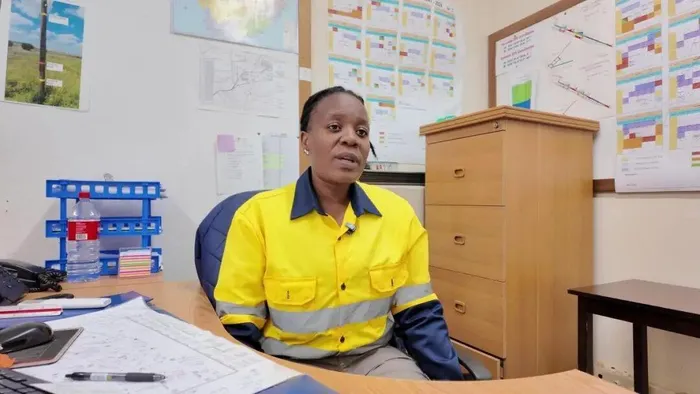
CAPM adopted a highly localised strategy, employing about 2,800 staff in South Africa with very few Chinese expatriates. Ndi Ngwenya, Geological Resource Manager at TAU Mine, leads a team crucial for mine planning and production direction.
Image: Supplied
The Chinese team immersed itself locally, regularly descending into the mines, working with frontline crews, and consulting with local firms to grasp operational realities. "Correct decisions require a fact-based understanding of local conditions," Li said.
The key to survival was building a capable local management team. CAPM's "dual-wheel drive" model is simple: the Chinese team sets strategy, while local teams handle operations. In weekly meetings, Chinese managers set goals, and local teams devise execution plans.
"We're not here to replace them, but to build bridges," said CAPM Deputy General Manager Wang Anfu. He noted that South Africa's performance evaluation system is more detailed than in China, with bonuses closely tied to output, quality, and cost controls.
During the pandemic, supply chain disruptions delayed critical equipment, while social unrest and illegal mining heightened safety risks, temporarily halting production restart.
Yet, the localised team showed resilience. Amid these challenges, the local team at CAPM's Oune Gold Mine managed to restart the West Processing Plant in 2024, despite equipment aging and parts shortages, using remote guidance and onsite innovation.
"Building the supply chain locally" was Li's biggest challenge and CAPM's key to development.
A Sustainable Partnership Model
At CAPM's mining area, English is the working language, but many local staff greet visitors with "Nǐ hǎo!"
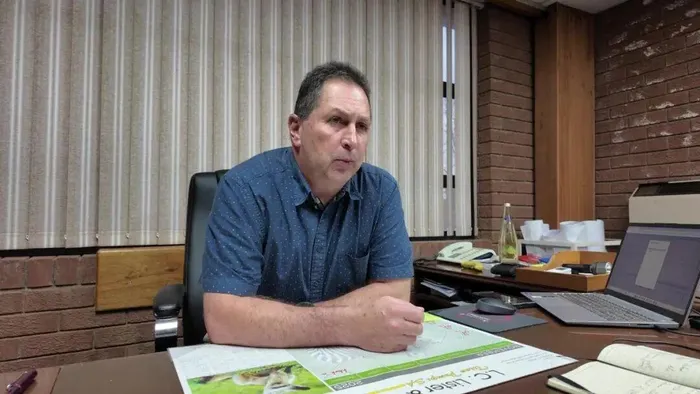
CAPM's General Manager, Warren Freeman, a 35-year mining veteran.
Image: Supplied
This integration goes deeper. Ndi Ngwenya, Geological Resource Manager at TAU Mine, leads a team crucial for mine planning and production direction.
"Chinese colleagues' data-driven approach changed my thinking," she said. "I now focus on data-based discussions, not just experience, bringing clarity to financial and project planning."
CAPM's General Manager Warren Freeman, a 35-year mining veteran, observed, "Chinese firms pursue innovation while keenly seeking optimal solutions within practices. South Africans often rely more on established 'best practices'."
South Africa's harsh environment has unexpectedly become a "testing ground" for Chinese miners' globalisation.
"Give us a suspended mine, and we can restart it using local resources," Li stated confidently. This "South African experience" is proving replicable: CAPM's new W Mine began production in November 2025, a rare new project in South Africa in nearly two decades.
The impact extends to talent development. With South Africa's internationally experienced mining professionals, CAPM envisions South African staff managing future overseas projects. "South Africa will become our global talent base," Li said.
Daily, Chinese managers descend into the mines with over 2,000 local employees. In the dark tunnels, they face not just technical challenges but the deeper test of building trust and transferring skills. They have found a simple answer: real development isn't about transplanting Chinese mines, but finding a shared "way of thriving" with local people and environments. Chinese firms are transforming from "outside merchants" into "insiders" in South Africa's development story. - Chinese Fund News
For Chinese mining companies in Africa, ESG (Environmental, Social, and Governance) principles are not just a slogan—they are central to operational planning and long-term viability. While technology and management provide the foundation, it is the commitment to mutual development that enables these projects to truly take root.
(1)Rerouting a River to Build a Future Together
In the dense jungle of Kolwezi, in the Democratic Republic of Congo (DRC), the China Molybdenum KFM copper-cobalt mine was developed in just over two years—from acquisition in December 2020 to trial production by the end of 2022. While this speed is notable, the deeper story lies in how ESG planning was integrated in the first place during early stages of this project.
Next to the mining camp, a preserved forest and a man-made reservoir known as “Golden Mountain Lake” reflect this mindset. The lake was created when the mining company diverted a river that originally flowed over the ore body.
“We had to change the riverway, but we wanted to do it right,” explained a KFM geology team member. “We considered factors like once-in-50-year floods and impacts on upstream and downstream villages.”
The final plan rerouted the river 6.4 kilometers and involved building a 485-meter-long dam. Surveying the dense forest was challenging—there were no roads, and the team relied on local guides to navigate. Early engagement with nearby villages led to another community benefit: a new water reservoir built with water from mine dewatering wells, providing a reliable and clean water source.
“KFM, friend! China, friend!” locals now proudly claim when fetching water.
“From the beginning, we aimed to set an industry benchmark in ESG,” said Liang Wei, Vice President of China Molybdenum. The river diversion became more than engineering—it became a bridge with the community.
Similar efforts are underway elsewhere. In Likasi, DRC, Pengxin Resources CAPM renovated over 10 kilometers of municipal roads and upgraded power facilities, supporting both community needs and mining operations.
(2)When a Tree Stands in the Way
At Hainan Mining’s Mali project, managers faced a different test. A large tree stood directly in the path of a planned transport road.
“A young engineer suggested transplanting it to save time and cost,” said Cai Yusheng, the Mali Project Manager. “But we learned it was a sacred tree where locals hold rituals and communicate with ancestors.”
The company decided to reroute the road. “Efficiency matters, but respect is essential. Once trust is broken, it’s hard to rebuild,” Cai said.
That respect extends to social initiatives. In 2022, CAPM donated supplies to 300 elderly and children in an informal settlement and converted a dormitory area into low-cost housing, maintaining facilities despite costs exceeding rental income.
Wang Hetao, Director of Changjiang Securities Research, notes that while Western mining firms still lead in high-grade assets and ESG systems, Chinese companies are learning quickly—combining their operational efficiency with growing attention to sustainability.
(3)Safety as a Non-Negotiable
But some principles are not flexible. At the Mali site, Cai enforces strict safety rules—like requiring protective boots—after finding workers in sandals.
“We made it mandatory. At the same time, we had local foremen explain why safety gear matters,” he said. “Being strict about safety is a form of respect for life.”
The same approach applies off-site: when the company noticed villagers struggling for water, it built a storage dam. It also donated tractors to support local farming.
This balance—flexibility on culture, firmness on safety and quality—reflects the broader strategy of Chinese mining firms in Africa. It’s a practice-led approach to ESG, where grand principles are put to work through concrete details.
The upcoming 2025 G20 Summit, to be hosted in Africa for the first time, alongside China’s push for green mineral cooperation, signals a deepening partnership. Over the last 25 years, Chinese mining companies in Africa have shifted focus from extracting resources to building local industrial capacity, turning minerals into catalysts for shared, sustainable growth.
The Johannesburg Summit will highlight the Green Mineral International Economic and Trade Cooperation Initiative, underscoring that mining can offer more than raw materials—it can build a future based on unity, equality, and sustainability.
(1)From Export to Local Industrialization
Africa holds 30% of the world’s mineral reserves but has long struggled to convert them into long-term development. Now, as global supply chains shift and green energy transitions accelerate, the continent has a historic opportunity—and Chinese mining firms are adapting their role.
China’s G20 action plan emphasizes supporting “Made in Africa” manufacturing. Chinese mining companies are increasingly investing in local processing—moving beyond digging and shipping raw ore to refining it within Africa.
In Johannesburg, Pengxin Resources refurbished a processing plant to turn gold ore into refined bars. In the DRC, more companies are setting up smelters to keep more value on the continent. This aligns with African policies that prioritize local beneficiation and resource sovereignty.
“Resources will run out, but skills and industry will last,” said Wesley Kgang, Johannesburg Economic Development Director and ANC national spokesperson. He notes that Chinese firms are helping to train local workers and develop supply chains—creating lasting value beyond mining itself.
According to Wang Hetao, Director of Changjiang Securities Research, Chinese miners are shifting from “scale expansion” to “quality upgrading.” This aligns with G20 sustainability goals and reflects a broader trend: Chinese companies are becoming partners in industrialization, not just extractors of resources.
(2)Win-Win Through Partnership
Mining is capital-intensive and complex, involving everything from infrastructure to community relations. Increasingly, Chinese companies are adopting a cooperative approach—sometimes even working with Western mining giants on environmental standards and ESG practices. For example, the ESG benchmarks of China Molybdenum’s KFM project were set against the highest ones in the globe.
The Green Mineral Initiative also encourages tripartite projects involving Chinese players, international agencies, and African partners, making investments more stable and creating a technology-sharing mode.
“Companies operating abroad must balance global standards with local adaptation,” Wang Hetao said. “The goal is to turn local advantages into global competitiveness.”
This people-centered approach aims to build sustainable livelihoods alongside mining operations.
(3)A New Chapter in Cooperation
Today, in mines deep down the African soil, Chinese and local engineers work side-by-side. In nearby towns, communities and companies collaborate on water access and infrastructure. These everyday interactions sketch a new model of cooperation—one based not on extraction, but on empowerment and mutual benefit.
“True globalisation means building deep local roots,” an industry expert noted. “The most resilient supply chains are those that benefit everyone.”
As the G20’s vision meets African realities, Chinese mining companies are showing how minerals can connect Africa not only to global markets, but to a more sustainable, inclusive future. -China Fund News