

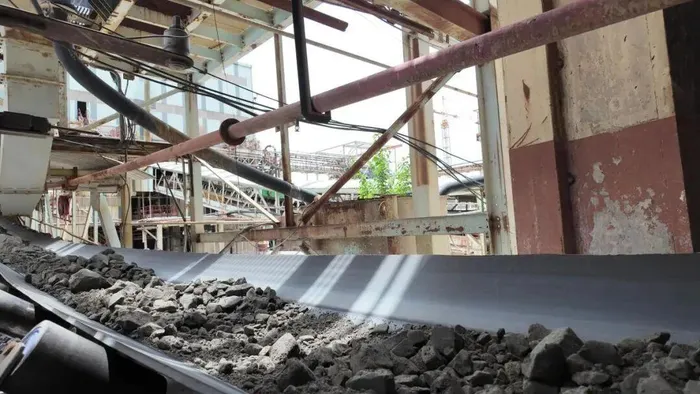
Self-sustainability is key.
Image: Supplied
As a new chapter in Africa's development unfolds, a fundamental shift is underway: Chinese enterprises are focusing more on building self-sustaining capabilities in Africa, moving beyond mere resource extraction. This story is not about "China saving Africa," but about how practical cooperation is creating new development pathways where mineral resources meet human needs.
Global observers often see Africa only through the lens of its abundant resources and competitive rush. But on this geologically rich yet historically challenged continent, a deeper transformation is taking place. Chinese companies are bringing not just tools for extraction, but seeds for mutual growth.
This approach begins with resources but aims far beyond. The recently launched Green Mineral International Economic and Trade Cooperation Initiative embodies this new vision, where mining connects not just commodities to markets, but also benefits local societies and bridges traditions with modern futures.
From "Resource Curse" to Self-Sustaining Development
Africa holds about 30% of the world's mineral reserves, including 95% of chromium, 90% of platinum, and major deposits of cobalt, lithium, and copper. Yet, this wealth has often been a burden—leading to environmental damage, social disruption, and wealth flowing out of the continent.
The problem is not the resources themselves, but unfair systems. Since the 21st century, African nations have been revising mining laws to gain a greater share of benefits. The African Union's Africa Mining Vision (2009) provided a common framework for sustainable mineral development.
The Forum on China-Africa Cooperation (FOCAC), established over two decades ago, has deepened ties. Chinese mining practices in Africa reflect this shift: digital mines in Zambia improve copper efficiency; local cobalt processing in the DRC adds value; and Zimbabwe's lithium export ban has spurred local battery material plants, turning "resource dividends" into industrial opportunities.
Aligning with the G20's focus on unity, equality, and sustainability, China-Africa mining cooperation is building a new model—one that breaks dependency through diversification and promotes shared growth for the Global South.

Wesley Kgang, Member of the Mayoral Committee at Matlosana Local Municipality and former ANCYL spokesperson.
Image: Supplied
Building a Non-Zero-Sum Network
"We are open to the world," said Wesley Kgang, Member of Mayoral Committee (MMC) at Matlosana Local Municipality and former ANCYL spokesperson.
This openness comes with principles. South Africa is building a multi-stakeholder investment model involving government, companies, and communities, emphasising local integration and win-win outcomes.
"South Africa has clear policies like Black Economic Empowerment," Kgang noted. "Chinese investors understand these well, which forms a good foundation for cooperation."
Across Africa, mining policies now encourage local processing. For example, the DRC raised taxes on mineral concentrates to promote local smelting, and Zimbabwe banned lithium exports to foster local industries. Chinese companies like Huayou Cobalt have adapted by building processing plants in Zimbabwe, creating local jobs and retaining more value within the country.
Kgang added that Chinese experience in infrastructure, training, and education is helping turn "resource dividends" into lasting "industrial capabilities."
On the ground, cooperation is key. In the DRC, Chen Yi, General Manager of MMG's Kinsevere Copper Mine, prioritises communication. "Take initiative and build trust," he says. Even with long waits for official meetings, face-to-face dialogue helps resolve misunderstandings and find joint solutions.
This approach has even led former competitors—including MMG, Glencore, and Ivanhoe—to form an alliance to tackle common challenges like power supply, moving from pure competition to collaborative problem-solving.
"A Brotherhood and Sisterhood Bond"
The highest level of symbiosis is human and cultural integration. Kgang stressed a "brotherhood and sisterhood bond," noting that Chinese companies often emphasise mentoring and skills transfer, replacing "I'm the boss" hierarchies with "Let me teach you" teamwork.
"Systematic training turns local workers into technical leaders, and scholarship programs open university doors for their children. These steps are crucial," Kgang said.
Cultural exchange also helps. At Pengxin Resources' site in the DRC, Spring Festival celebrations with lion dances attract local employees and residents, blending traditions and building genuine people-to-people bonds.
Given its long cycles and deep local ties, mining acts as a stress test for Chinese companies going global. A mature cooperation model has emerged: strategic alignment with national goals, multi-stakeholder collaboration, and a focus on human connections.
This African experience offers lessons for other Chinese sectors expanding globally, like new energy vehicles and photovoltaics. It shows that in an age of "de-globalisation," a rooted, partnership-based model is key to sustainable and inclusive growth.
As CAPM Deputy General Manager Wang Anfu put it: "Each generation has its mission. Ours is to establish roots and secure a lasting place for Chinese enterprises on this land." - Chinese Fund News