

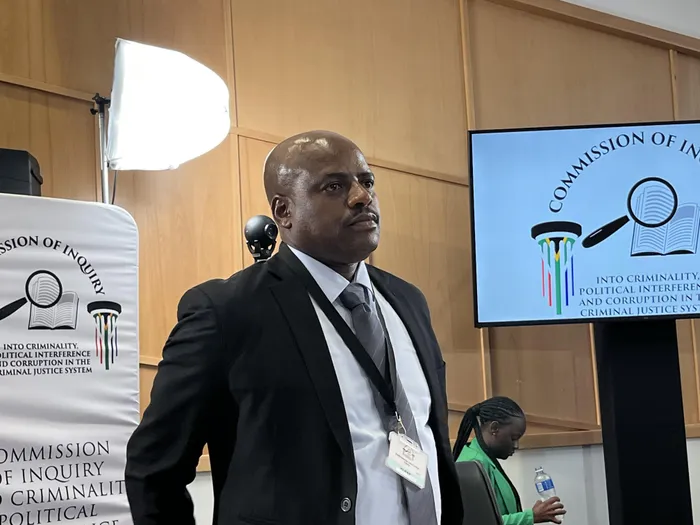
The commission found preliminary evidence implicating current and former officials of the Ekurhuleni Metropolitan Municipality and the Metro Police, including suspended EMPD Chief Commissioner Julius Mkhwanazi.
Image: Kamogelo Moichela/IOl L News
The Madlanga Commission has welcomed President Cyril Ramaphosa’s urgent directives to establish a special police task team and fast-track criminal investigations into senior law-enforcement officers and municipal officials implicated in corruption and misconduct.
Others, however, contend that it is hard to overlook the fact that, as of right now, no politician has been identified or held directly responsible.
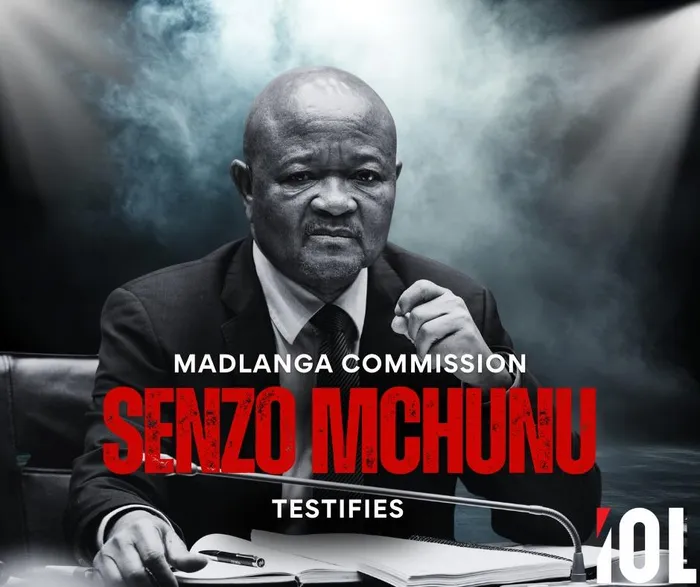
Suspended Police Minister Senzo Mchunu is appearing before the Madlanga Commission.
Image: IOL
This follows Ramaphosa’s acceptance of its interim recommendations, which triggered criminal referrals, possible suspensions, and heightened oversight of stalled investigations involving senior figures in the SAPS and the City of Ekurhuleni.
Commission spokesperson Jeremy Michaels said the president’s response demonstrated political will and urgency but stressed that the interim report submitted to Ramaphosa does not amount to final findings.“
The commission has not made findings,” Michaels said. “The report contains recommendations based on prima facie evidence. Those implicated will be allowed to appear before the commission to respond to the allegations and present their version.”
Ramaphosa established the inquiry on July 13 following allegations by KwaZulu-Natal Police Commissioner Lieutenant General Nhlanhla Mkhwanazi.
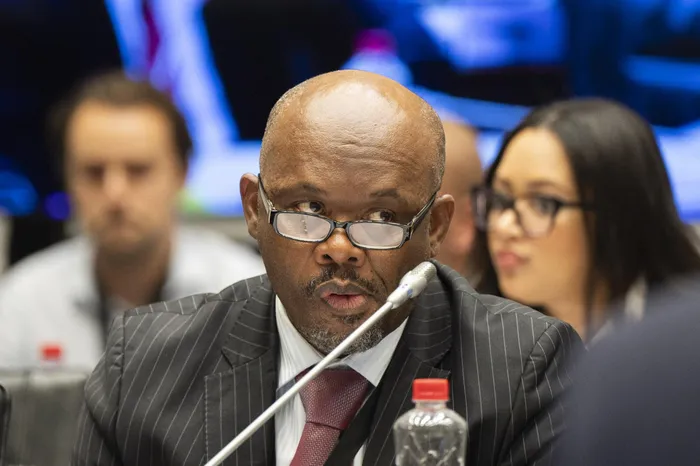
Testimony delivered before the Madlanga Commission has linked suspended Deputy Police Commissioner, Lieutenant-General Shadrack Sibiya, to criminal syndicates.
Image: Armand Hough / Independent Newspapers
Mkhwanazi claimed a sophisticated criminal syndicate had infiltrated law enforcement and justice institutions, compromising investigations, prosecutions, and internal accountability.
Chaired by retired Constitutional Court Justice Mbuyiseli Madlanga and supported by Advocates Sesi Baloyi SC and Sandile Khumalo SC, the commission submitted its interim report on December 17, 2025.
The president has now confirmed he has studied the report in full and accepted its recommendations.
The interim findings stop short of final conclusions but carry serious weight.
The commission identified prima facie evidence of criminal conduct and corruption, prompting immediate referrals for criminal investigation, urgent prosecutorial decisions, and disciplinary action.
The allegations span crimes including fraud, corruption, perjury and murder.
However, in a statement by the Presidency, implicated people, including the suspended Police Minister, Senzo Mchunu, suspended deputy police commissioner, Shadrack Sibiya, Mchunu’s chief of staff, Cedric Nkabinde, Tommy Mthombeni, and Brown Mogotsi are not on the list of those who should face criminal charges.
In line with its mandate, the commission invoked powers under its terms of reference to recommend suspensions and referrals.
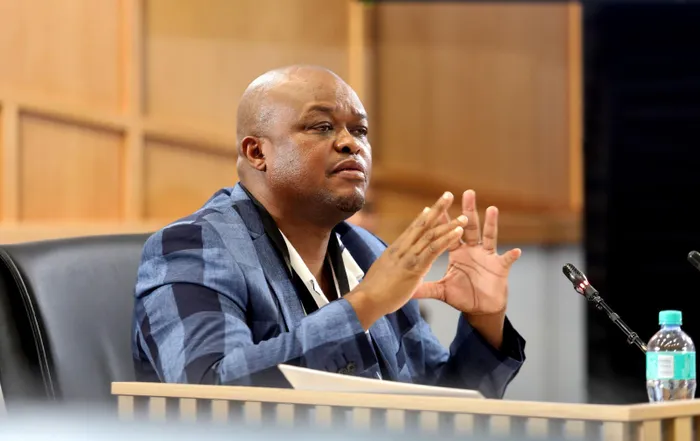
Brown Mogotsi, North West businessman, wants Parliament to pay for his own security detail before giving testimony before the Ad Hoc Committee.
Image: Oupa Mokoena / Independent Newspapers
Clause 7 authorises recommendations on the employment status of officials implicated on a prima facie basis, while Clauses 10.4 and 12 empower the Commission to refer matters for immediate investigation and prosecution.
The referrals include five senior South African Police Service officials: Major Generals Lesetja Senona and Richard Shibiri, Brigadiers Mbangwa Nkhwashu and Rachel Matjeng, and Sergeant Fannie Nkosi.
The commission also found prima facie evidence implicating current and former officials of the Ekurhuleni Metropolitan Municipality and the Ekurhuleni Metro Police Department.
Among them are suspended EMPD Chief Commissioner Julius Mkhwanazi, several EMPD officers, former Ekurhuleni City Manager Dr Imogen Mashazi, and senior officials responsible for fleet management, human resources, and legal services.
Where investigations are already under way, including at the Independent Police Investigative Directorate (IPID), the commission will demand updates and explanations for delays.
Crucially, the commission stressed that, except for EMPD’s Mkhwanazi, it has not yet heard responses from several implicated individuals.
The allegations, therefore, remain preliminary and are not formal findings.
Even so, the Commission concluded the gravity of the claims justifies immediate action.
Ramaphosa has directed Police Minister Professor Firoz Cachalia and National Police Commissioner General Fannie Masemola to establish a special investigations task team, reporting directly to Masemola, to fast-track the cases flagged in the report.
“The urgency is non-negotiable,” the president said, arguing that swift implementation is essential to restore public trust and rebuild operational capacity in institutions tasked with fighting crime and corruption.
Ramaphosa thanked Justice Madlanga, the commissioners, and staff for their work.
The president further added that he was awaiting the commission’s final report, which is expected to shape the future integrity of South Africa’s criminal justice system.
Although Build One South Africa (BOSA) has noted the release of the interim report, the party raises some concerns.
''While the report outlines prima facie evidence of serious wrongdoing by a number of officials across SAPS and the Ekurhuleni Metro, it is hard to ignore that not a single politician has been named or held directly accountable at this stage.
''The president and his government are asking South Africans to believe that a criminal justice system allegedly infiltrated by syndicates, paralysed by corruption, and compromised at multiple levels is the result of only administrative or operational failure. That is not credible.''
BOSA added that what is clear is that this is not an instance of a few bad actors. ''It is evidence of a state hollowed out from within, where politically connected and politically protected individuals have been allowed to weaken institutions that are meant to protect citizens from crime.''
IOL Politics
Additional Reporting: The Star Reporter