

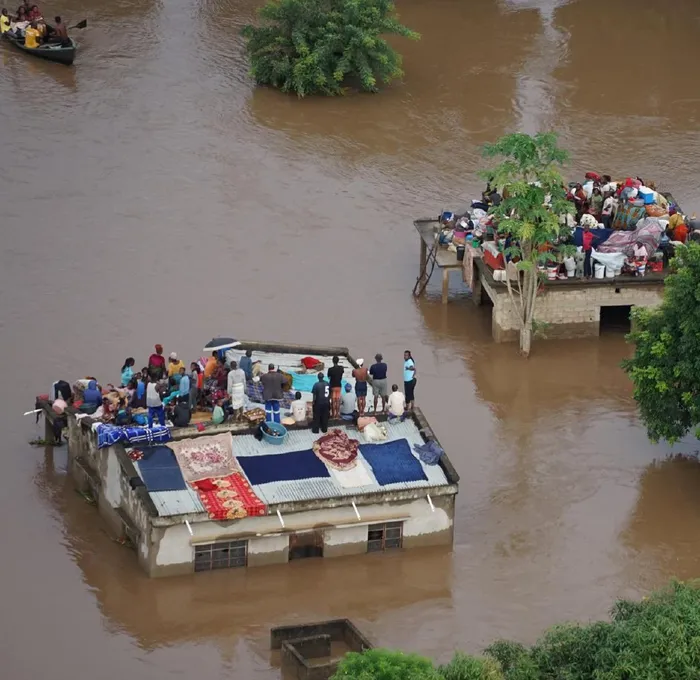
Widespread destruction in Mozambique as severe flooding displaces thousands.
Image: Facebook/ SADC
Mozambique is reeling from one of its most severe flooding events in decades, as weeks of heavy rains have affected southern and central provinces, displacing hundreds of thousands and claiming more than 150 lives. The floods have compounded existing vulnerabilities, with extensive damage to infrastructure, agriculture, and livelihoods, while exacerbating public health crises such as the ongoing cholera outbreak.
Since late December 2025, persistent rainfall has caused rivers across southern Mozambique to swell, overwhelming dams and inundating low-lying towns such as Xai-Xai, Chókwè, and Matola. According to humanitarian agencies, approximately 800,000 people have been affected, with thousands displaced to temporary shelters. Urban areas have been particularly hard-hit due to high population density and unplanned construction that blocks waterways, resulting in severe flooding in neighborhoods across Maputo and Gaza provinces.
Floodwaters have forced families to flee homes, often taking refuge on rooftops, car roofs, or even treetops, while rescue teams work to evacuate stranded residents. In some areas, water stretches for kilometers, leaving isolated homes and communities cut off from essential services. The disaster has left many families without food, clean water, or sanitation, heightening the risk of disease outbreaks.
Humanitarian agencies report that children constitute roughly half of the displaced population, and concerns about malnutrition and waterborne diseases are mounting. UNICEF has highlighted the dangers of diarrhoea and other preventable illnesses in flood-affected areas, noting that malnourished children are particularly vulnerable.
The floods have coincided with a nationwide cholera outbreak, complicating the humanitarian response. According to the National Directorate of Public Health, 4,540 cholera cases have been reported since 3 September 2025, resulting in 62 deaths and a case fatality rate of 1.4%. Nampula province leads in infections with 1,930 cases and 23 deaths, followed closely by Tete with 1,755 cases and 28 deaths. Cabo Delgado has 728 cases and eight deaths, while Zambézia has recorded 72 cases and one death.
The outbreak is active in multiple districts, including Marara, Tsangano, Moatize, Changara, and Cahora Bassa in Tete; Eráti and Memba in Nampula; Montepuez, Metuge, Pemba. Health authorities warn that poor sanitation and contaminated water from floodwaters have intensified the spread of cholera, putting displaced populations at heightened risk.
The floods have destroyed significant agricultural land and storage facilities, particularly in Gaza Province, an agricultural heartland. Many families dependent on small-scale farming or informal trade have seen their livelihoods wiped out, with long-term economic consequences. In urban centers such as Maputo and Matola, flooding has damaged roads, homes, and public facilities, hampering rescue and relief operations. The government estimates hundreds of millions of dollars in losses, while humanitarian organizations continue to struggle to meet the needs of affected communities.
Mozambique’s recurring disasters highlight long-standing structural vulnerabilities. Research from the Inclusive Growth in Mozambique programme indicates that communities repeatedly exposed to natural shocks are often those with the highest levels of multidimensional poverty, limited access to healthcare, education, and inadequate infrastructure. Natural disasters exacerbate inequality, pushing already marginalized households further into poverty.
Geographic and social disparities compound the problem. Rural areas, poorer provinces, and marginalized ethnolinguistic groups tend to bear the brunt of disasters, while urban populations and wealthier households recover more quickly. Between-group inequalities have widened over the past decade, with the urban-rural divide and provincial disparities limiting the capacity for affected households to rebound after shocks.
Analyses of previous disasters, including Cyclone Idai in 2019, show that floods and cyclones can reduce per capita food consumption by 25–30%, triggering short-term spikes in poverty. Rural households dependent on subsistence agriculture or informal trade are especially vulnerable. Once income and assets are depleted, recovery is slow, and families remain exposed to future disasters, creating a cycle of vulnerability.
The government, through the Instituto Nacional de Gestão de Calamidades (INGD), has mobilized resources to assist displaced populations and provide emergency relief, including temporary shelters, food, and medical assistance. Hundreds of rescue teams have been deployed, and international partners have sent emergency kits for food, water, and shelter.
Despite these efforts, authorities face immense challenges. Many residents delayed evacuation due to uncertainty or fear of looting, resulting in increased exposure to floodwaters. Retired hydrologist Carmo Vaz has criticized the government’s approach, arguing that early warnings alone are insufficient. “Issuing alerts is only part of the solution,” he said. “People must be helped to move to safe locations before disasters strike.”
Emergency health interventions have been prioritized to contain the cholera outbreak. Hospitals are treating both flood-related injuries and cholera patients, with 2,484 hospitalized and 2,056 treated as outpatients since the outbreak began. However, the scale of both crises, flooding and cholera, has stretched the health system to its limits, highlighting systemic gaps in public health infrastructure.
Experts emphasize that addressing Mozambique’s vulnerability requires more than emergency response. Sustained investment in resilient infrastructure, improved sanitation, and access to healthcare is critical. Post-disaster cash transfers and rapid livelihood restoration can prevent households from falling deeper into poverty. Lessons from Cyclone Idai show that immediate, targeted support accelerates recovery and reduces long-term deprivation.
Climate adaptation is another priority. Mozambique is highly vulnerable to extreme weather events, and experts warn that floods are likely to become more frequent and severe due to climate change. The government has appealed for international support, requesting over $30 billion in funding for adaptation initiatives until 2030. Without such investment, communities will remain exposed to repeated shocks, and the humanitarian toll will continue to mount.
Despite the scale of devastation, communities across Mozambique have demonstrated resilience and solidarity. Local networks and neighbors are helping each other, providing food and shelter even in areas where resources are scarce. International aid and regional support have supplemented these efforts, but the scale of the disaster has highlighted the limits of both national and international capacity to respond effectively.
The 2025–2026 floods and ongoing cholera outbreak are stark reminders of Mozambique’s vulnerability to natural disasters and public health crises. Hundreds of thousands of people have been displaced, livelihoods destroyed, and essential services disrupted. The crisis underscores the urgent need for long-term investment in resilient infrastructure, public health, and social protection to prevent future disasters from escalating into humanitarian catastrophes.