

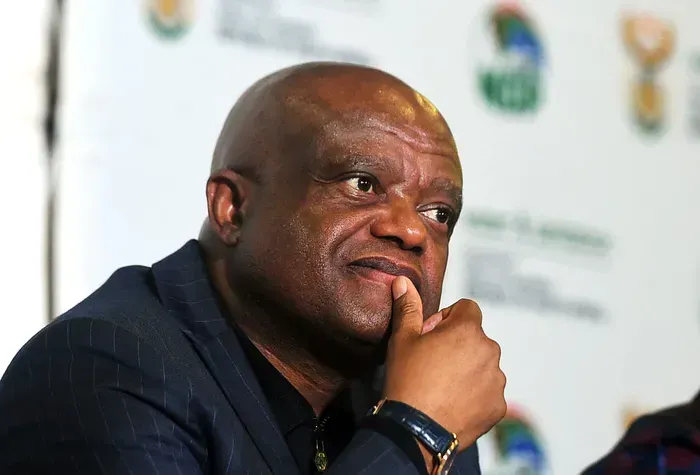
Johannesburg mayor Mayor Dada Morero
Image: Social Media
City of Johannesburg Mayor Dada Morero is under intense pressure as a vote of no confidence is scheduled for Thursday, with coalition partners and opposition parties increasingly questioning whether he is fit to run Johannesburg. The motion comes amid growing frustration over the city’s worsening water crisis, administrative delays, and what critics describe as a lack of decisive leadership.
Residents across the city continue to grapple with intermittent water supply, with some suburbs going days without water. Broken pipelines, ageing infrastructure, and slow maintenance have left communities frustrated and angry. Many say the city administration has failed to act decisively, leaving residents to deal with the consequences of poor planning and delayed responses.
Coalition partners now openly view Morero as the main problem at the center of city governance. Parties represented in the Political Management Committee (PMC), including the Economic Freedom Fighters (EFF), Patriotic Alliance (PA), African Independent Congress (AIC), African People’s Convention (APC), United Democratic Movement (UDM), and African Transformation Movement (ATM) have voiced growing dissatisfaction over the mayor’s leadership. Sources within the coalition say frustrations have reached a tipping point, with many members believing Morero is unable to coordinate effectively with partners or implement crucial resolutions.
Kenny Kunene, Deputy President of the PA, has emerged as one of Morero’s fiercest critics. He accused the mayor of regularly skipping PMC meetings and failing to implement decisions agreed upon by coalition partners. Kunene said, “If the ANC is reconsidering him, it’s very good. It is clear to all residents, Morero needs to go.” He also described Morero as “simply not fit to run the city,” a sentiment echoed by several coalition members who privately fear that continued instability in Johannesburg could worsen the ongoing water crisis and further undermine service delivery.
The water crisis has become a major flashpoint, but residents complain that service failures go far beyond taps running dry. Sindisiwe Nkosi, a Johannesburg resident, said: “We are tired of this. So many promises, we have no water, power failures, the streets are a mess, potholes. Joburg is a crime zone. This is the same mayor that wanted to hire foreign nationals. We are tired.”
Nkosi’s reference points to a controversial August 2024 proposal by Morero to recruit foreign nationals into the Johannesburg Metro Police Department (JMPD). The aim was to bridge language barriers when dealing with crime in immigrant-heavy areas like Hillbrow, Berea, and Yeoville. The proposal, however, faced immediate backlash from opposition parties, residents, and even the ANC, which called the plan “undesirable” and inconsistent with party policy. Critics also noted high unemployment rates among South African youth. Morero quickly withdrew the proposal and issued a public apology, confirming the city would not proceed with hiring non-citizens for the JMPD.
In Alexandra, residents say they go for days without water, while communities in Soweto report similar interruptions. One local added, “It feels like the mayor is absent when we need him most. Johannesburg needs a leader who can act fast.” Critics argue that Morero’s administration has been slow to respond, leaving ordinary residents to bear the brunt of leadership failures.
Beyond water, Morero has faced criticism over budget shortfalls and administrative delays, which have affected city services and infrastructure projects. Analysts say that disputes between coalition partners in the PMC have slowed decision-making, contributing to public perceptions of indecision. The combination of service delivery failures and political gridlock has created a perfect storm, leaving Morero vulnerable to the no-confidence motion.
This is not the first time a vote of no confidence has been planned against Morero. A previous motion was not withdrawn, but the city speaker sought a legal opinion before proceeding, delaying the process and intensifying political uncertainty. That unresolved motion underscores the persistent tension between the mayor and coalition partners, highlighting the growing impatience among parties who feel Johannesburg needs stronger leadership.
If the vote succeeds this week, former mayor Parks Tau and Loyiso Masuku, the ANC’s regional chairperson and the first woman to hold the post, are expected to take the lead on election strategy for the city. Party insiders say Tau and Masuku are being positioned to guide the ANC’s Johannesburg campaign and coordinate governance improvements while projecting stronger leadership. Masuku is widely regarded as better positioned to lead the city due to her experience, organizational skills, and ability to unify coalition partners.
Political commentators note that Thursday’s vote could reshape Johannesburg’s leadership and determine how quickly the city addresses urgent challenges, particularly water supply, sanitation, and infrastructure. The outcome could also influence the ANC’s performance in upcoming elections, as poor leadership in South Africa’s largest metro may erode voter confidence.
Dada Morero is a long-time member of the ANC and has been active in Johannesburg politics for several years. Before becoming mayor, he held various council and party leadership positions, rising through the ANC’s regional structures.