

The US and Israel launched a coordinated military offensive against Iran, disrupting global stability and air travel, while experts warn of far-reaching economic impacts and the urgent need for diplomatic resolution.
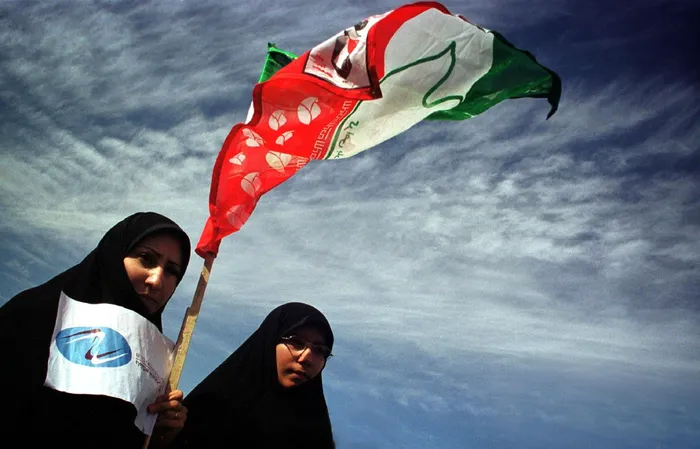
Image: Morteza Nikoubazl / Reuters / File
Global stability and commerce were shaken on Saturday as the United States and Israel launched "major combat operations" against Iran, an action confirmed by President Donald Trump.
The disruption of international air travel is the immediate, tangible impact of the surprise offensive, which Israeli Prime Minister Benjamin Netanyahu named Operation Lions Roar.
This offensive has abruptly derailed diplomatic efforts and triggered a widespread regional crisis.
President Trump addressed the nation from the White House, justifying the military action as a necessary defence. He asserted that the goal was "to defend the American people by eliminating imminent threats from the Iranian regime".
He reiterated a long-standing policy, adding: "It has always been the policy of the United States, in particular, my administration, that this terrorist regime can never have a nuclear weapon."
In a parallel video statement, Prime Minister Netanyahu confirmed the joint campaign, explaining: "The objective of the operation is to put an end to the threat from the Ayatollah regime in Iran. At this time, the Israeli Defence Forces (IDF) are attacking targets of the oppressive regime, facilities of the Revolutionary Guard, along with the United States military targeting ballistic missile sites."
The immediate collateral damage of the strikes has been the closure of crucial Middle Eastern airspace, a vital corridor for flights connecting Europe and Asia.
With Russian and Ukrainian airspace already restricted, the region had become an "indispensable routing" for many international carriers, a route now compromised.
A long list of major airlines, including Lufthansa, Air France, British Airways, and Virgin Atlantic, have suspended service to destinations in the region.
Qatar Airways Group announced the "temporary suspension of its flights to, and from, Doha due to the closure of Qatari airspace".
The carrier cautioned passengers about the lasting effects. "Once usual operations resume, we anticipate delays to the flight schedule," the group stated, prioritising safety above all. "The safety of our passengers and crew is always our highest priority."
Simultaneously, the UAE's General Civil Aviation Authority (GCAA) announced a "temporary and partial closure" of its airspace as an "exceptional precautionary measure, aimed at ensuring the safety of flights and aircrews".
The authority urged passengers to contact their respective airlines for the latest updates on flight schedules.
Beyond the logistical nightmare in the skies, the attack represents a dramatic end to recent high-level diplomatic talks.
International relations expert Professor Gideon Chitanga stressed that the military action has "abruptly derailed the diplomatic track", calling the offensive a "violation of international law, second, aggression against a sovereign state by Israel and the US".
Chitanga suggested the primary motivation behind the attacks is not merely countering the nuclear threat, but engineering a regime change in Tehran. "The Prime Minister of Israel has been very explicit about engineering a regime change in Iran. I think that that is the core, that is the main intention, that is the main driving interest,” he explained.
The expert warned that the conflict is rapidly escalating. "It became clear that this is no longer just a war between Israel, the US, and Iran, but it is a regional conflict that has spread to cover much of the Middle East."
He urged the world to "brace itself for the economic shocks that are likely to result from the conflict", given the Middle East’s role as the prime producer of oil.
"The bigger issue is going to be the economic impact, short term and long term, because the Middle East is the prime producer of oil, including Iran, and much of the world is linked to consumption of this oil."
Despite the explosive start, Chitanga maintained that a peaceful resolution is the only viable path forward. "The final solution will have to be diplomatic," he asserted, adding, "We all know that all wars end via diplomacy. There's no single war that is ended through violence."
He urged the international community to take immediate action. "The parties in the international community should really proactively urge a quick diplomatic solution and urge the parties to stop the war."
Chitanga believes that instead of establishing nuclear deterrence and regime change in Iran, this conflict may inflame a regional and international nuclear race, and dangerous instability in the Middle East. "The general impact will be regional and international instability."
Adding a different perspective on the global power structure, André Thomashausen, Professor Emeritus of International Law at Unisa, said the World Order, as from 2025, is that of an oligopoly of the five heads of State of the USA, China, Russia, India, and Saudi Arabia.
Thomashausen said marginal countries like South Africa can no longer play any significant role.
"As from February 28, 2026, the Big Five have run out of patience with the Mullah regime in Iran and its systemic abuse of human rights. The Islamic Revolution government in Tehran will not survive what President Trump has on Saturday declared to be ‘major combat operations’, supported by the entire region, including a surprise alliance between the UAE and Saudi Arabia," he said.