
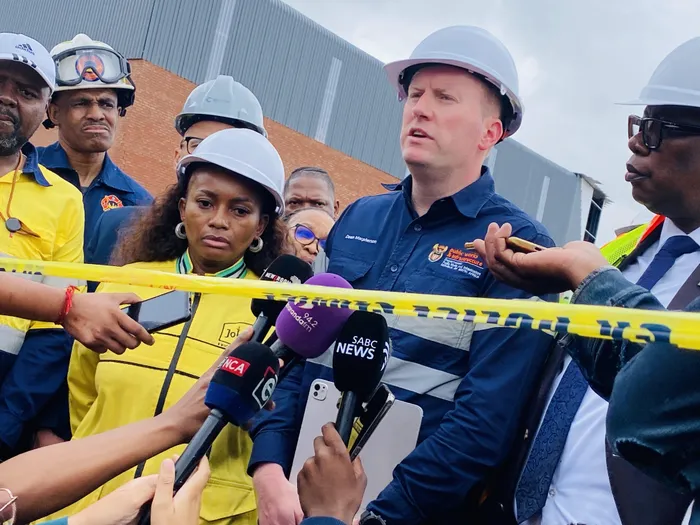
Just last week, another building in Ormonde, Gauteng, succumbed to structural failure, killing nine construction workers.
Image: Simon Majadibodu/IOL
South Africa is grappling with a construction crisis that has resulted in a tragic spate of deaths and injuries between 2024 and 2026, as a series of building collapses occuring accross the country.
With Gauteng, KwaZulu Natal, and the Western Cape bearing the brunt of these catastrophic incidents, it becomes evident that systemic failures, regulatory lapses, and deep-seated corruption are to blame.
In May 2024, a multi-storey building under construction in George, Western Cape, collapsed, claiming the lives of 34 individuals. This prompted an investigation that unearthed alarming findings pointing to weak monitoring mechanisms, systemic failures, and blatant non-compliance with existing building regulations.
Fast forward to December 2025, the spectre of tragedy loomed again in Verulam, KwaZulu-Natal. Here, a four-storey building that housed a temple collapsed, resulting in the death of five more individuals. Investigative bodies revealed a disturbing pattern that echoed the previous year’s findings, including substandard materials, a lack of approved plans, and an absence of essential construction permits.
Late in 2025, consequences struck Gauteng, specifically in Soweto, when a double-storey building in Doornkop gave way. The collapse tragically claimed the lives of three individuals, including a child.
Just last week, another building in Ormonde, Gauteng, succumbed to structural failure, killing nine construction workers.
These repeated failures are not mere coincidences but rather symptoms of longstanding issues that plague South Africa’s construction industry.
Lufuno Ratsiku, an infrastructure specialist, believes the roots of this crisis dig deeper into a culture of mediocrity and greed. According to Ratsiku, the building industry's negligence stems from a failure to acknowledge proper protocols, arising from a desire to cut costs at the expense of safety.
Ratsiku offers a practical example of this corruption, noting that construction sites sometimes operate without a competent supervisor to oversee operations.
Ratsiku further explains that an individual might decide to pocket the R25,000 or R30,000 intended for a supervisor's salary, emphasizing how decisions made for monetary gain directly endanger human life.
The significant uptick in construction-related deaths calls for immediate remedies and stringent accountability measures to restore trust in an industry marred by scandal and ire.
While strict by laws exist, they remain ineffective without proper implementation.