

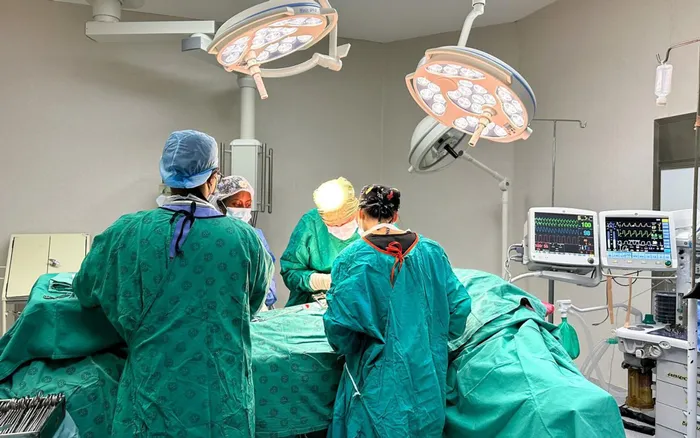
With a growing surgical backlog, the Gauteng Health Department is implementing system-wide changes to reduce wait times for critical procedures, leveraging technology and expanded capacity to improve patient care.
Image: Supplied
According to the Gauteng Department of Health, system-wide interventions are being intensified in an effort to reduce the approximately 30,600 patients who are waiting for surgery in the province's public hospitals.
The department said it is implementing a combination of digital innovation, expanded surgical capacity, and targeted reforms to improve efficiency and patient-centred care in hospitals.
''The estimated backlog currently stands at approximately 30,600 patients awaiting various surgical procedures. This figure represents a consolidated provincial baseline and continues to be refined through an ongoing process of hospital-level verification to strengthen planning and accountability,'' said the department.
Of this total, approximately 29 969 cases are classified as legacy backlog cases, while 631 represent current cases awaiting scheduling under routine service flow.
The department said the backlog reflects sustained system pressures over time, including increased referrals to tertiary and central hospitals, infrastructure and equipment constraints, workforce limitations and external disruptions such as water supply challenges experienced in parts of the province in 2025, which contributed to surgical cancellations and delays.
It said that while system throughput has improved following remedial reforms, residual delays remain due to the prioritisation of emergency and high-acuity cases as well as the accumulation of earlier disruptions.
''In response to these pressures, the Department has implemented a series of targeted measures to increase surgical output and improve patient flow. Central to this is the rollout of the Treatment Time Guarantees (TTG) Surgical Backlog Platform, also known as the TTG Dashboard, which enables case-level tracking across the surgical pathway.
''The system provides visibility into waiting lists and waiting times, strengthening coordination across facilities and supporting more responsive, clinically informed decision-making. While the digitisation of historical records is ongoing, the platform marks a significant step towards a fully integrated, data-driven approach to managing
Hospitals are also extending operating hours, including weekends and after-hours sessions, to conduct surgical marathons focused on priority procedures, said the department.
Additional measures include the recruitment of specialised clinicians, improved allocation of human resources, optimisation of capacity and strengthened maintenance of critical equipment to minimise downtime.
The department said it is also enhancing coordination within hospital clusters to redistribute cases to facilities with available capacity, while strengthening referral pathways, improving booking systems and tightening operational oversight to reduce cancellations and maximise utilisation.
It added that waiting list validation and digitisation is being accelerated to ensure that planning and resource allocation are based on accurate, up-to-date information, particularly at tertiary and central hospitals where demand remains high.
''Efforts are underway to strengthen the resilience of health facilities by addressing operational risks affecting surgical services, including equipment reliability, theatre conditions and continuity measures to mitigate the impact of external disruptions,'' the department said.
According to the department, these interventions are aimed at reducing the legacy backlog over time while improving the management of current cases and strengthening the overall efficiency of the public health system in Gauteng.
“Collectively, these interventions are expected to reduce the legacy backlog over time while sustaining improvements in the management of current cases and establishing a more responsive, efficient and sustainable public health system in Gauteng.
IOL News