

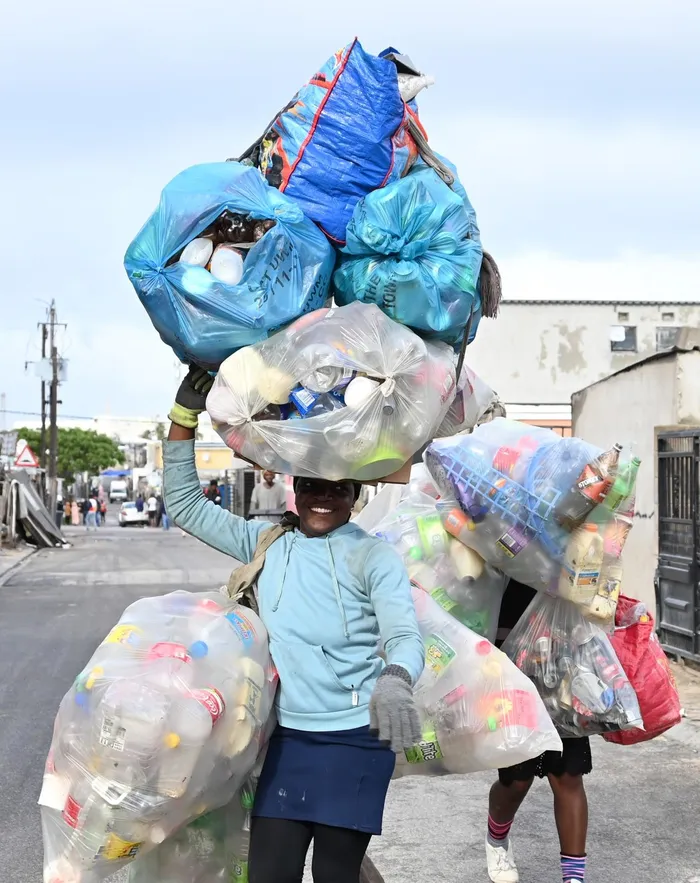
A waste picker in Dunoon carries recyclable plastic materials, highlighting the vital role informal reclaimers play in keeping communities clean and supporting the circular economy.
Image: Ayanda Ndamane / Independent Media
A newly unveiled R3 million recycling baler in the Western Cape, officially launched in April, is being hailed as a major boost for collections and informal waste pickers.
However, campaigners say the real test will be whether those doing the hard work of reclaiming waste can share meaningfully in the benefits.
Cape Town-based recycling and waste management company, CL Trading, recently launched its imported Enerpat horizontal baler at its Parow facility, saying the machine is expected to double its processing capacity and create additional income opportunities for hundreds of waste pickers who sell recyclable materials to the business.
The company said it currently processes about 3,500 tonnes of recyclable material a month and expects the new high-volume machine to significantly increase that output in the coming months.
Managing Director Shaun Styger said the machine would help divert more waste from landfills, while improving efficiency across the business.
"We’re still learning and configuring the new baler and conveyor system, but with it, we’re looking to double our processing volume in the coming months," he said.
Styger added that faster processing and denser bales would improve transport logistics and reduce costs.
"The higher density of the bale allows us to get more payload onto our trucks and containers, making us more efficient in terms of logistics, and enabling us to pass some of the cost savings in the processing fee on to our suppliers," he said.
The machine was commissioned with financial support from Petco, which said investments in infrastructure were aimed at strengthening the recycling value chain.
Petco Chief Executive Telly Chauke said: "Giving the right tools to the right people will help them build a solid operational foundation, and grow South Africa’s circular economy for the benefit of all."
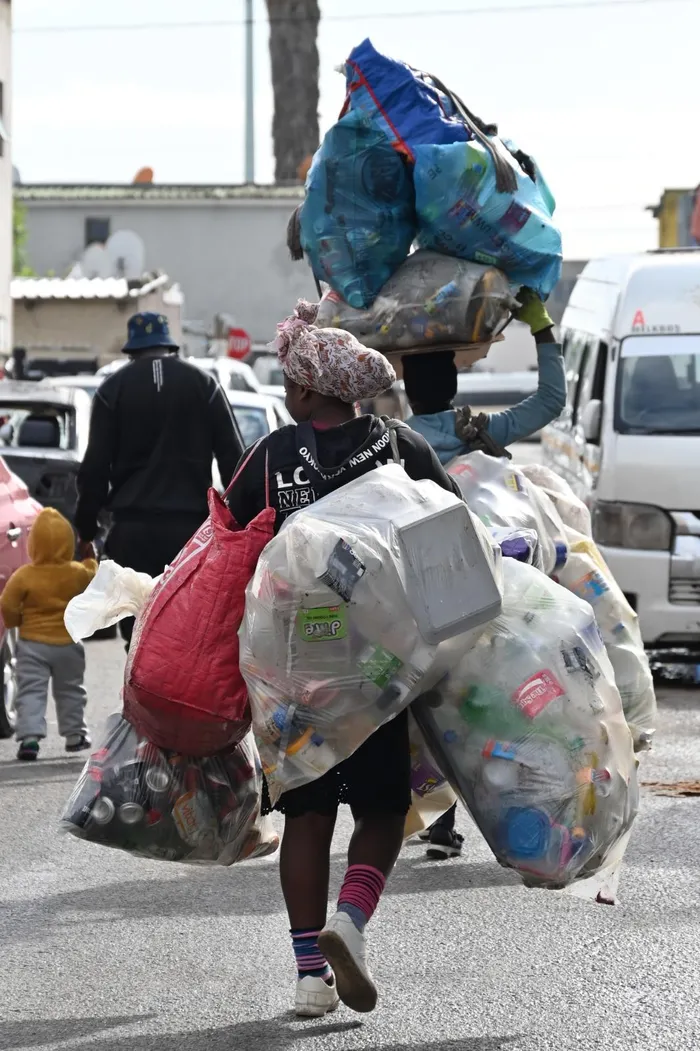
Waste pickers carry bags of collected plastic through a Dunoon street, where informal reclaimers earn an income by recovering recyclable materials.
Image: Ayanda Ndamane / Independent Media
But waste picker advocates say access to such tools remains uneven, particularly for informal reclaimers who collect bottles, cardboard, plastic, and cans on foot or with trolleys before selling materials to depots.
Senior waste campaigner Musa Chamane, who works closely with the South African Waste Pickers Association, said baling machines play an important role in the recycling economy because compressed materials are easier to transport and often fetch better prices.
"When you take the baled materials to the market, it’s easier for the truck to load more waste in terms of kilograms, because loosely packed material has air in between," Tshamane said.
"If it is baled, it has more value because of the size and weight."
He said most informal waste pickers do not have access to balers and instead transport loose bags of recyclable material to buy-back centres.
"A waste picker in Khayelitsha collecting bottles will not have a baling machine. The waste picker will bring a sack to the market. But if the waste picker had a baling machine, they could bale the material and make more money," he said.
Chamane said ownership remained central to who benefits most from recycling technology.
"If it belongs to an individual entrepreneur, then they will benefit, and if it belongs to waste pickers, then they will be the ones to benefit," he said.