

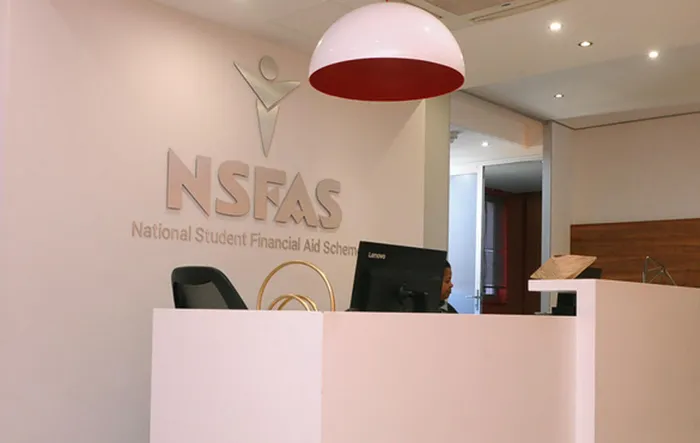
Minister Buti Manamela has placed NSFAS under administration, citing governance instability, audit failures and operational breakdowns affecting student funding and the credibility of the higher education funding system.
Image: Independent Newspapers Archives
The National Student Financial Aid Scheme (NSFAS) has been placed under administration by Minister of Higher Education and Training Buti Manamela because of unstable governance, audit failures, and operational issues that have an impact on student funding.
Speaking during a media briefing on Monday in Pretoria, Manamela said NSFAS remains central to the country’s democratic project as it enables access to higher education for students from poor and working-class households.
“NSFAS is one of the most important public institutions in our democratic project,” he said, adding that it exists “to ensure that young people from poor and working-class backgrounds are able to access higher education and training.”
He warned that instability at the entity had wider consequences beyond the institution itself.
“Any instability within NSFAS, therefore, has implications not only for universities and TVET colleges but also for students, households, communities, the fiscus, and public confidence in the ability of the democratic state to advance social justice,” he said.
Manamela said the decision to place NSFAS under administration was taken after legal and governance considerations under sections 17A to 17D of the NSFAS Act, 1999, following what he described as a prolonged period of intervention attempts and assessments.
“Today, after careful consideration of the legal, governance, financial and operational circumstances affecting NSFAS, and acting in terms of sections 17A to 17D of the National Student Financial Aid Scheme Act, 1999, I have taken the decision to place NSFAS under administration and appoint an Administrator,” he said.
He stressed that the move followed a series of failed attempts to stabilise the institution through ordinary governance mechanisms.
“This decision was not taken lightly. It follows a long process of engagement, legal assessment, governance intervention, and consideration of alternatives,” he said.
Manamela pointed to long-standing governance concerns, including issues relating to the constitution of the NSFAS board, which led the department to approach the courts through self-review proceedings.
He said the government could not ignore possible legal irregularities in a statutory body managing billions of rand in public funds.
As governance instability continued, NSFAS also experienced board resignations, including that of the chairperson and other members, prompting the appointment of interim leadership. However, Manamela said instability persisted and deeper operational concerns began to emerge.
He cited a disclaimer audit outcome for the 2024/25 financial year, irregularities flagged by the Auditor-General, weaknesses in consequence management, data integrity problems, ICT system delays, unresolved student appeals, and failures in student accommodation oversight.
“In March this year, I issued a formal Ministerial Directive to NSFAS in terms of the NSFAS Act,” he said.
He said it followed “serious concerns arising from, among other matters, the 2024/25 disclaimer audit outcome and material irregularities identified by the Auditor-General.”
Manamela said student accommodation failures affecting student dignity and safety, as well as broader governance and accountability concerns, also formed part of the directive.
He said governance instability worsened further following additional resignations within the board, leaving the institution unable to function effectively under its existing structure.
Manamela said that after considering alternatives, including filling vacancies, appointing further interim leadership and increasing departmental oversight, he was not satisfied that these measures would restore stability in time.
“Ultimately, however, I was not satisfied that the ordinary governance arrangements were capable of adequately stabilising the institution within the urgency and seriousness of the challenges confronting NSFAS,” he said.
Former South African Reserve Bank and revenue service executive Professor Hlengani Mathebula has been appointed administrator. Manamela stressed that student funding would not be disrupted.
IOL News